Why is Zaha Hadid Being Copied in China?

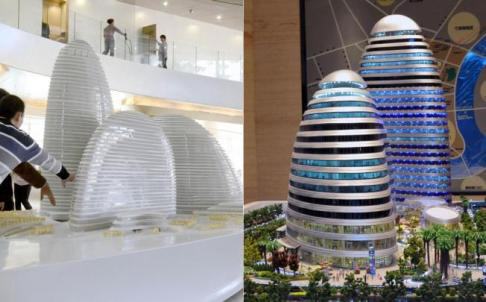
Zaha_copied in ChinaZaha Hadid’s Wangjing SOHO design (left). Chongqing Meiquan 22nd Century design (right). Image from AFP.

Earlier this year, the architecture world was in shock after a story made the rounds that a Zaha Hadid designed project in Beijing is being pirated by a developer in Chongqing. What’s surprising about this story is not the actual copying of Hadid’s design but the reaction from the design media, as if this is the first incidence of architectural piracy in China.

Of course this is not the case as building designs are routinely copied in China. However, what makes this instance unique is that while Hadid’s design (Wangjing SOHO) is still under construction, the copied version (Chongqing Meiquan 22nd Century) is set to complete first. Pan Shiyi, Board Chairman of SOHO China, Hadid’s client, has not kept quiet about his disapproval, and is now taking legal action against the developers in Chongqing. Continue reading
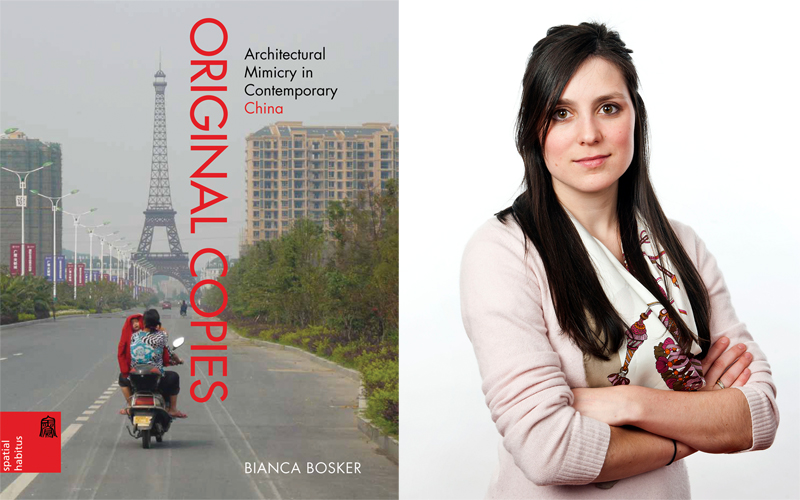
Interview with Bianca Bosker, Author of New Book “Original Copies: Architectural Mimicry in Contemporary China”

BBoskerBook

The widespread pirating of architectural motifs in China’s developing urban landscape is a well-documented phenomenon. From Alpine Villages to starchitect-designed superstructures, Chinese builders often seem to have no shame in copy and pasting designs originating from far away places.

This perplexing and culturally intriguing topic is the subject of a new book by Bianca Bosker, Executive Tech Editor for The Huffington Post. Original Copies: Architectural Mimicry in Contemporary China (University of Hawaii, 2013) examines the trend of “duplitecture” in China – the construction of monumental, themed communities that replicate the cities and towns of the West, frequently drawing on historical European archetypes.

Bianca was nice enough to answer some questions to help give us a better idea of what her book is about: Continue reading

Illuminating Hong Kong’s Bank of China Tower

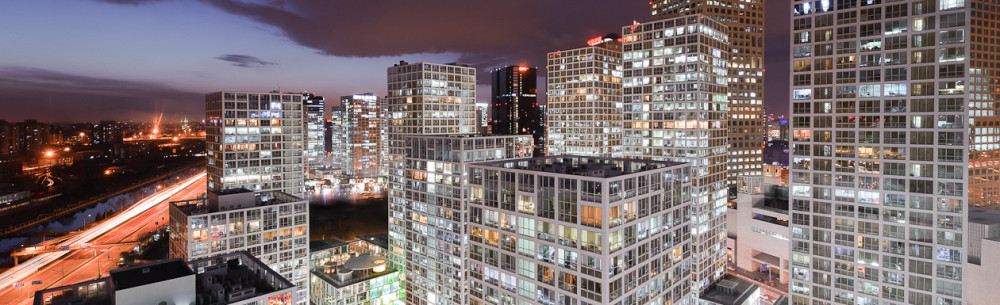
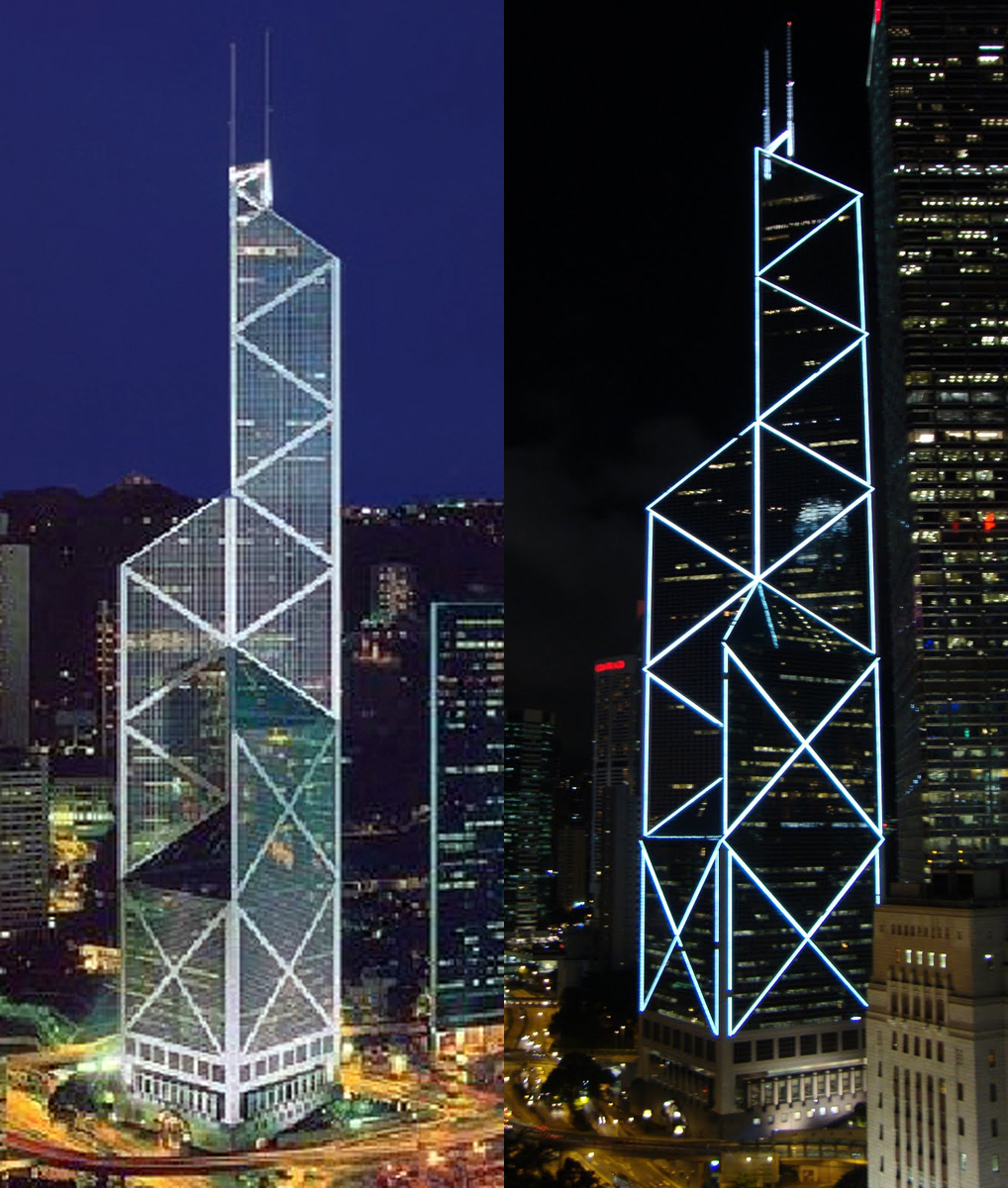
BankOfChina_LightingHong Kong’s Bank of China building with its original nighttime lighting scheme (left) compared to its current one (right)

The following post was written by John Yuan, a Chinese-American architect who worked on the design of the Bank of China building in Hong Kong during his tenure as an employee of I.M. Pei’s architectural practice:

Since first returning to visit Hong Kong around the time of the handover to China in 1997, I noticed that Bank of China Tower appeared strikingly different at night during subsequent visits over the next decade. I never imagined that the exterior lighting scheme for the tower would ever be altered from the original design done by Fisher Marantz, the lighting consultant to I.M. Pei’s office on the project.

Even from the beginning of the design process, illuminating the tower at night posed great challenges. The tower stands over 300 meters tall and has an exterior covered mostly in reflective glass- characteristics which both posed difficulties for the nighttime lighting design. Continue reading

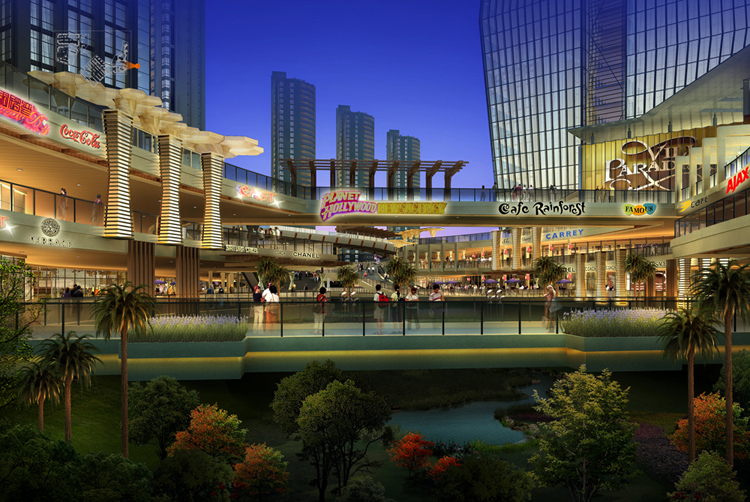
Urban Fantasies in China: Architectural Visualization

The following piece appears in the new issue of the architecture journal CLOG:RENDERING

Urban Fantasies in China: Architectural Visualization

Architectural visualization specialists are the overlooked laborers involved in the vast China urban development program. They differ from architects in that they do not have design training beyond very specific knowledge of software programs such as 3D Studio Max© or the Adobe Creative Suite©. While some Chinese architecture firms employ in-house visualization specialists, most rendering work is outsourced to gigantic three-dimensional modeling studios.

Stepping into one of these studios is much like walking into a factory (one office can employ upwards of one thousand people), but instead of workers assembling widgets along conveyer belts, rows of workers hunch over their desktop computers for hours on end, producing images to be used in presentations to high-level officials or real estate marketing brochures. Just as in a factory, workers are assigned to one specific task: three-dimensional modeling, rendering (material and camera view selection) or post-production work in Adobe© Photoshop© – there is no overlap in roles. Continue reading

An Experience in Contrasts: Redevelopment in Beijing’s Historic Qianmen Neighborhood

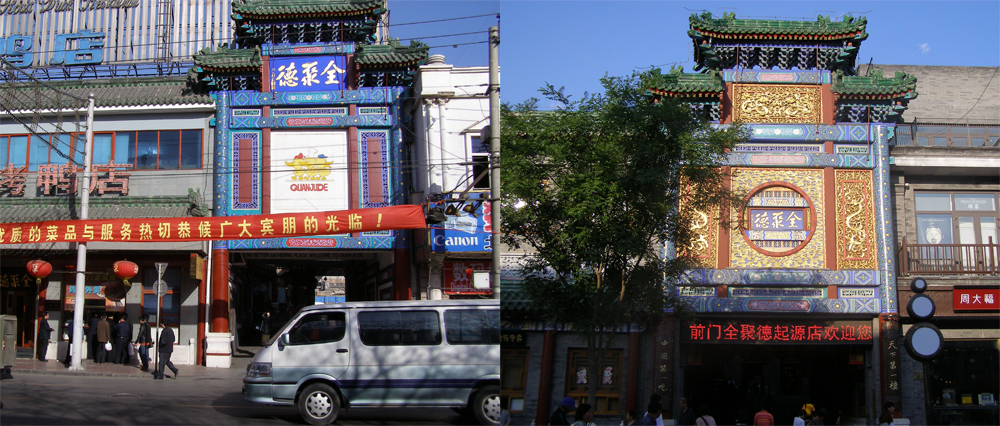
Before and After Photos of ‘Quanjude’, a famous Peking Duck Establishment in Qianmen Since 1864

It is a familiar narrative across China’s cities: historic districts routinely razed to make way for new developments comprised of high-rise residential communities and retail mixed-use complexes designed to reflect China’s 21st Century image.

Yet in some of China’s more high-profile historic neighborhoods, redevelopment is conceived to capture the spirit what was once previously on site by rebuilding in traditional Chinese architectural styles. ‘Tourist Streets’, as these kinds of developments are referred to by developers and government officials, are a hot project type in China- nearly every city wants one. They range from accurate recreations of China’s past to cheap pastiche. Continue reading