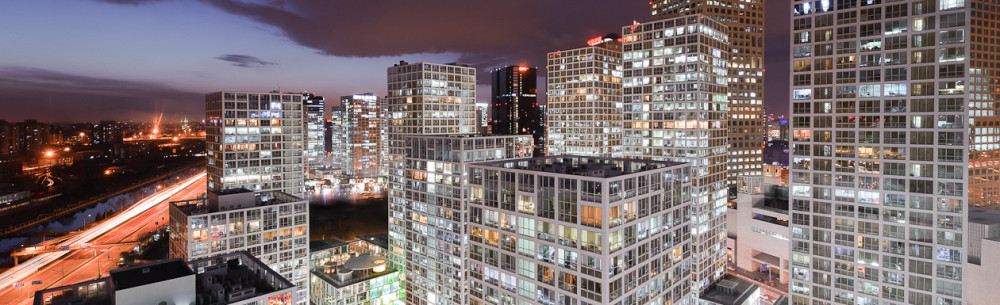
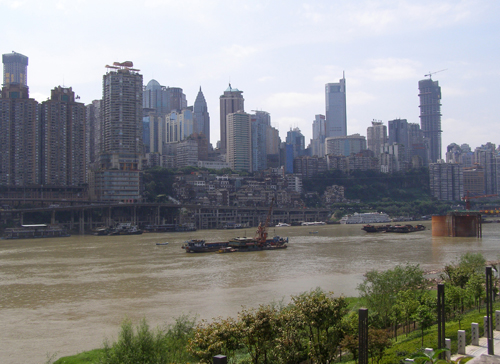
Chengdu and Chongqing Leading the Way in Hukou Reform

The hukou system, or household registration system, is a method of accounting for the country’s population by requiring each citizen to officially register his or her place of residence.

Possessing an urban hukou in a large city means that one is an official ‘resident’ of that city and eligible to receive benefits such as  access to medical insurance and education as well as the right to purchase property. This poses a problem for the floating population of rural migrants to cities who are not afforded similar benefits due to their lack of an official urban hukou.

Given the difficulty rural migrants have in obtaining an urban hukou, most have no incentive to settle in a city once their period of work is finished. This means that until the system is reformed, rural migrants will always have one foot in the big city and one foot back in the village. Continue reading
Urbanizing Towards a Clean and Sustainable Future

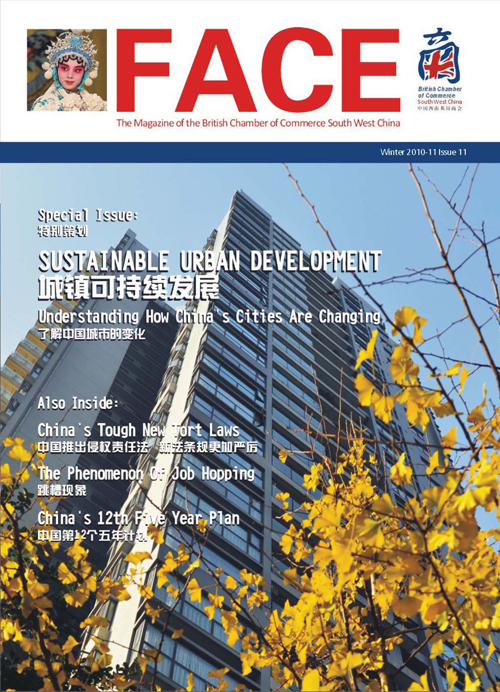
An article I wrote about the sustainable development in China’s cities was recently published in the Winter 2010/2011 Issue of the British Chamber of Commerce South West China Magazine “Face“. The piece examines the historical context under which China’s cities are currently developing and looks at some of the important decisions being made  by civic leaders, arguing that they will ultimately prove to be beneficial in the long-run.

For the readers of the China Urban Development Blog, here is a reproduction of the original piece: Continue reading

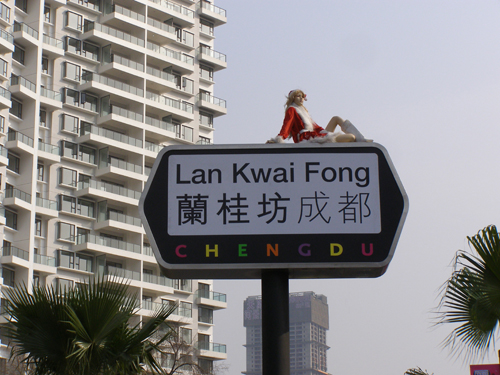
Lan Kwai Fong Entertainment District Opens in Chengdu

Lan Kwai Fong, the trendy bar district in Hong Kong, has been the island’s premier nightlife spot for the better part of three decades. Developed by Canadian investor Allan Zeman, the small collection of hilly streets above Hong Kong’s Central is an energetic zone of debauchery.

Not long ago, Chengdu, a city well-known for its love of leisure, recruited Zeman and his brand of cosmopolitan nightlife to collaborate on opening a Lan Kwai Fong location in the provincial capital. Given the city’s reputation, Zeman readily agreed and chose a site next to the Funan River in the city’s burgeoning Central Business District. Continue reading

China Linking Southeast Asia with High-Speed Rail

Kunming, Yunnan Province:   China’s Gateway to Southeast Asia

China receives a lot of well-deserved recognition for its expanding high-speed passenger rail system. Now China’s rail ambitions are extending well beyond its borders into neighboring countries. This April, construction is to begin on a rail line linking southern Yunnan province with the country of Laos to the south.

With cash in hand and the ability to build such a rail line, China is paying for the majority of the construction cost while Laos will only be responsible for 30% of the cost. This is yet another example of China exercising its policy of ‘infrastructure diplomacy’- that is, helping other developing nations pay for and build new infrastructure to promote favorable relations and gain access to natural resources. Continue reading

Kashgar: New SEZ in Xinjiang

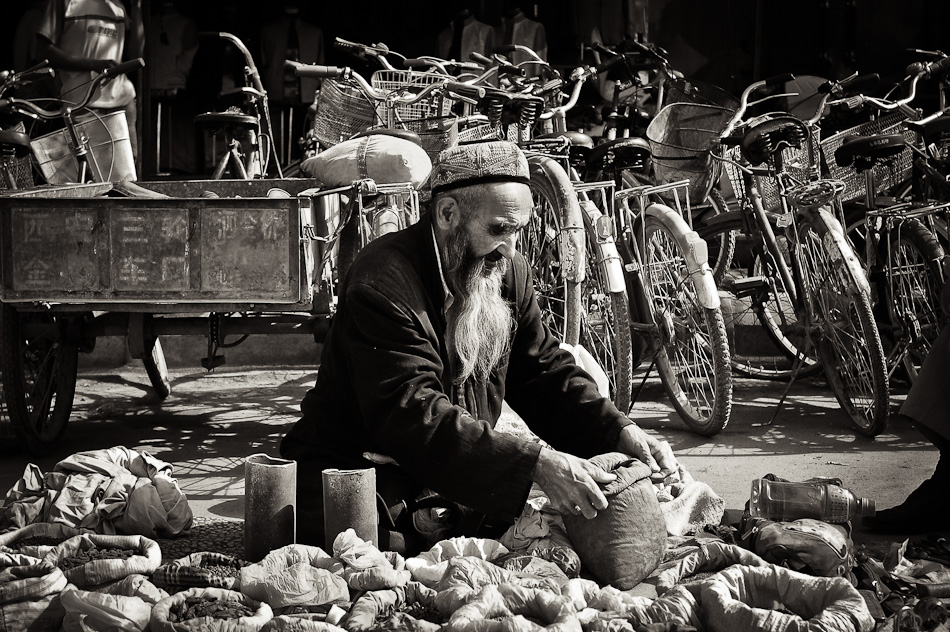
Photo courtesy of Nicolas Marino

One rising city to be on the look out for in the next decade of China development is little-known Kashgar in the country’s western Xinjiang Autonomous Region. At just under a half a million people, Kashgar (in Chinese known as ‘ka shi’) sits at the far western part of China near the borders of Kazakhstan, Kyrgyzstan, Tajikistan, Afghanistan and Pakistan, making it a strategic gateway to Central Asia.

As a matter of fact, Kashgar has more in common culturally with its post-Soviet neighbors to the west than is does with what is historically thought of as China. Once an important outpost on the Northern Silk Road, today the city is dominated by the Uyghurs, a Muslim ethnic minority of Turkic origin.

This might not be the case for much longer. Continue reading