China Regional Urbanization Trends: 2014 Edition

OLYMPUS DIGITAL CAMERAThe Economist Intelligence Unit (EIU) shared with us their new study on “China’s Urban Dreams 2014” – an update on the country’s urbanization program. With all the uncertainty about China’s property sector in the news recently, this in depth analysis gives some clarity to the often murky topic of Chinese development.

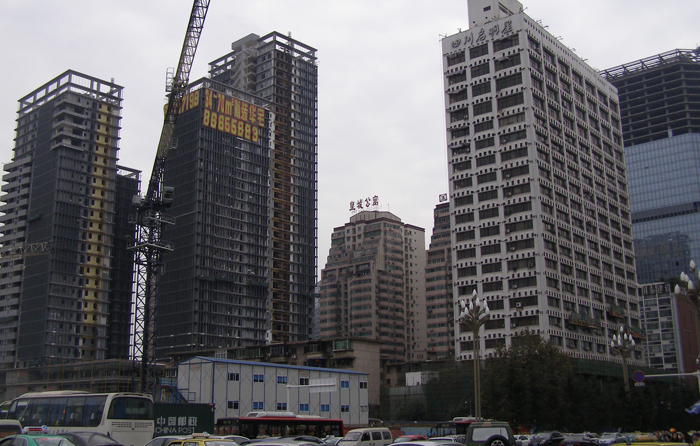
While Western media tends to paint China with one large brushstroke when discussing the country’s property sector, the reality is that real estate markets vary greatly from region to region. China, like the U.S., is a large, diverse country with many different cities and regions with varying strengths and weaknesses. If there is one takeaway from the EIU study, it’s that not all regions are created equally, and going forward, there are bound to be winners and losers. Continue reading
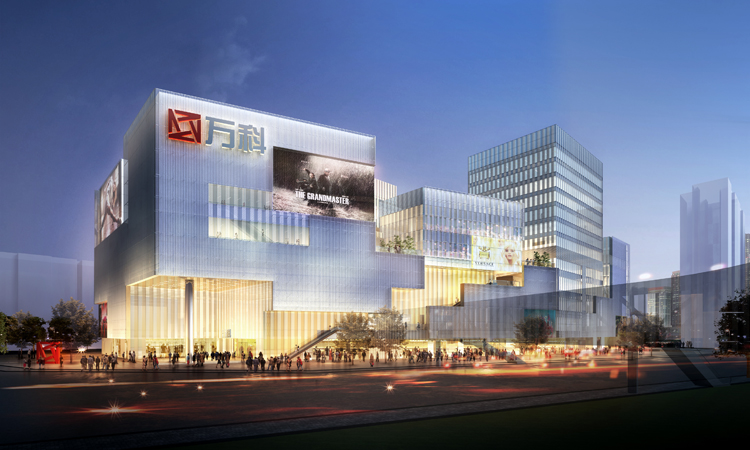
Vanke Jiugong Mixed-Use Development by SPARK Architects

0051_Vanke_Jiugong

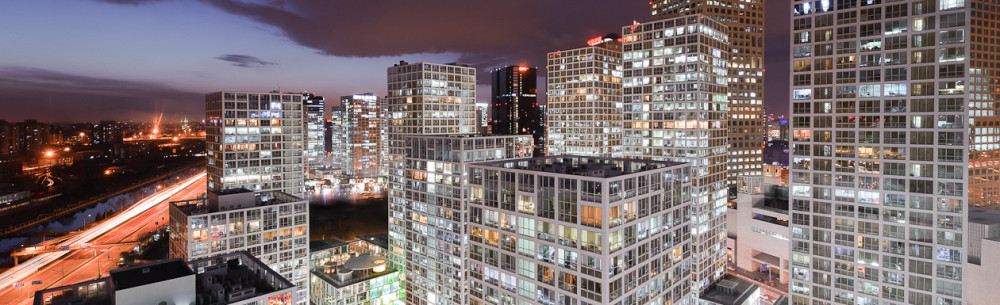
SPARK Architects have shared with us their award-winning design for a new mixed-use development in Beijing. Designed for Vanke in the city’s growing southern suburbs, the project is a mix of retail, leisure, entertainment and office programs.

Currently under construction, Vanke Jiugong is a continuation of SPARK’s investigations into the breaking up of the architectural mass of the shopping mall, and the forging of connections between ‘interiorized’ space and the city. The 127,000 sqm development will incorporate a mall, a cinema, three live-work towers, and a separate retail pavilion, with a pedestrian bridge connection to an adjacent train station. Continue reading

China In Africa: An Interview With Go West Project

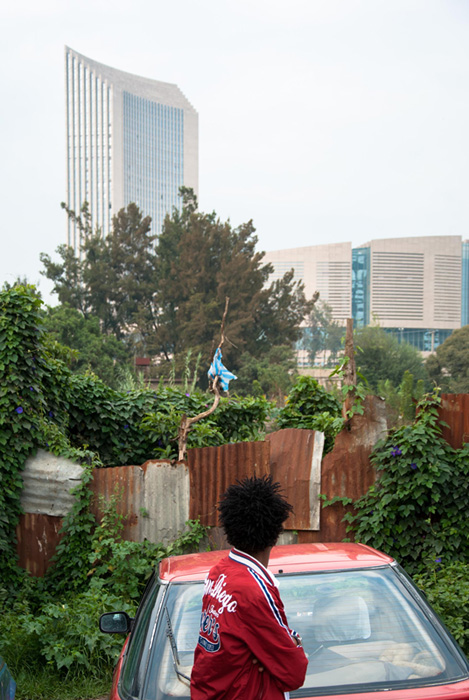
African Union Building A local looks up at the new African Union Headquarters in Addis Ababa, Ethiopia. The complex was funded entirely by Chinese money. Photo Credit: Go West Proejct

In 2009, China surpassed the U.S. to become Africa’s single largest trading partner. Yet the burgeoning relationship between China and Africa is no ordinary trading arrangement. Rather than colonizing the continent as Western powers did in the past century, China is trading infrastructure development and urbanization expertise for access to Africa’s vast natural resources. This re-balancing of trade has yet to be studied in depth as it is probably too early to tell what the impact of China’s involvement in Africa will have on the broader world’s economy.

What we can observe is the immediate impact China is having on Africa’s urban development. Luckily we have Dutch researchers Michiel Hulshof and Daan Roggeveen of the emerging cities think-tank Go West Project to explain to us what is happening on the ground.

I first met Hulshof (a journalist) and Roggeveen (an architect) at the 2011 Chengdu Biennale where they presented their research on China’s developing western metropolises (hence the name of their think-tank). Their research culminated in the book How the City Moved to Mr. Sun – China’s New Megacities (2011), which looks beyond the so-called 1st Tier cities of Beijing and Shanghai to tell the story of urbanization in the country’s heartland.

Now Hulshof and Roggeveen are looking even further, beyond China’s borders, to study what the Chinese urbanization experiment means for Africa’s cities. They were kind enough to take the time to answer some questions for us about their initial research: Continue reading

Chinese Developers on the Defensive After Accusations of Tax Evasion

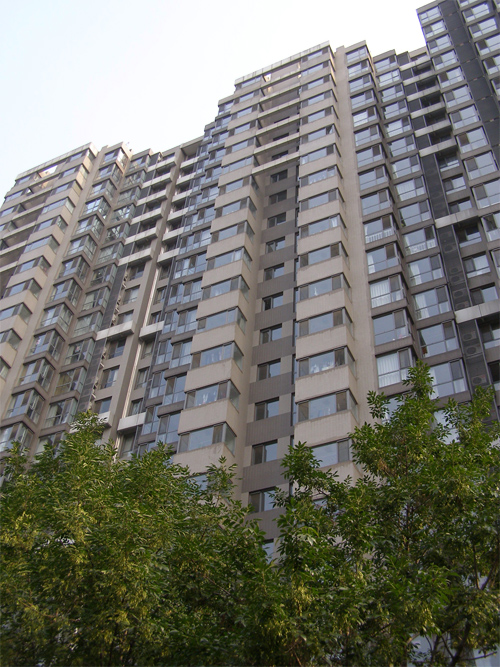
Beijing Residential Tower

As China’s state media increases its accusations of tax evasion, real estate developers are going on the defensive.

Last week, property tycoon Ren Zhiqian, Chairman of Beijing-based developer Hua Yuan Real Estate Group, posted  a message on Weibo (China’s version of Twitter) calling China state broadcaster CCTV “the dumbest pig on earth“.  This was in response to a program recently aired by CCTV accusing Vanke, another very large property developer, of owing more than 4.4 billion yuan (~$727 million USD) in unpaid taxes. The unpaid tax in question is the ‘land appreciation tax’ (LAT).

As a tax levied on the gains from the transfer of land development rights of state-owned land to real estate developers, the idea of the LAT is simple enough in theory but more complicated in practice. As explained in this South China Morning Post article from November:

“Land appreciation tax is collected by local governments, who have much leeway on deciding the actual tax rate. When a developer gets a pre-sale licence, it needs to pay a certain amount of land appreciation tax based on the asking price of the project. When the project is sold out, the exact amount of the tax will be calculated, deducting the cost of land, construction, marketing and other expenditures from the sales revenues, and multiplying the result by progressive tax rates.” Continue reading

Why is Zaha Hadid Being Copied in China?

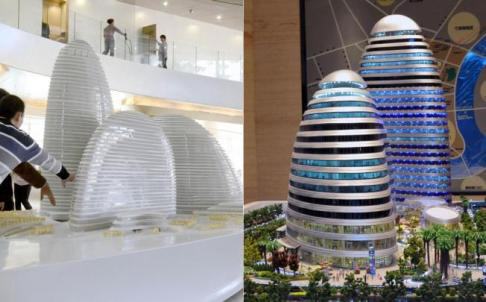
Zaha_copied in ChinaZaha Hadid’s Wangjing SOHO design (left). Chongqing Meiquan 22nd Century design (right). Image from AFP.

Earlier this year, the architecture world was in shock after a story made the rounds that a Zaha Hadid designed project in Beijing is being pirated by a developer in Chongqing. What’s surprising about this story is not the actual copying of Hadid’s design but the reaction from the design media, as if this is the first incidence of architectural piracy in China.

Of course this is not the case as building designs are routinely copied in China. However, what makes this instance unique is that while Hadid’s design (Wangjing SOHO) is still under construction, the copied version (Chongqing Meiquan 22nd Century) is set to complete first. Pan Shiyi, Board Chairman of SOHO China, Hadid’s client, has not kept quiet about his disapproval, and is now taking legal action against the developers in Chongqing. Continue reading