What the New York Times Misses in its Article About China’s Property Market

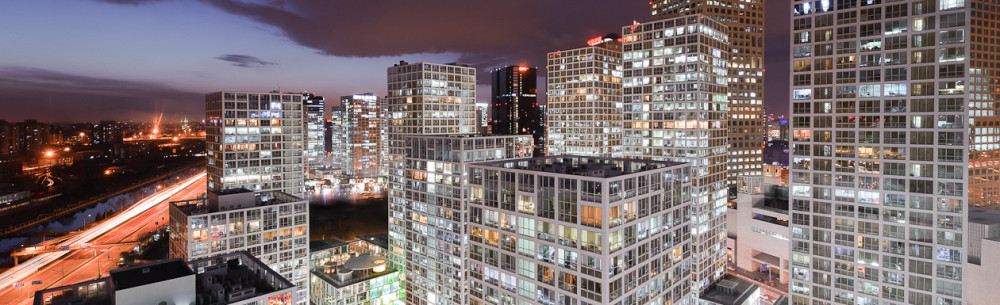
The New York Times has published yet another article about China’s real estate market and the proliferation of empty apartment buildings. This time the focus is on Jurong, a suburb of Nanjing in Jiangsu Province where a new 22-building residential complex called “Center Park” sits mostly empty. The NYT posits that what is happening in Jurong and other cities across China is cause for concern- enough so to even consider that a housing correction in China could bring down the global economy. Even though I don’t think the article gives a full picture, it is worth a read: Empty Homes and Protests: China’s Property Market Strains the World

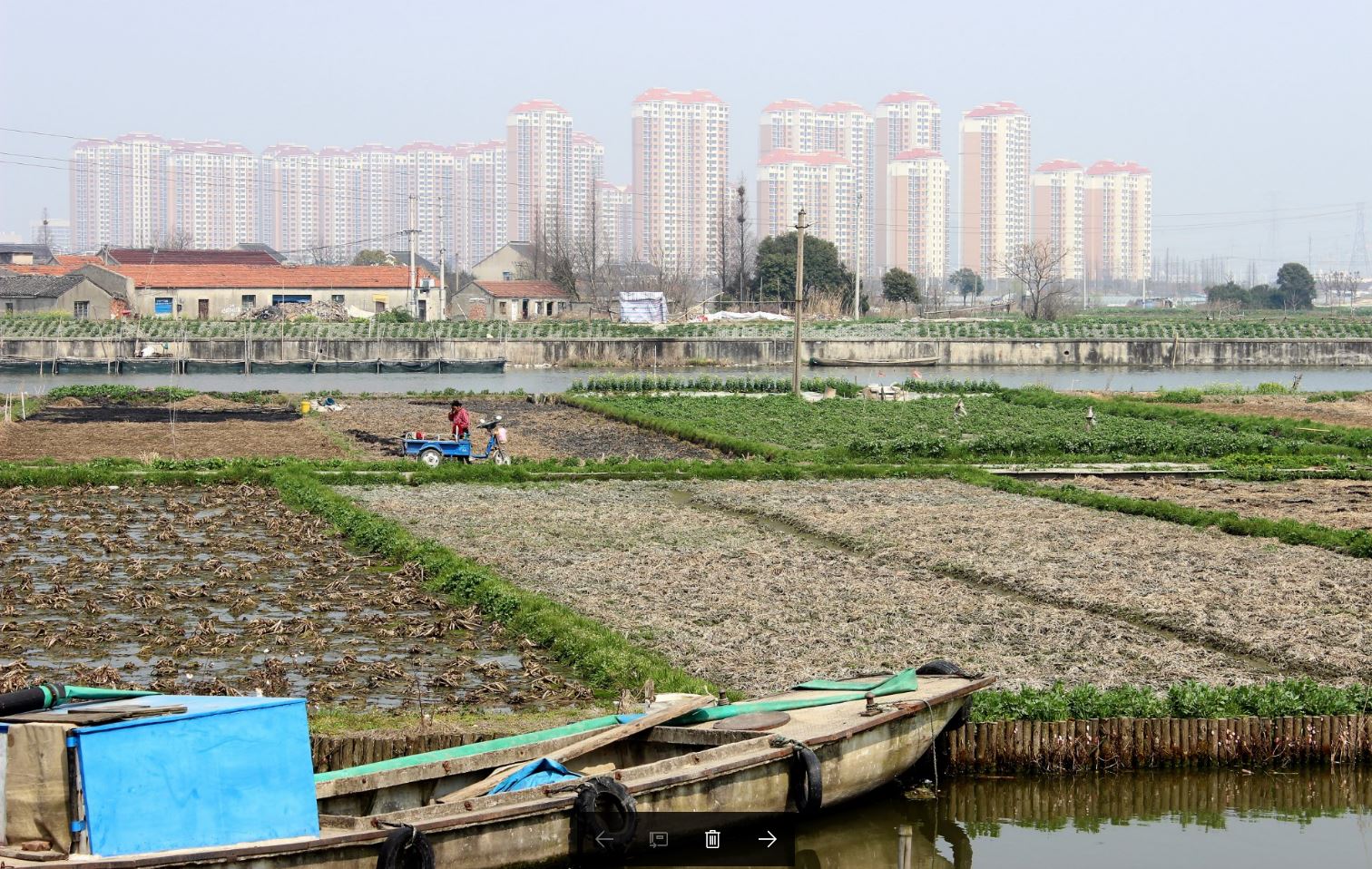
To be sure, the glut of empty apartment buildings across China is cause for concern but what is missed in the coverage of this phenomenon is the reason why there seem to be so many empty buildings. It all has to do with government policy and the singular focus on economic growth. At some level, government leaders in China at both the national and local levels understand that the building boom will not last forever and that abundant labor to construct buildings and infrastructure will not always be so easy to come by.

On top of the concerns about future labor shortages, the Chinese government has a policy of discouraging land banking/land speculation by property developers. This makes sense given that China’s cities are rapidly urbanizing. To prevent land speculation, the Chinese government has a policy whereby property developers who successfully bid on a piece of land have a limited window, usually 2-3 years or so, on which they can build. Without developing property, these developers may lose the rights to the land.

What this oftentimes leads to is buildings sprouting up where there necessarily isn’t as high of a demand (at the moment). Sometimes these developments are on the outskirts of town with plans for future transit connections to job centers. Even in the NYT article, one of the homeowners in the Center Park development in Jurong is hopeful about a new subway line that will connect it to the megacity of Nanjing in less than 5 years.

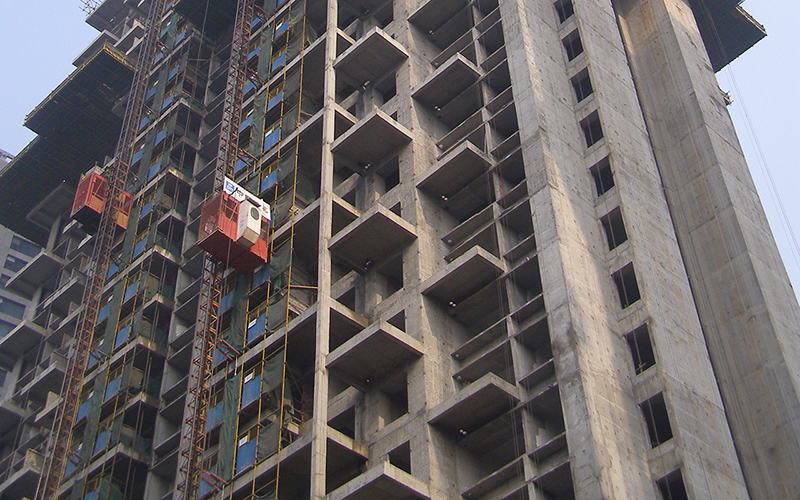
And what about developments that remain largely empty and don’t see any sign of being populated anytime soon? Well, buildings, even empty ones, have valuable construction materials that can be salvaged and reused in more productive building types in the future. Empty buildings can also serve as a type of subterfuge to get around China’s policy against land banking.

Does this make any sense? Probably not to observers from the United States and other Western countries with more mature property markets. Is China headed for a total real estate collapse and will it bring down the entire global economy with it? I do think there will be some sort of correction for sure, but I don’t expect it to be catastrophic.

In the end if (when) there is a real estate correction in China, winners and losers will be determined by location, location, location. Properties close to city centers and job centers in 1st and 2nd tier cities will hold their value whereas those further on the outskirts and in 3rd and 4th tier cities may lose significant value.

Individual buyers invested in units in these buildings may lose their shirts, but the Chinese government can always step in with some sort of assistance program to ensure that upset home buyers who see their home values drop don’t threaten social stability.

It helps to view China’s urban development and property market with a long lens. Western publications like the New York Times have been predicting a real estate market meltdown in China for well over a decade now but have consistently failed to examine why the current condition exists and all the different ways in which the country could potentially manage a correction, as insurmountable as that may seem.

CHINA’S URBAN REVOLUTION: An Interview with British Architect Austin Williams

Image courtesy of Austin Williams

Very rare is it to meet a China expat in the architecture and design field who is as an astute observer of development trends as Austin Williams. Williams is a British architect and educator who came to China six years ago at the behest of the Xi’an Jiaotong-Liverpool University (XJTLU) in Suzhou to set up a new Architecture Department there.

Prior to making the move over to China, Williams was an editor of the Architects’ Journal and authored a series of books for the Royal Institute of British Architects (RIBA). He is currently working a new book, China’s Urban Revolution: Understanding Chinese Eco-Cities“, which is due out this October.

I had the pleasure of interviewing Williams recently about his experience in China and his observations of the country’s development. We also spoke a bit about his new book and how he is generally bullish about China’s ability to quickly clean up the environmental mess that has been generated through rapid development. Continue reading

Tetris and the Challenge of Curbing Chinese Sprawl

Chinese SprawlWhile Chinese cities are growing at an unprecedented pace, much of this growth isn’t what most city planners would consider “smart” — that is, growth that is efficient, equitable, and environmentally sustainable. Instead, most Chinese cities are experiencing high levels of sprawl. This has led both Chinese and international pundits to focus on the issue of Chinese sprawl, with some even asking why Chinese cities haven’t learned lessons from American cities. Is sprawl a sign that Chinese leaders don’t know what they’re doing?

In theory, sprawl can be limited by good planning. In practice, sprawl is an exceedingly challenging phenomenon to stop. Though there are numerous complex reasons for the growth of Chinese sprawl, there are three systemic factors driving Chinese cities’ expansive growth: unprecedented Chinese growth, local government budget dependence on land sales, and the importance of GDP growth in the Chinese political promotion system. Continue reading

Q&A With Author of “The People’s Republic of Chemicals”

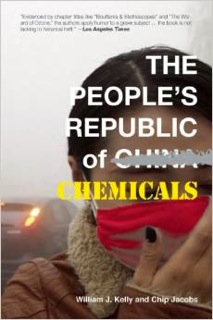
PRC cover

Nothing threatens the stability of China’s economic miracle more than the hazardous levels of pollution generated by rapid development. The rise of the private automobile, unregulated toxic factories, and the widespread use of coal-burning as an energy source have all contributed to environmental degradation across China’s cities. While in the past, these issues were swept under the rug in favor of economic growth at all costs, the rise in living standards means that China’s leadership can no longer ignore the concerns of the people they serve.

China is now at a crucial turning point where economic goals must be balanced with considerations for the environment going forward. This is not an easy problem to tackle and the solution will require a global effort.

The new book The People’s Republic of Chemicals serves as an excellent starting point in understanding how China’s pollution problem got so out of hand in the first place and what can be done to stop it (or at least slow it down). The book’s co-authors, William Kelly and Chip Jacobs, are appropriate storytellers having together written the 2008 book Smogtown about the rise and fall of pollution in mid-century Los Angeles.

William took the time to answer some questions for us about their new book:

Continue reading

5 Questions for Shaun Rein, Author of “The End of Copycat China”

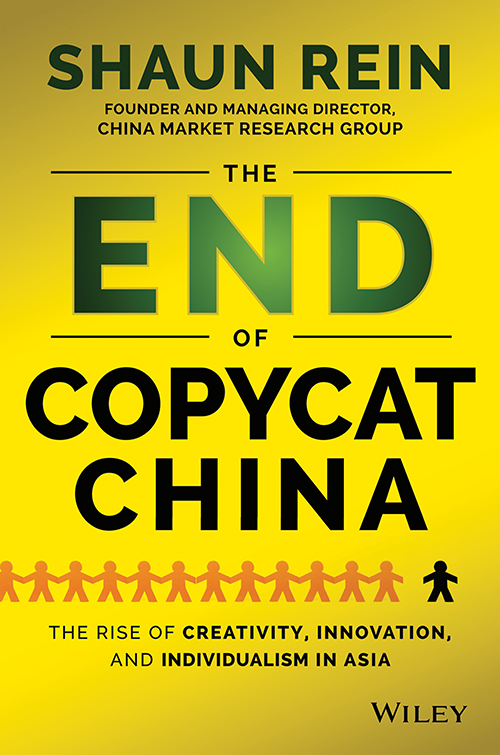
EndofCopycat China

More can happen in two years in a developing country like China than can happen in a decade or more in developed countries. And given this high speed of change, the information in business books about China’s economy can go out of date really fast.

That is why it is not surprising that although it has only been a little over two years since China analyst Shaun Rein released his first book, The End of Cheap China, he is back with another one. In that time span, China got a new leader in Xi Jinping, the one-child policy was significantly reformed, and Alibaba, the country’s biggest internet company, went public on the New York Stock Exchange.

The End of Copycat China is a natural follow up to End of Cheap China (which we featured a review of on this blog not long ago) and looks to build upon the research he’s been doing for the past decade on the ground in China.

I recently had a chance to chat with Rein about his new book and ask some questions about what he’s seen change in the past two years and, more importantly, the trends he sees influencing China’s development in the near future. Continue reading