Solving Hong Kong’s Affordable Housing Crisis

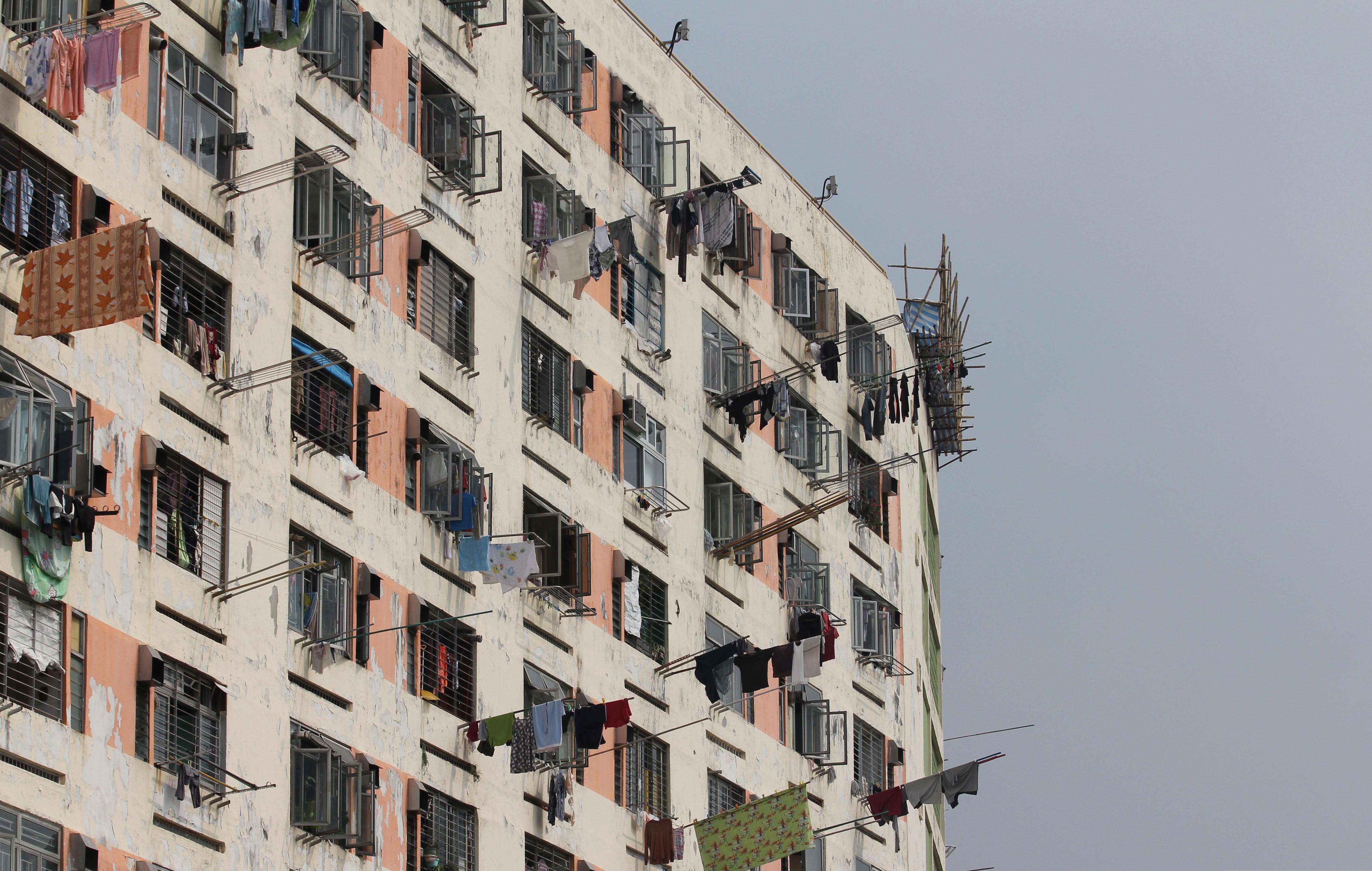
Mei Tung Estate

Mei Tung Estate – Photograph by Can Pac Swire via Creative Commons

Hong Kong’s shortage of affordable housing is becoming an increasingly pressing issue – over 30% of the population is currently living in subsidized housing, and the number of people waiting to enroll in the public housing program is growing each day. Because the Government program is so competitive, many residents are forced to live in divided units, cage homes, or rooftop settlements. Increasing rent pressure, inflation, and undesirable living conditions make homelessness the only option for many.

Hong Kong is a rich city, but wealth is extremely unevenly distributed. According to a study on 28 Asia-Pacific cities, Hong Kong ranked the lowest on its Gini Index – a measurement of income distribution. While the rich enjoy luxury condos with elevated swimming pools, the poor, which makes up about 20% of the population (a total of ~1.4 million people), struggle with ever-increasing housing prices. Continue reading
Hong Kong’s Wong Chuk Hang: How Long Will it be the “Undiscovered Gem” of HK’s Creative Community?

HK MTR Stations

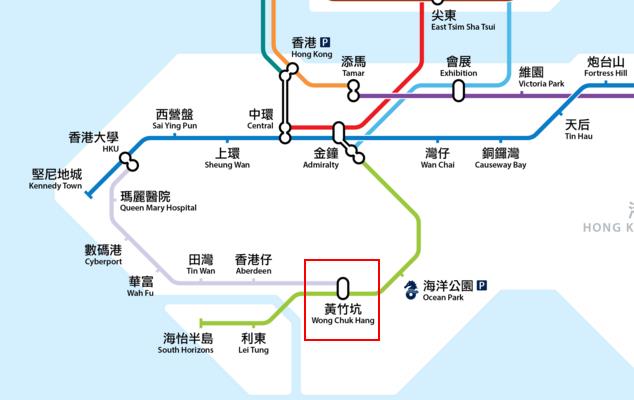
Existing & Proposed MTR Stations, map by Wikimedia

Wong Chuk Hang, one of the most hip “undiscovered” neighborhoods in Hong Kong, is undergoing massive redevelopment thanks to a planned MTR Station. Just as galleries, artist studios, hidden coffee shops, and restaurants started emerging in recent years, the community is now facing rising rents and redevelopment pressures. Will WCH become another transient alternative neighborhood that will soon be overtaken by big developers? Continue reading

Solving Problems Across City Borders: Opportunities and Challenges to Regional Planning in China

CoverPhoto v2

Photo by Thomas Depenbusch / Photo edited by Author via CC BY


China is known for having a strong central government. In many ways, this perception is very true. Unlike countries like the United States which clearly delineate federal and local (state) powers, all governmental authority in China flows from the central government. Over the past several decades, however, the central government has gradually delegated power down to local governments. Local governments now have significant decision-making authority when developing policies.

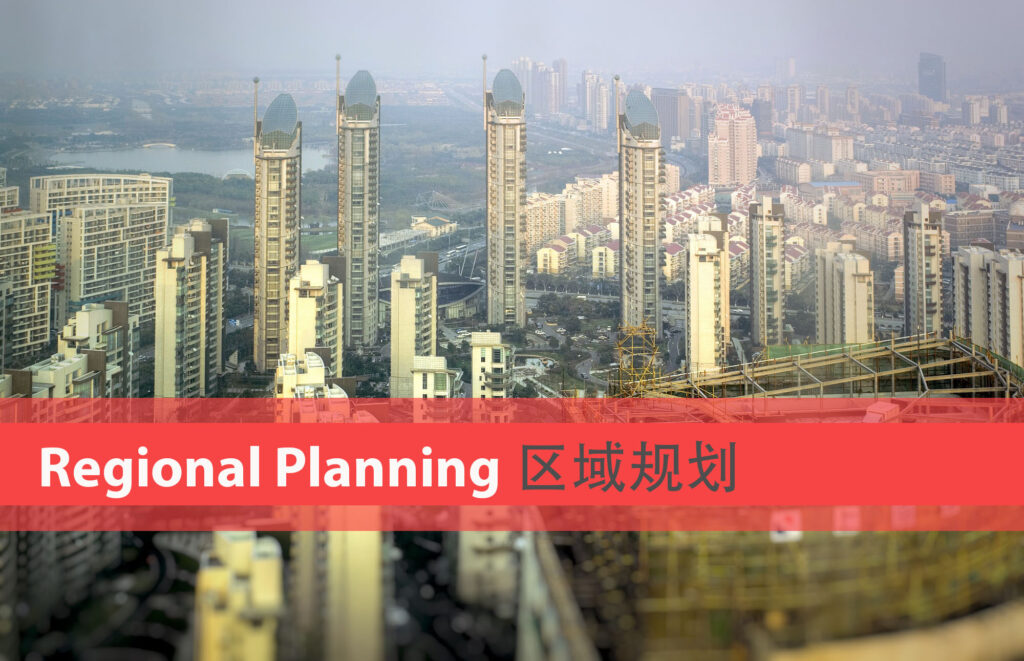
Though decentralization has spurred economic growth, it has also brought challenges. In particular, there has been a rise in local protectionism, with local government officials focusing on growth in their own municipalities at the expense of surrounding areas.

The Chinese government increasingly needs to balance the priorities of central and local governments. Furthermore, many problems, including environmental protection, are just handled better on a regional rather than city level. As such, there has been significant growth in the rise of regional plans over the past decade. Continue reading

Tetris and the Challenge of Curbing Chinese Sprawl

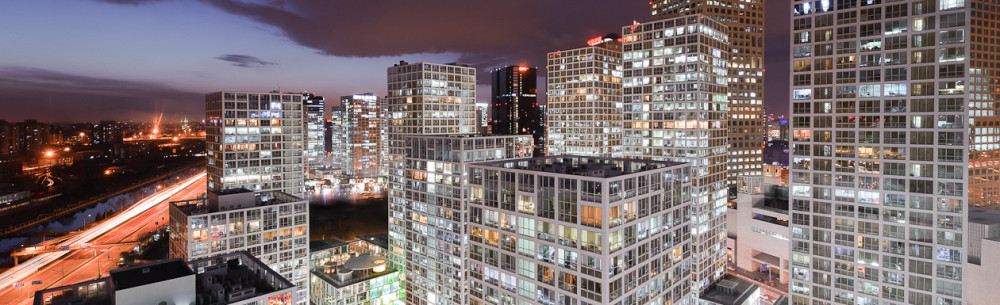
Chinese SprawlWhile Chinese cities are growing at an unprecedented pace, much of this growth isn’t what most city planners would consider “smart” — that is, growth that is efficient, equitable, and environmentally sustainable. Instead, most Chinese cities are experiencing high levels of sprawl. This has led both Chinese and international pundits to focus on the issue of Chinese sprawl, with some even asking why Chinese cities haven’t learned lessons from American cities. Is sprawl a sign that Chinese leaders don’t know what they’re doing?

In theory, sprawl can be limited by good planning. In practice, sprawl is an exceedingly challenging phenomenon to stop. Though there are numerous complex reasons for the growth of Chinese sprawl, there are three systemic factors driving Chinese cities’ expansive growth: unprecedented Chinese growth, local government budget dependence on land sales, and the importance of GDP growth in the Chinese political promotion system. Continue reading

Are Chinese Subway Systems the New American Interstate?

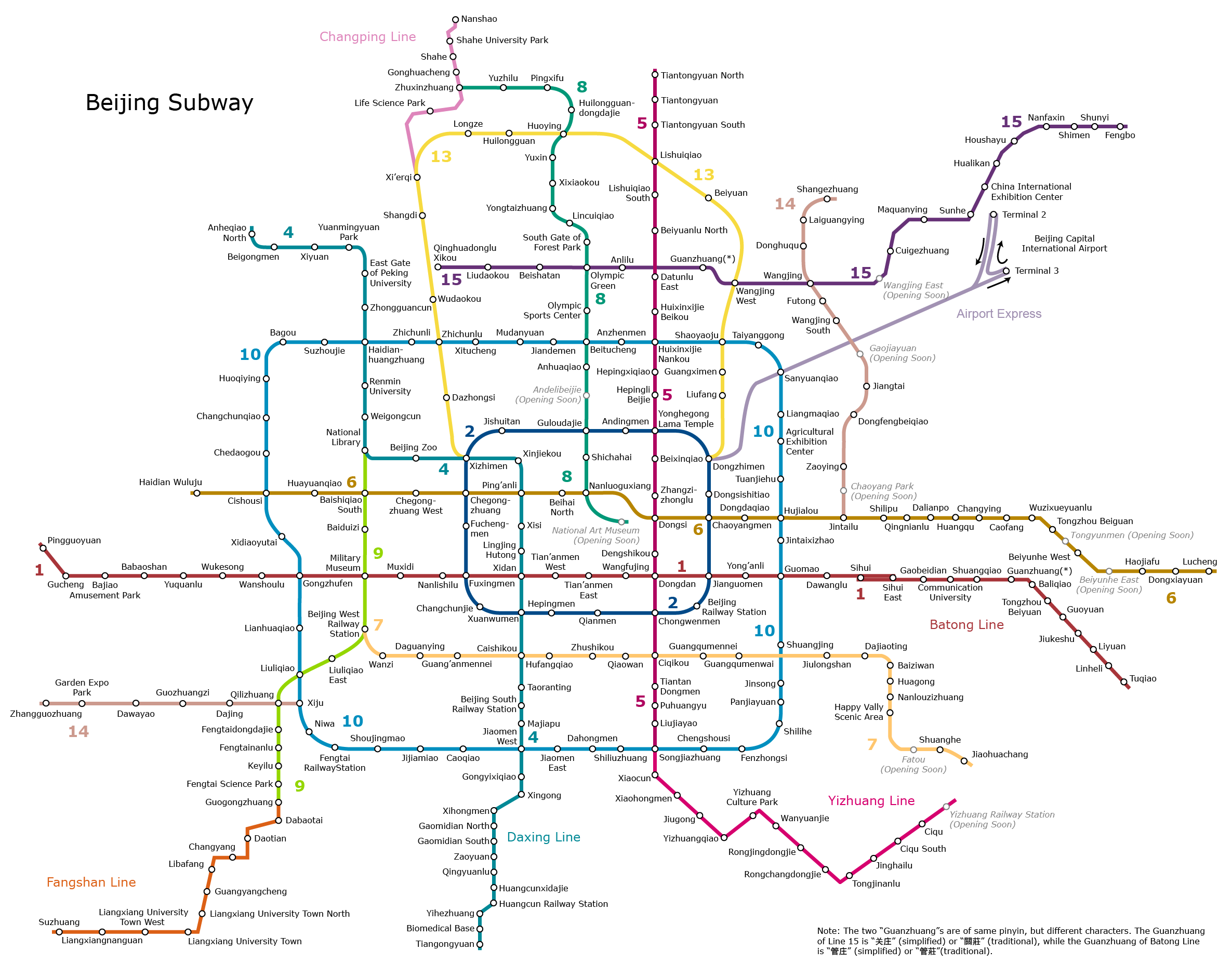
Beijing-Subway_enBeijing Subway Map

It is virtually impossible not to marvel at China’s new subway systems after spending some time in a city like Beijing or Shanghai. The relatively new subway systems allow for convenient and affordable (albeit crowded) way to travel around these cities. These infrastructure investments will certainly leave a lasting impact on Chinese cities for years to come, but what will this legacy be? Continue reading