China, America, Paul Krugman

Every few months, Nobel Prize winning economist and New York Times columnist Paul Krugman writes an opinion piece lambasting China for ‘manipulating’ its currency, the renminbi (RMB). Whenever he brings this particular issue up, Krugman argues that China is undermining America’s (and other countries) manufacturing competitiveness.

I have responded to Krugman’s previous commentaries about the Chinese currency issue before (U.S. – China Trade Complications) and discussed why letting the RMB float will not bring manufacturing jobs back to the U.S. Krugman doesn’t seem to be getting the message based on yet another  Op-Ed he penned titled China, Japan, America. Continue reading
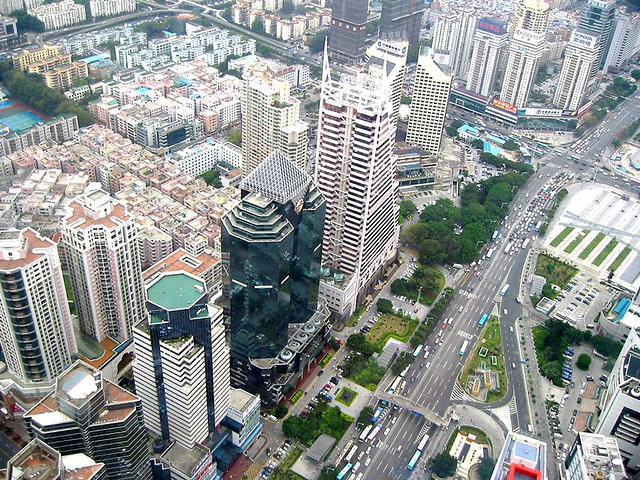
Happy Birthday Shenzhen: Special Economic Zone Turns 30

By now everyone knows the story of Shenzhen: a small fishing village in  south China’s Guangdong Province transforms into an economic powerhouse in only a matter of a few years. It was a mere 30 years ago this month when China’s then-leader Deng Xiaoping selected Shenzhen to become the country’s first Special Economic Zone (SEZ), laying the foundation for what would eventually become the most symbolic city of the new China. Continue reading

Development in the Far West: Bumpy Road Ahead

Uyghur people in Xinjiang. Photo courtesy of Nicolas Marino

One advantage of China’s top-down approach to urban development is the lack of organized resistance to new projects. Aside from the occasional story of a  lone-ranger hold out protesting imminent demolition of property, China is a nation almost completely devoid of NIMBYs (not in my backyard). This is due largely in part to the collectivist nature of China’s ethnic majority.

That majority is of course the Han people, who comprise more than 90% of China’s overall population. There is a very strong self-identification among the Han, which begets an unspoken but omnipresent social unification. This spirit has been one of the driving forces behind China’s rapid and successful urban development.

Yet as momentum shifts  westward, the outlook for peaceful development looks more uncertain. Whereas the east coast of China consists mainly of Han people, the interior areas are more mixed ethnically. The far west autonomous regions of Tibet and Xinjiang are majority-minority populations. Continue reading

Expatriate Mobility in China

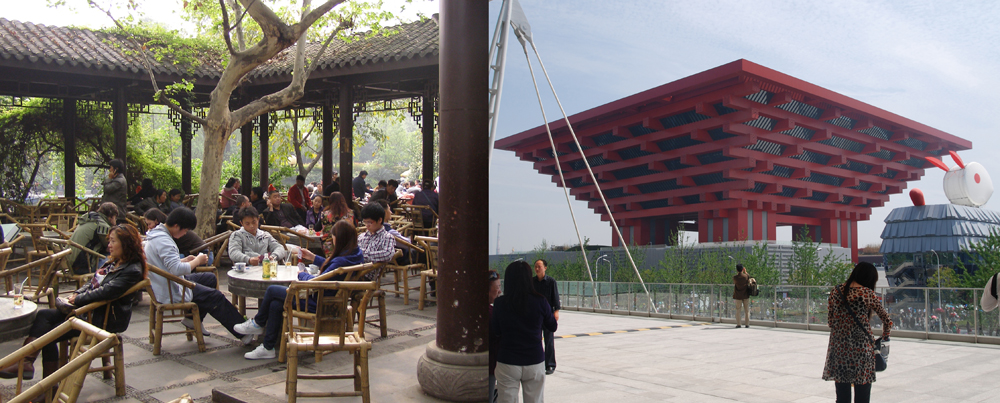
Scenes from Chengdu and Shanghai – Two Popular Cities with Expats

Since China reopened its doors 30 years ago, the country has attracted a growing expatriate population. Foreigners (known as laowai in Chinese) choose to call China home for a variety of reasons. Many come for business opportunities while others arrive out of a desire to learn about the language and culture. Whatever the reason, the allure that has intrigued people from outside the Middle Kingdom’s borders for centuries is alive today.

American writer Sascha Matuszak, who has lived in China off and on for ten years, reflects on his own experience as a laowai in a piece for Chengdu Living. He recently moved from Chengdu to Shanghai to take a new job. Relocating from one city to another for opportunity is not uncommon, both for native Chinese and foreigners living in China. Continue reading

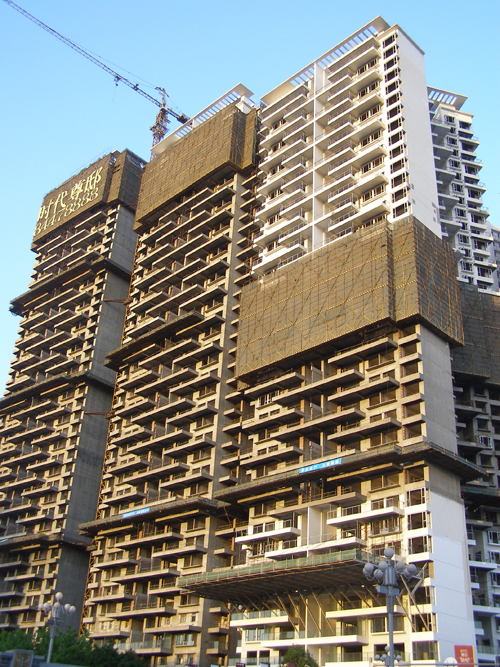
China Housing Bubble? Maybe, But Not as Bad as You Think

Many economic analysts are convinced that China is now in the midst of a  colossal housing bubble. Wendell Cox thinks otherwise. In a recent NewGeography piece titled China’s Sliver of a Housing Bubble, Cox digs through the various studies surrounding the talk of a housing bubble and focuses in on one particular study conducted by Dr. Wang Xialou for Credit Suisse.

Dr. Wang’s study differs from the others in that it takes into account the ‘grey income’ that is prevalent in China. Grey income is income not reported in official data. Anyone familiar with the earning and spending habits in China knows that under-the-table dealings are standard practice. This makes it difficult to assess real income versus housing prices and decisively conclude whether there really is a housing bubble. Continue reading