China Linking Southeast Asia with High-Speed Rail

Kunming, Yunnan Province:   China’s Gateway to Southeast Asia

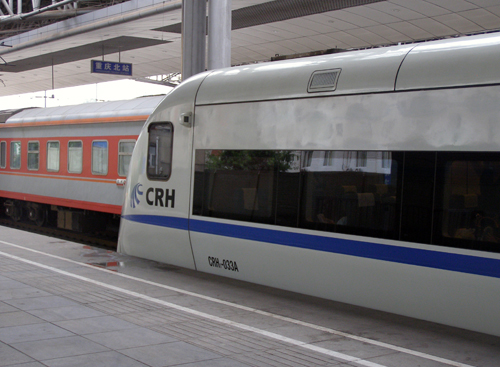
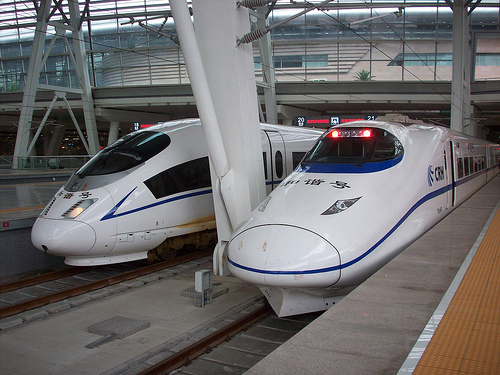
China receives a lot of well-deserved recognition for its expanding high-speed passenger rail system. Now China’s rail ambitions are extending well beyond its borders into neighboring countries. This April, construction is to begin on a rail line linking southern Yunnan province with the country of Laos to the south.

With cash in hand and the ability to build such a rail line, China is paying for the majority of the construction cost while Laos will only be responsible for 30% of the cost. This is yet another example of China exercising its policy of ‘infrastructure diplomacy’- that is, helping other developing nations pay for and build new infrastructure to promote favorable relations and gain access to natural resources. Continue reading
Beijing Roads Headed Toward Maximum Capacity

2,000 New Cars Hit Beijing Streets Everyday

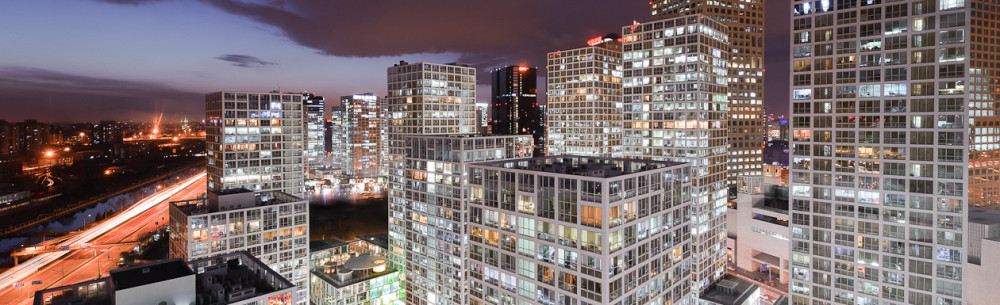
As the government and cultural center of the country, Beijing is a worthy capital of a rising China. The city’s infectious aspirations have led it to become a prime destination for ambitious Chinese from all parts of the country (and foreigners from all parts of the world). Unfortunately, this has not been without consequences to the city’s transportation network.

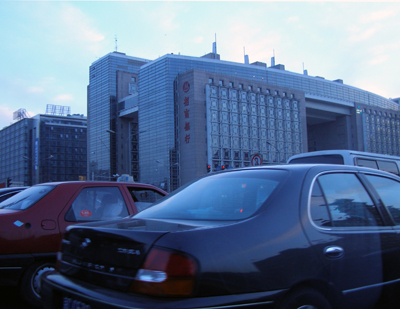
The massive growth of Beijing has put undue strain on the city’s roads. And though there has been a proliferation of new roads built in and around the city, the construction has not kept pace with the amount of new car owners. Continue reading

China High-Speed Rail Tracks In Trouble?

Photo by Matthew Felix Sun

The South China Morning Post has a worrying article about rail track construction quality for China’s new high-speed train network. The piece posits that the fast pace at which the system is being built means that quality is being sacrificed. Here is a reproduction of the article below: Continue reading

China Leaping Ahead With High-Speed Rail

Fast Train from Chengdu to Chongqing

Via Infrastructruist:

As America continues its game of high-speed rail hot potato, China has quietly finished laying the tracks for the longest bullet line in the world. Spanning more than 800 miles, the line will link the Chinese capital of Beijing with Shanghai, an economic hub on the east. Travel between the two cities will drop to four hours—down from 10—when train service begins in 2012.

Infrastructurist: China Completes World’s Longest Bullet Line

Well there you have it folks. China is pulling far ahead in transportation development with its comprehensive high-speed passenger rail system. Meanwhile, Megan McArdle at the Atlantic writes about why the U.S. will not get China’s high-speed rail. She makes some very good points, including the fact that China has a higher concentration of densely populated metropolises close to one another than in the U.S.- creating a demand for high-speed rail.

McArdle might be onto something here, as opponents of high-speed passenger rail in the U.S. worry about low ridership levels due to the sprawling, low-density nature of the country and its cities- which are, as the argument goes, better served by the private automobile.

Low ridership is definitely not a problem in China, where it is advisable to book tickets for high-speed rail routes at least 5 days in advance due to a huge demand. Whether this would be the case in the U.S. or not would be difficult to predict. For China, a comprehensive high-speed rail system is perhaps the crowning accomplishment on its path to economic and urban dominance.

Chengdu’s First Subway Line Set to Open

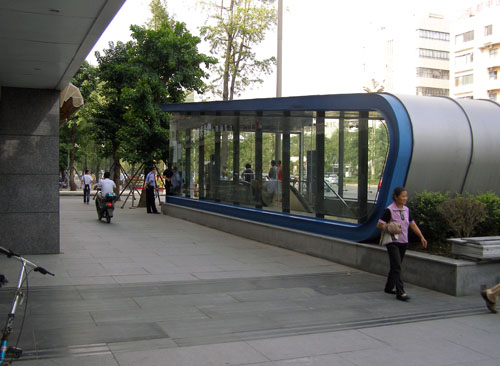
Entry shell to the new Chengdu underground metro

October 1st, 2010 will be a momentous day in the Sichuan capital of Chengdu. On this day, the city will inaugurate its first subway line: Line 1. This is significant not only because road traffic is getting increasingly worse in the city and more alternatives for getting around town are much-needed, but also because it represents to the citizens of Chengdu a rite of passage into modern China.

Line 1 of the Chengdu Metro traverses a north-south axis through the middle of the city, reaching from the older neighborhoods in the north to the newly developed high-technology zones in the south. In the center is the Tianfu Square station, where Line 1 and Line 2 are set to converge in the future making it a critical transfer hub. Continue reading