Torrential Rains and Flooding in Chengdu

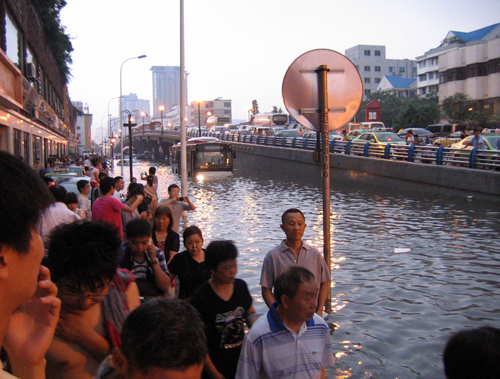
It’s been a rough start to the summer season for provinces in central and southwest China. Torrential rain and floods have affected millions, destroying crops and forcing many to evacuate their homes. Chengdu was largely spared any flooding up until this past Sunday when a heavy storm dumped on the city.

The storm blew out power lines while the flooded streets created traffic chaos throughout the city. My colleague took some photos of the flooding near his apartment in the low-lying southern part of Chengdu. Continue reading

China’s Ancient Cities and the Crisis of Branding

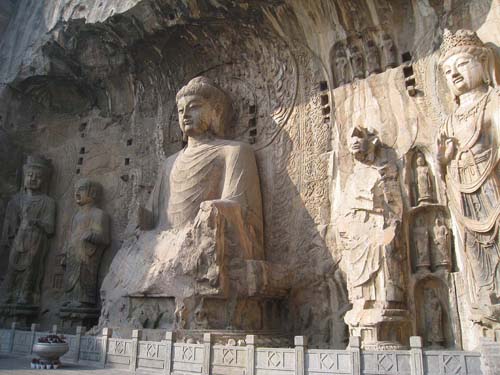
UNESCO Heritage Site, Longmen Grottoes Stone Carvings near Luoyang, Henan Province.  Photo by Easytourchina.

In April I had the honor of being invited to sit on a panel at a conference sponsored by Forbes China in Luoyang. The discussions that took place during the event centered around the next 10 years of development in central China. With Luoyang being the host, much of the discussion pertained to the city itself.

Luoyang, a city of about 6 million people, sits in China’s central plains in the northwestern part of Henan Province, 100 kilometers west of the provincial capital Zhengzhou. New buildings dot the skyline, but not at the high density one sees in 1st or 2nd tier Chinese cities. Automobile and pedestrian traffic is light as well. Wide, tree-lined streets with bike lanes and generous sidewalks lend the city a pleasant atmosphere.

What is not immediately clear traversing the streets of Luoyang is the fact that it is one of China’s Four Great Ancient Capitals. Luoyang was a seat of power for several dynasties- most prominently during the Eastern Zhou and Han dynasties, and later the Sui and Tang dynasties. Continue reading

Chengdu and Chongqing Leading the Way in Hukou Reform

The hukou system, or household registration system, is a method of accounting for the country’s population by requiring each citizen to officially register his or her place of residence.

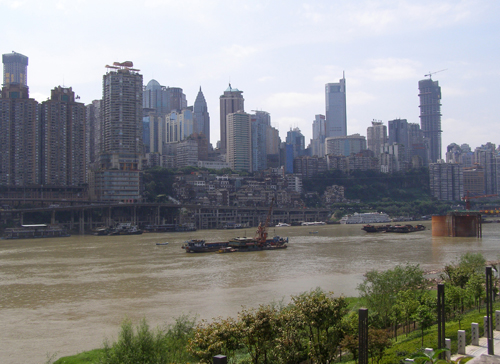
Possessing an urban hukou in a large city means that one is an official ‘resident’ of that city and eligible to receive benefits such as  access to medical insurance and education as well as the right to purchase property. This poses a problem for the floating population of rural migrants to cities who are not afforded similar benefits due to their lack of an official urban hukou.

Given the difficulty rural migrants have in obtaining an urban hukou, most have no incentive to settle in a city once their period of work is finished. This means that until the system is reformed, rural migrants will always have one foot in the big city and one foot back in the village. Continue reading

(Mis)understanding China’s Suburbs

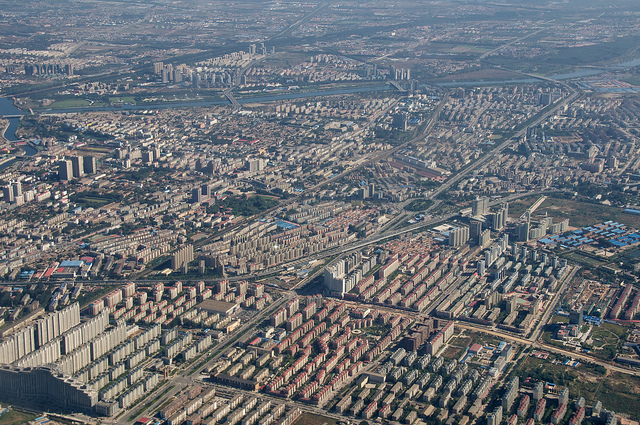
Beijing Suburbs. Photo by Manuel.A.69.

As China’s expanding cities inevitably swallow up surrounding countryside, the boundaries between urban, rural and suburban areas become progressively more blurred. What today might be farmland could tomorrow be the next central business district sprouting state-of-the-art skyscrapers. This fast-changing reality makes defining what constitutes urban vs suburban with developed-world standards insufficient. China needs its own definitions. Continue reading

Development in the Far West: Bumpy Road Ahead

Uyghur people in Xinjiang. Photo courtesy of Nicolas Marino

One advantage of China’s top-down approach to urban development is the lack of organized resistance to new projects. Aside from the occasional story of a  lone-ranger hold out protesting imminent demolition of property, China is a nation almost completely devoid of NIMBYs (not in my backyard). This is due largely in part to the collectivist nature of China’s ethnic majority.

That majority is of course the Han people, who comprise more than 90% of China’s overall population. There is a very strong self-identification among the Han, which begets an unspoken but omnipresent social unification. This spirit has been one of the driving forces behind China’s rapid and successful urban development.

Yet as momentum shifts  westward, the outlook for peaceful development looks more uncertain. Whereas the east coast of China consists mainly of Han people, the interior areas are more mixed ethnically. The far west autonomous regions of Tibet and Xinjiang are majority-minority populations. Continue reading