Beijing Roads Headed Toward Maximum Capacity

2,000 New Cars Hit Beijing Streets Everyday

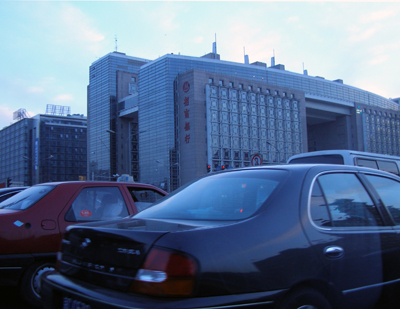
As the government and cultural center of the country, Beijing is a worthy capital of a rising China. The city’s infectious aspirations have led it to become a prime destination for ambitious Chinese from all parts of the country (and foreigners from all parts of the world). Unfortunately, this has not been without consequences to the city’s transportation network.

The massive growth of Beijing has put undue strain on the city’s roads. And though there has been a proliferation of new roads built in and around the city, the construction has not kept pace with the amount of new car owners. Continue reading

China High-Speed Rail Tracks In Trouble?

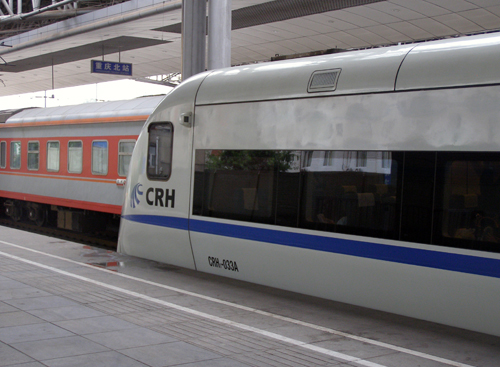
Photo by Matthew Felix Sun

The South China Morning Post has a worrying article about rail track construction quality for China’s new high-speed train network. The piece posits that the fast pace at which the system is being built means that quality is being sacrificed. Here is a reproduction of the article below: Continue reading

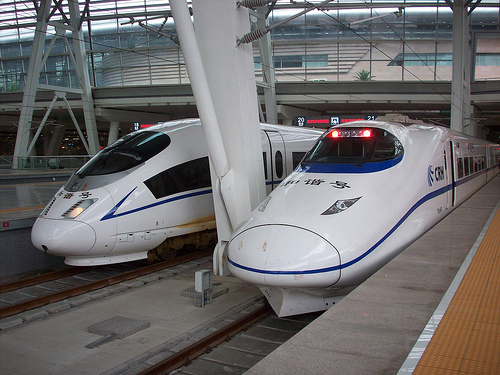
China Leaping Ahead With High-Speed Rail

Fast Train from Chengdu to Chongqing

Via Infrastructruist:

As America continues its game of high-speed rail hot potato, China has quietly finished laying the tracks for the longest bullet line in the world. Spanning more than 800 miles, the line will link the Chinese capital of Beijing with Shanghai, an economic hub on the east. Travel between the two cities will drop to four hours—down from 10—when train service begins in 2012.

Infrastructurist: China Completes World’s Longest Bullet Line

Well there you have it folks. China is pulling far ahead in transportation development with its comprehensive high-speed passenger rail system. Meanwhile, Megan McArdle at the Atlantic writes about why the U.S. will not get China’s high-speed rail. She makes some very good points, including the fact that China has a higher concentration of densely populated metropolises close to one another than in the U.S.- creating a demand for high-speed rail.

McArdle might be onto something here, as opponents of high-speed passenger rail in the U.S. worry about low ridership levels due to the sprawling, low-density nature of the country and its cities- which are, as the argument goes, better served by the private automobile.

Low ridership is definitely not a problem in China, where it is advisable to book tickets for high-speed rail routes at least 5 days in advance due to a huge demand. Whether this would be the case in the U.S. or not would be difficult to predict. For China, a comprehensive high-speed rail system is perhaps the crowning accomplishment on its path to economic and urban dominance.

China, Japan, America

Japanese Retail Chain Uniqlo at Chengdu’s Chunxi Lu Shopping Street

After spending the previous two weeks in the U.S. visiting friends and relatives, I returned to chaos in Chengdu last week. Just a few blocks from my apartment, protests were being held at the city’s main shopping street, Chunxi Lu, against Japanese-owned businesses. I had no idea this was going on until I was alerted by my friends over at Chengdu Living who were there documenting the scene with photos and video.

This anti-Japanese demonstration came about due to a recent dispute about the ownership of the Diaoyu Islands in the Pacific. The cultural rift between the two countries goes deeper than that though, with bitter feelings about Japan’s invasion of China during World War II still prevalent among those living in mainland China. Continue reading

Thomas Friedman to America: China is Kicking Our Butt

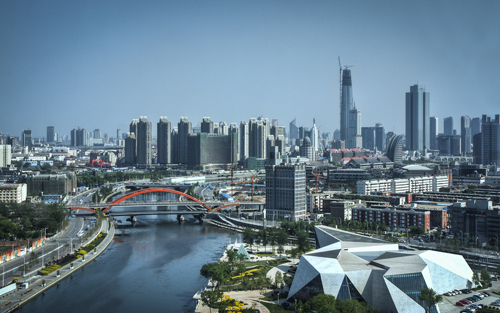
Tianjin. Photo by Sarmu

New York Times foreign affairs columnist Thomas Friedman was in Tianjin earlier this month for the 2010 Summer Davos World Economic Forum. His trip yielded a pair of opinion pieces blasting America for its lagging economic progress in comparison to rising China.

The title of Friedman’s first piece, Too Many Hamburgers?, references a skit produced for the Davos Forum where four children wearing four different flags – Chinese, American, Indian and Brazilian- are about to run a race. The child with the American flag bolts ahead only to lose ground shortly after due to a bout of cramps. The others wonder what is wrong with him until one of them says, “he ate too many hamburgers.” Continue reading