Guangzhou’s New Central Business District: Zhujiang New Town

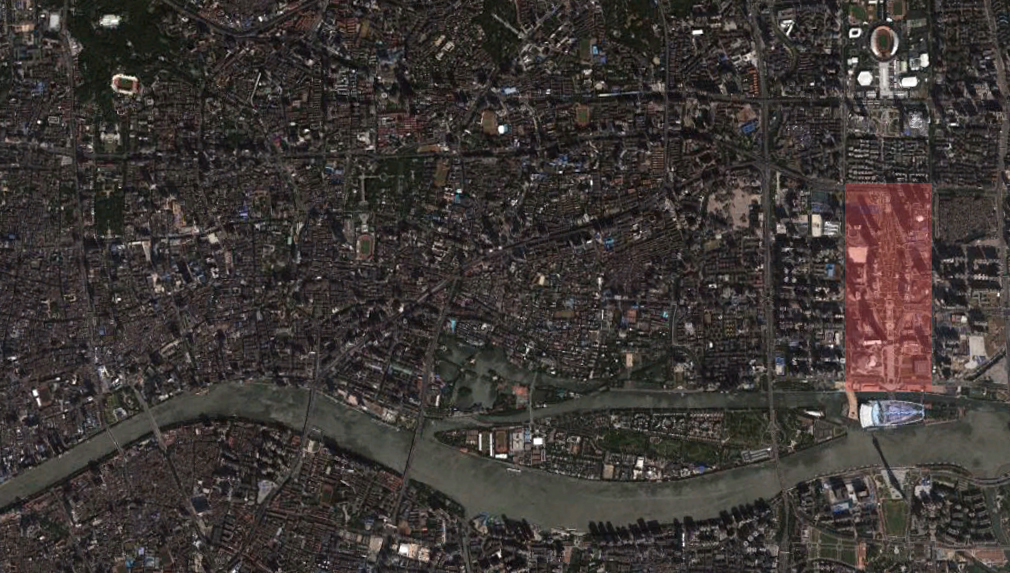
Guangzhou’s New CBD (highlighted in red) sits north of the Pearl River and east of the Old City in what not long ago was agricultural land

Recently I visited Zhujiang New Town, Guangzhou’s newly built central business district (CBD). While Guangzhou itself is hardly a new city (its status as an international trading port goes back centuries), the CBD is brand new, built on what used to be agricultural land well outside of the historic city core. Though thanks to the city’s expanding underground metro and freeway system, Zhujiang New Town doesn’t seem so far away.

Currently Zhujiang New Town is best known as the site for the Guangzhou Opera House and many of the athletic venues for the 2010 Asian Games. One unique aspect about Guangzhou’s CBD compared with others around China is its marriage of cultural buildings with commercial office towers. In this regard, Zhujiang New Town is not much different from the planned ‘downtowns’ of sprawling 20th Century American cities like Los Angeles, Phoenix and Houston. Continue reading
Deindustrializing Beijing: Images from the Decommissioned China National Steel Factory

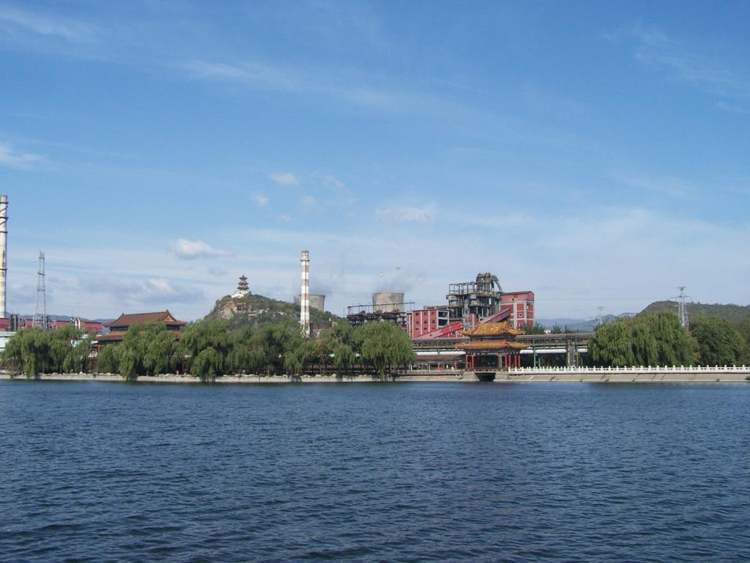
Beijing’s poor air quality is a well-documented phenomenon, yet what is often not considered is the fact is that the municipality has taken steps in recent years to deindustrialize and move its polluting factories outside the city to neighboring provinces (mainly Hebei Province). Unfortunately the closure of factories doesn’t seem to have done much to abate Beijing’s air quality problems as an increasing number of private automobiles continue to clog the city’s roads. That being said, Beijing did try its best to at least keep its air clean for the two weeks of the Summer Olympics back in 2008.

One of the most high-profile examples of this effort was the permanent closure of the China National Steel Factory in western Beijing- one of the largest steel mills in the country. My friend and Beijing resident Daniel Garst, an American writer, recently had the opportunity to visit the decommissioned factory and take some nice shots of the slowly decaying complex.

As the future remains uncertain for the former steel factory, it presently serves as a reminder of Beijing’s industrial past and is a prime location for shooting photography and filming commercials. Perhaps the factory will be reused in the future as a commercial/entertainment district as developers take advantage of the ‘industrial chic’ aesthetic to redevelop other decommissioned factories around the country.

For now, please enjoy the following images of the abandoned complex. Continue reading

Speculation: China’s Proposed Eco-Cities

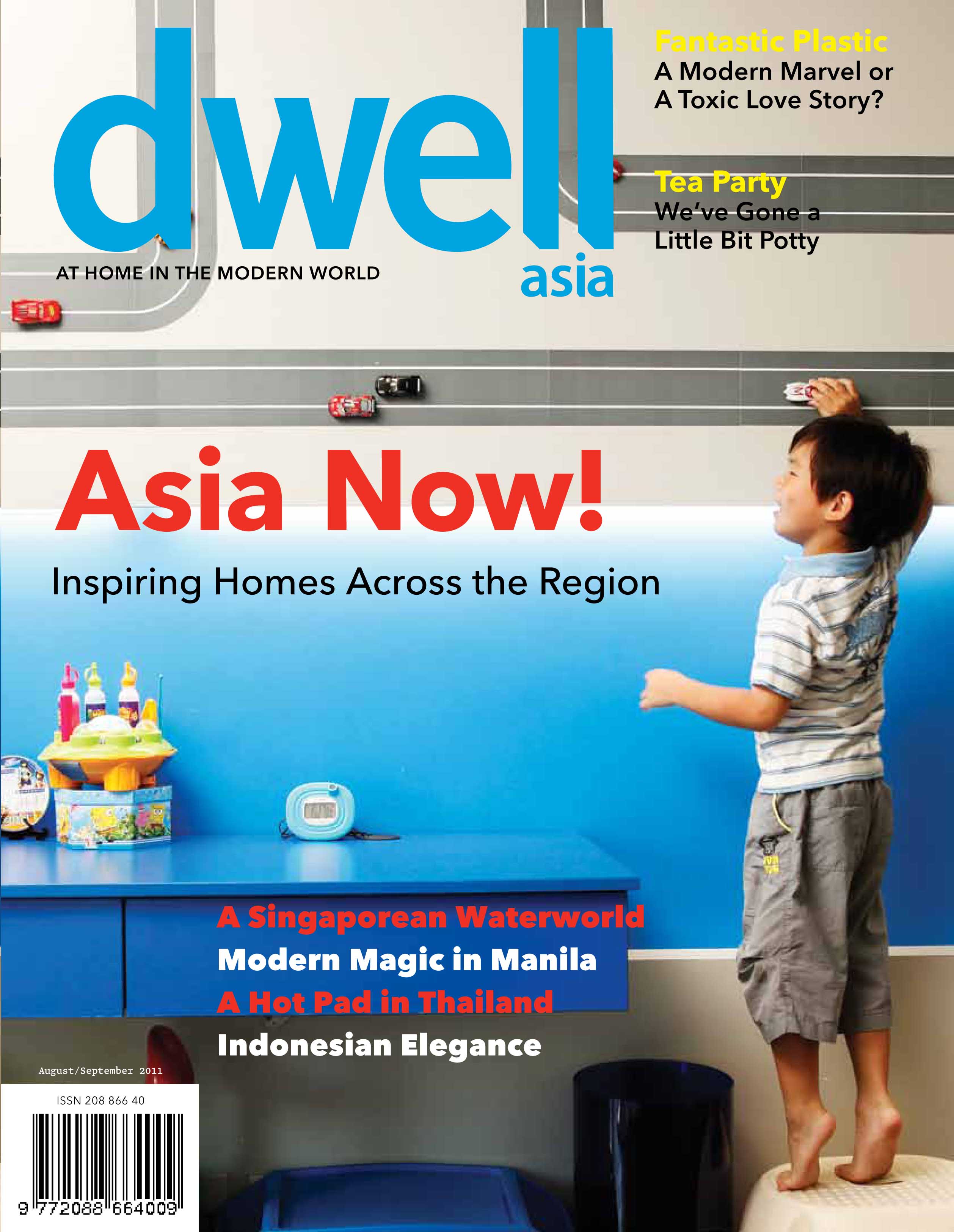
A piece I wrote about China’s proposed eco-cities appeared recently in the  inaugural issue of Dwell Asia magazine. The article takes a look at two proposed eco-cities, Dongtan in Shanghai and the Sino-Singapore Eco-city in Tianjin, examining the implications of the ideas presented in both proposals.

For the readers of the China Urban Development Blog, here is a reproduction of the original piece:

Today’s urban development zeitgeist suggests that cities should move towards sustainable models of living to combat climate change and reduce resource consumption. Of course, how to achieve that is a subject of ongoing debate among design and planning professionals. Unfortunately, branding new developments as ‘green’, ‘eco’ or ‘sustainable’ is often a loaded attempt to satisfy marketing and public relations needs for developers and government officials.

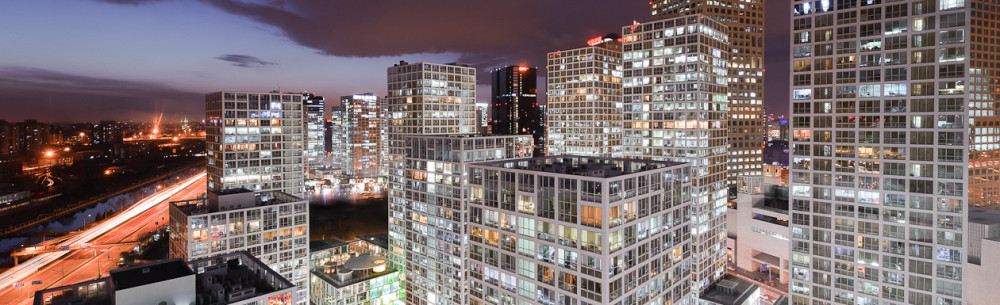
Nowhere is the use of greenwashing strategies more common than in China, where new cities practically arise overnight. Many new developments, particularly large-scale residential communities consisting of repetitive tower blocks, with names like Authentic Gardens and Spring Flower Court, claim to be environmentally friendly, but have little in the way of sustainable design strategies aside from a few patches of green space. Continue reading

Chengdu Enhances Urban Environment With Recreational Paths

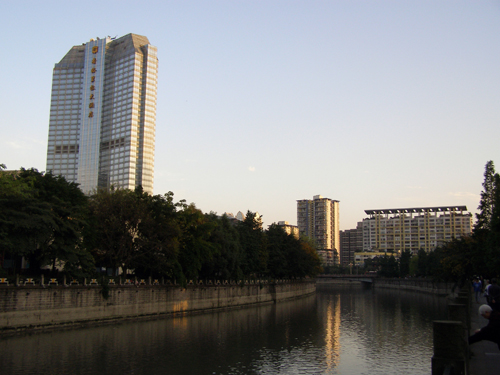
It seems that too often talk about China development focuses on ‘hard’ infrastructure projects including roads, bridges, power stations, rail systems, etc.  Yet what is often overlooked in discussions about China’s infrastructure are projects designed to enhance quality of life for city dwellers. I recently discovered one of these new projects in the city where I live, Chengdu. Continue reading

High-Speed Train Derails in Zhejiang Province

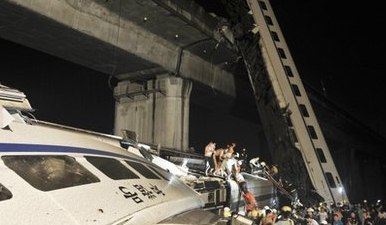
In a gigantic blow to the credibility and safety of China’s high-speed rail network, a train traveling from Zhejiang’s provincial capital of Hangzhou to the seaside city of Wenzhou derailed Saturday evening. Details at this point are still developing, but so far reports have said that the train was struck by lightning and then subsequently hit by another train, leading to two of the train’s cars falling from a bridge. So far, 16 passengers are reported dead and 89 injured. Continue reading