View from the Ground in the Chengdu-Chongqing Economic Zone

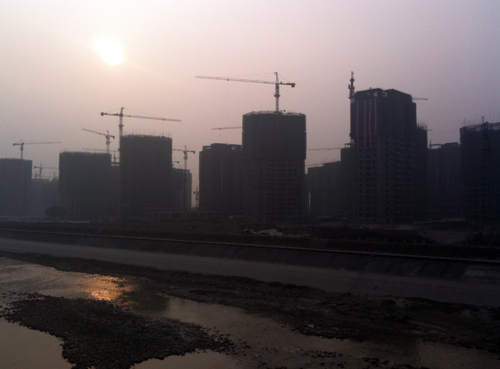
New development outside Jiangyou, Sichuan Province

The following post is an adaptation of a comment I made on my good friend and Chengdu-based American writer Sascha Matuszak’s recent ChengduLiving article about the development of the Chengdu-Chongqing Economic Zone. The comment recalls my own experience of a business trip to one of the smaller cities in the zone: Jiangyou, Sichuan Province:

Thanks for the update on the Chengdu-Chongqing Economic Zone, Sascha. Having been to several of the 3rd and 4th tier cities in Sichuan you mentioned (Suining, Mianyang, Nanchong, etc..) I’ve often wondered how the prosperity in the region’s two dominant cities (Chengdu and Chongqing) would trickle into these other cities as well.

It seems as if most of the young ambitious Chinese people I meet from these cities who now live in Chengdu feel like there is nothing left for them in their hometowns. They also tell me that if they want to move ahead the best opportunities are found in Chengdu or Chongqing.

This isn’t to suggest that Chengdu and Chongqing will continue being the only cities absorbing all the region’s young, educated and ambitious talents. As is clear from what you wrote, the government is pushing for the prosperity to spread throughout the region. And given the enormous combined population of Sichuan Province/Chongqing Municipality at a whopping 110 million people, this is certainly a reasonable plan.

Unfortunately, observations on the ground often tell a different story. About a year and a half ago I was in a city called Jiangyou (famous as the hometown of the poet Li Bai and now actually considered a part of greater Mianyang) to meet with a housing developer for a potential new project. The developer had just finished building a series of faux Italian-style villas on the outskirts of town and reveled in showing us the finished product. No one had moved in yet, but the units were sold out. Continue reading
On Poor Quality: Corruption and Construction in China

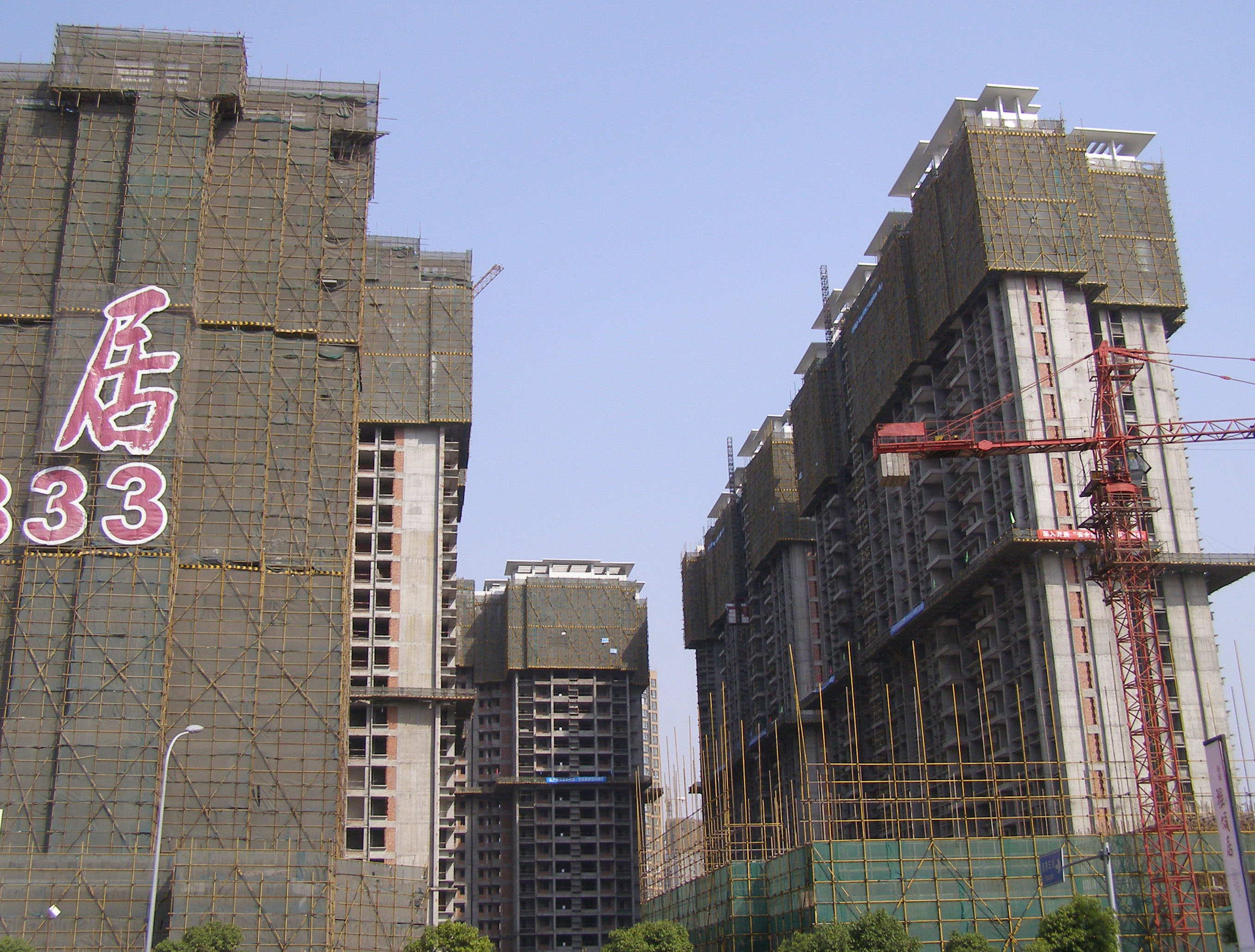
As someone who works in the building industry in China, I am often asked why the quality of construction of most new buildings is so poor. The people who usually ask are expatriates from places like Europe or America; rarely does someone native to China who hasn’t spent time overseas pose the same question.

This perhaps has to do with the fact that building quality in China is relative. Most Chinese first-time home buyers moving into brand new housing tower blocks do not have the frame of reference to evaluate finish material quality. This is exacerbated by the fact most housing developers sell units as empty concrete shells, leaving it up to the owners to fit them out with finishes and fixtures.

This is not to suggest that the thousands of recently built high-rise towers  across Chinese cities are on the verge of collapse. On the contrary, structural engineers in China tend to err on the side of caution when designing structural systems and from what I’ve seen on construction sites, they do not skimp on steel rebar reinforcing (especially here in Chengdu where the destruction from the 2008 Wenchuan Earthquake is still very fresh in memory). Continue reading

Speculation: China’s Proposed Eco-Cities

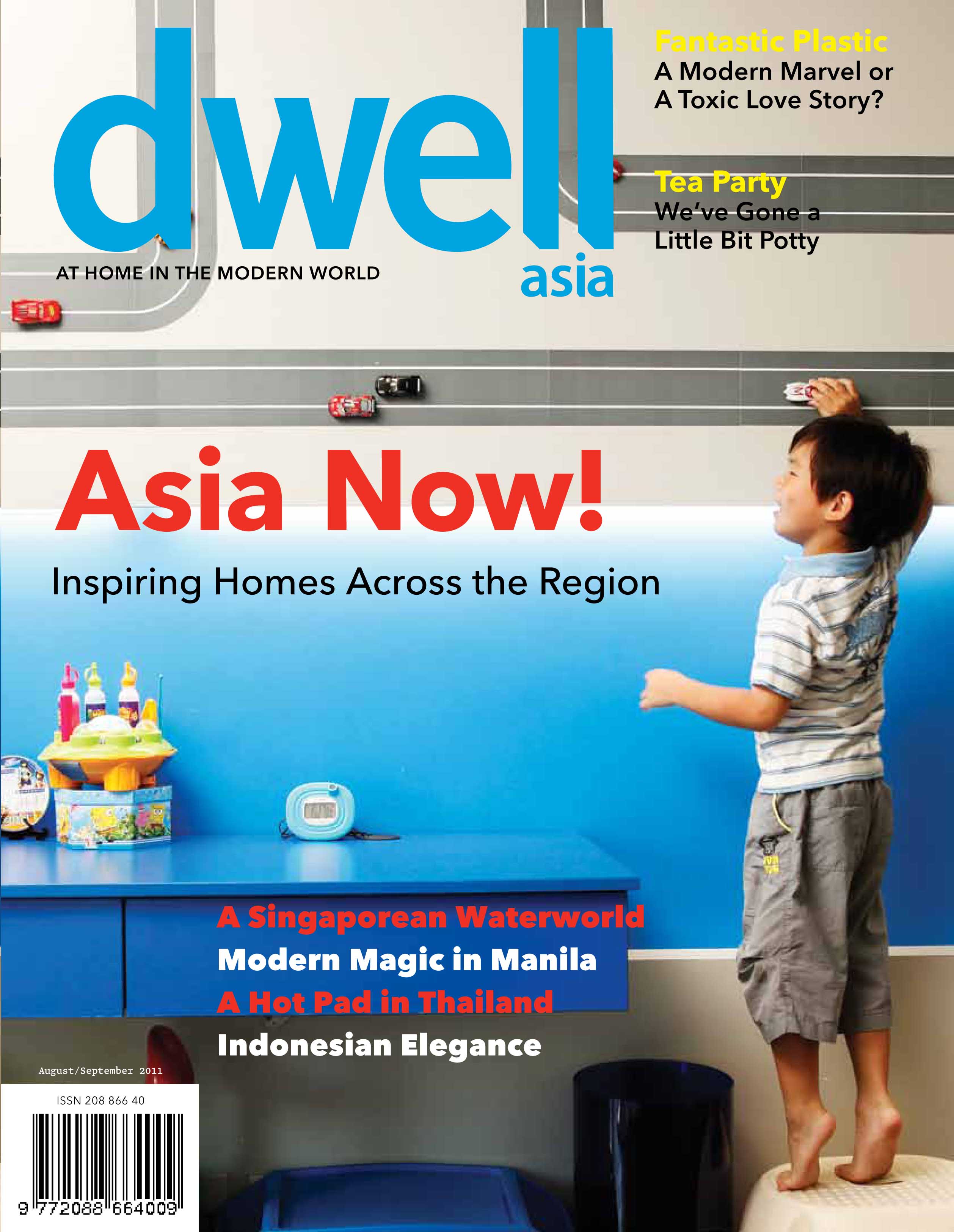
A piece I wrote about China’s proposed eco-cities appeared recently in the  inaugural issue of Dwell Asia magazine. The article takes a look at two proposed eco-cities, Dongtan in Shanghai and the Sino-Singapore Eco-city in Tianjin, examining the implications of the ideas presented in both proposals.

For the readers of the China Urban Development Blog, here is a reproduction of the original piece:

Today’s urban development zeitgeist suggests that cities should move towards sustainable models of living to combat climate change and reduce resource consumption. Of course, how to achieve that is a subject of ongoing debate among design and planning professionals. Unfortunately, branding new developments as ‘green’, ‘eco’ or ‘sustainable’ is often a loaded attempt to satisfy marketing and public relations needs for developers and government officials.

Nowhere is the use of greenwashing strategies more common than in China, where new cities practically arise overnight. Many new developments, particularly large-scale residential communities consisting of repetitive tower blocks, with names like Authentic Gardens and Spring Flower Court, claim to be environmentally friendly, but have little in the way of sustainable design strategies aside from a few patches of green space. Continue reading

9/11, China and the Enduring Symbolic Power of the Skyscraper

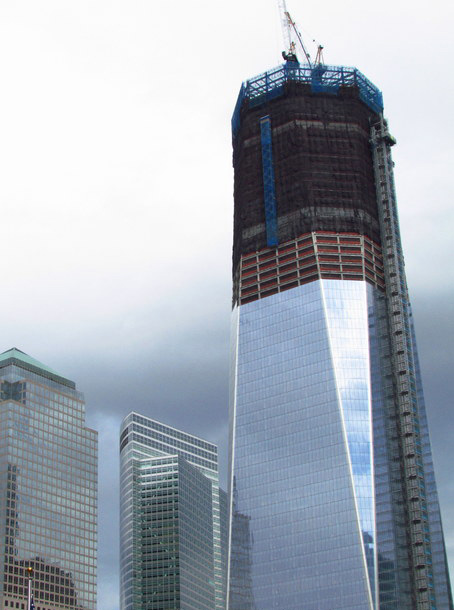
1 World Trade Center Rising in Lower Manhattan

Now that it has been about a month since the 10 year anniversary of the 9/11 attacks in the U.S., I have had some time to reflect on the enduring significance of the skyscraper. With One World Trade Center finally starting to form a new image in the Manhattan skyline, we see that in spite of protestations to building such a tower on sacred ground, construction crews move ahead to realize what will perhaps be the city’s most ambitious project in years. Some question why it has taken so long to get to this point while others still see the entire rebuilding effort as an affront to the memory of tragedy. Continue reading

Local Debt Adding Fuel to Bearish Outlook on China

Credit rating agency Moody’s recently released a report claiming that Chinese financial auditors have understated local government debt by half a trillion dollars. This is no small estimate, and the thought of so many non-performing loans on bank balance sheets is enough to make any seasoned investor bearish on China.

Of course, the majority of debt is fueled by lending that is going to local provincial and municipal governments and developers to fund new infrastructure and building projects. Banks are making these loans because of direct orders from the top-level of China’s central government. These orders were stepped up significantly after the 2008 world financial crisis to keep the country’s growth engine humming along as the export market fell off a cliff. Continue reading