MTR Island Line Extension Set to Change Hong Kong’s Western District

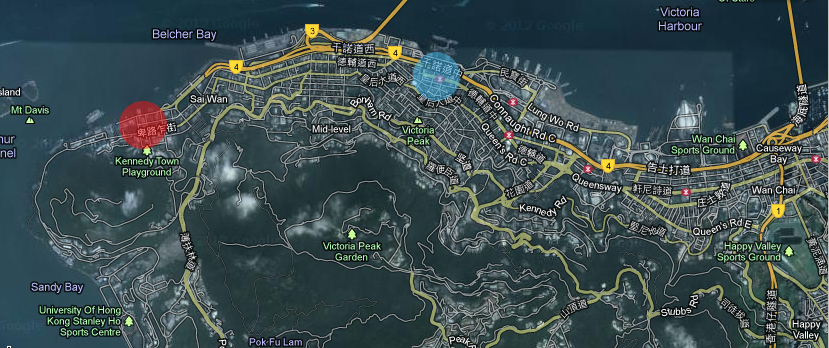
Blue Dot = Current Western Extent of MTR Hong Kong Island Line (Sheung Wan)       Red Dot = Terminus of Island Line Western Extension To Open in 2014 (Kennedy Town)
Infrastructure development continues in Hong Kong as the city’s Metro Transit Railway (MTR) extends its underground Island Line into the city’s Western District. Beginning construction in 2009, the western extension of the Island Line (dubbed the ‘West Island Line’) is set to open in 2014. The Island Line currently ends at Sheung Wan, one stop west of Central (Hong Kong’s central business district), but the extension will add three new stops, including Sai Ying Pun, Hong Kong University, and terminating at Kennedy Town. Continue reading

View from the Ground in the Chengdu-Chongqing Economic Zone

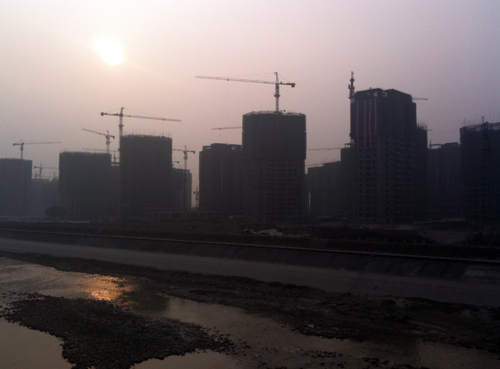
New development outside Jiangyou, Sichuan Province

The following post is an adaptation of a comment I made on my good friend and Chengdu-based American writer Sascha Matuszak’s recent ChengduLiving article about the development of the Chengdu-Chongqing Economic Zone. The comment recalls my own experience of a business trip to one of the smaller cities in the zone: Jiangyou, Sichuan Province:

Thanks for the update on the Chengdu-Chongqing Economic Zone, Sascha. Having been to several of the 3rd and 4th tier cities in Sichuan you mentioned (Suining, Mianyang, Nanchong, etc..) I’ve often wondered how the prosperity in the region’s two dominant cities (Chengdu and Chongqing) would trickle into these other cities as well.

It seems as if most of the young ambitious Chinese people I meet from these cities who now live in Chengdu feel like there is nothing left for them in their hometowns. They also tell me that if they want to move ahead the best opportunities are found in Chengdu or Chongqing.

This isn’t to suggest that Chengdu and Chongqing will continue being the only cities absorbing all the region’s young, educated and ambitious talents. As is clear from what you wrote, the government is pushing for the prosperity to spread throughout the region. And given the enormous combined population of Sichuan Province/Chongqing Municipality at a whopping 110 million people, this is certainly a reasonable plan.

Unfortunately, observations on the ground often tell a different story. About a year and a half ago I was in a city called Jiangyou (famous as the hometown of the poet Li Bai and now actually considered a part of greater Mianyang) to meet with a housing developer for a potential new project. The developer had just finished building a series of faux Italian-style villas on the outskirts of town and reveled in showing us the finished product. No one had moved in yet, but the units were sold out. Continue reading

An Architect’s Guide to Working in China

A few months ago I read a piece from Bloomberg discussing Frank Gehry’s decision to ‘turn to Asia for architecture projects as U.S. growth slows.’ In terms of big name architects from the U.S. and Europe turning to Asia for work, Gehry is late to the party. Nevertheless, it is a very telling sign that Gehry, someone who in the past could be highly selective of his clients, is looking to Asia to keep his office busy.

In the Bloomberg article, Gehry is candid about his desire to work domestically in the U.S. yet lacking the opportunity due to the depressed economic situation. As if another reminder is needed about the sorry state of the industry, Salon published a piece about the dire outlook for the profession last month titled ‘The Architecture Meltdown‘.

So aside from returning to graduate school, designing furniture or leaving the profession completely, most architects in the U.S. and other Western nations have limited options, therefore turning to emerging markets where there is work happening. China is by far the largest of these emerging markets for new buildings. Continue reading

On Poor Quality: Corruption and Construction in China

As someone who works in the building industry in China, I am often asked why the quality of construction of most new buildings is so poor. The people who usually ask are expatriates from places like Europe or America; rarely does someone native to China who hasn’t spent time overseas pose the same question.

This perhaps has to do with the fact that building quality in China is relative. Most Chinese first-time home buyers moving into brand new housing tower blocks do not have the frame of reference to evaluate finish material quality. This is exacerbated by the fact most housing developers sell units as empty concrete shells, leaving it up to the owners to fit them out with finishes and fixtures.

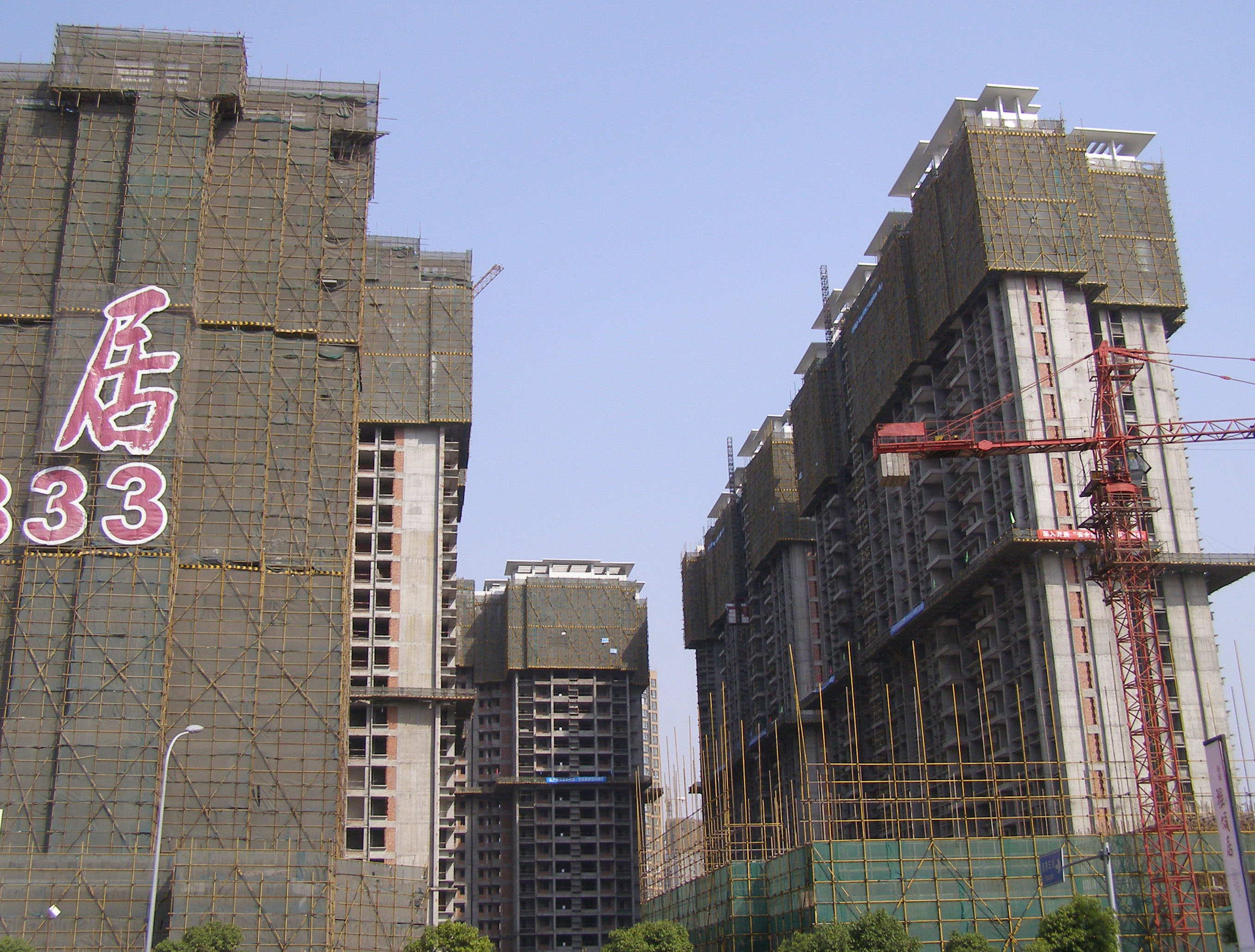
This is not to suggest that the thousands of recently built high-rise towers  across Chinese cities are on the verge of collapse. On the contrary, structural engineers in China tend to err on the side of caution when designing structural systems and from what I’ve seen on construction sites, they do not skimp on steel rebar reinforcing (especially here in Chengdu where the destruction from the 2008 Wenchuan Earthquake is still very fresh in memory). Continue reading