China’s Overheated Real Estate Market

Photo by 发课 吴

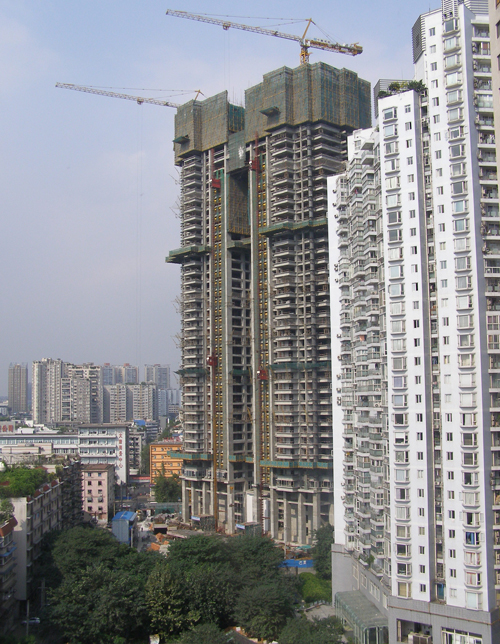
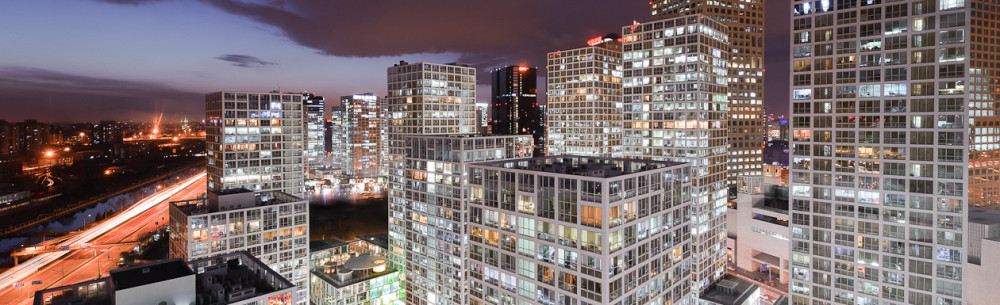
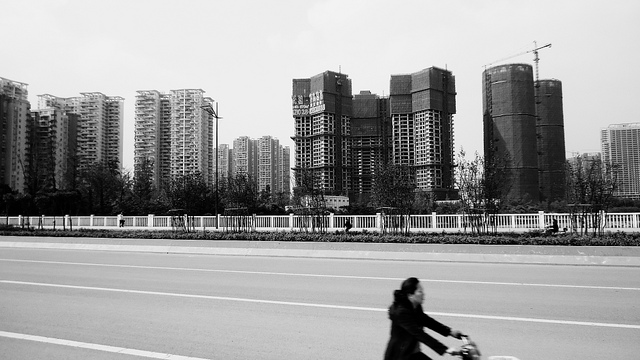
Since the end of 2015, property values have been heating up throughout China. In over 15 cities, home prices increased over 20% since September 2015. Although home prices have been steadily climbing for over a decade, the past year recorded the largest jump since 2010.

Home prices in Shanghai, Shenzhen, and Dongguan recorded over a 40% (source in Chinese) increase in less than a year, which makes property value in China’s largest cities comparable to international hubs such as New York and London. However, home buyers do not get nearly the value for their money. Homeowners in China only enjoy the right to use the property on long lease terms. Most residential property contracts grant a 70-year right of use, and the policy for renewal terms has not yet been clarified. These lease terms not only determine the limited rights of owning a home, but also dictate the quality of construction. Continue reading
Guangzhou’s New Central Business District: Zhujiang New Town

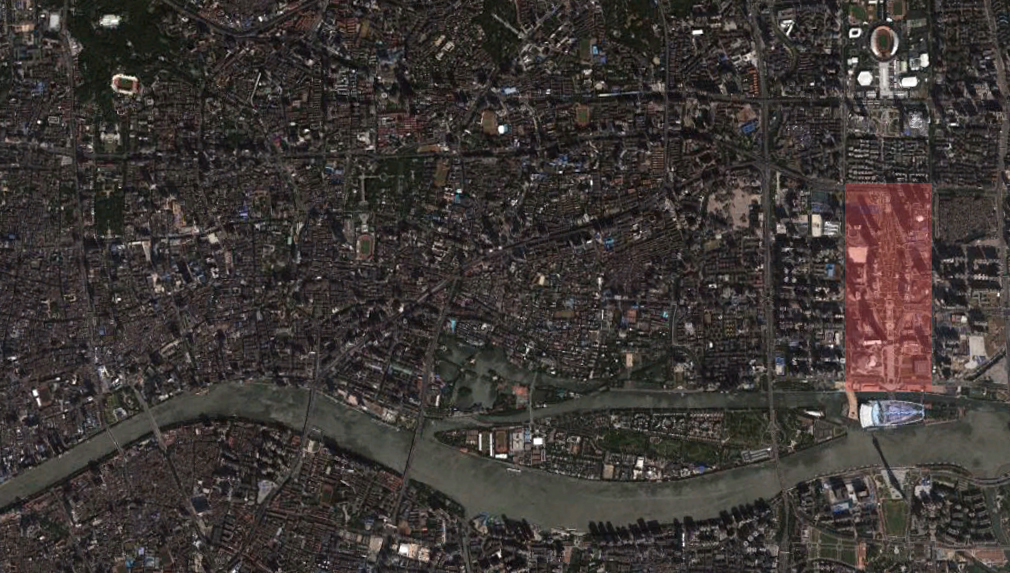
Guangzhou’s New CBD (highlighted in red) sits north of the Pearl River and east of the Old City in what not long ago was agricultural land

Recently I visited Zhujiang New Town, Guangzhou’s newly built central business district (CBD). While Guangzhou itself is hardly a new city (its status as an international trading port goes back centuries), the CBD is brand new, built on what used to be agricultural land well outside of the historic city core. Though thanks to the city’s expanding underground metro and freeway system, Zhujiang New Town doesn’t seem so far away.

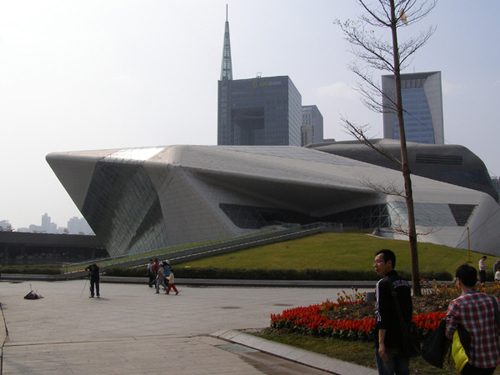
Currently Zhujiang New Town is best known as the site for the Guangzhou Opera House and many of the athletic venues for the 2010 Asian Games. One unique aspect about Guangzhou’s CBD compared with others around China is its marriage of cultural buildings with commercial office towers. In this regard, Zhujiang New Town is not much different from the planned ‘downtowns’ of sprawling 20th Century American cities like Los Angeles, Phoenix and Houston. Continue reading

The Guangzhou Opera House: An Architectural Review

Image

A few months ago I visited the recently opened Guangzhou Opera House, designed by renowned British-Iraqi architect Zaha Hadid. The project represents a new era in cultural development for Guangzhou and China. Drawing inspiration from the adjacent Pearl River, the project is conceived as  ‘pebbles in a stream smoothed by erosion’.

Guangzhou (0nce known as Canton) is one of China’s great cities, with a long history and unique culture. Sitting in the Pearl River Delta, the city was once China’s gateway to the world, serving as the country’s primary hub of international trade. Today Guangzhou remains an important city as it is the capital of prosperous Guangdong Province.

Yet as China has developed in recent years, Guangzhou has ceded some of its historic luster. No longer is Guangzhou China’s gateway to the world as nearby Hong Kong has taken that title. The special economic zone of Shenzhen, also nearby, dominates international headlines with its rapid development and status as China’s symbol modern prosperity.

Yet what Shenzhen and Hong Kong lack in culture, Guangzhou makes up for with its proud sense of the past. The opera house is an attempt to regain some of its cultural dominance in southern China. Continue reading

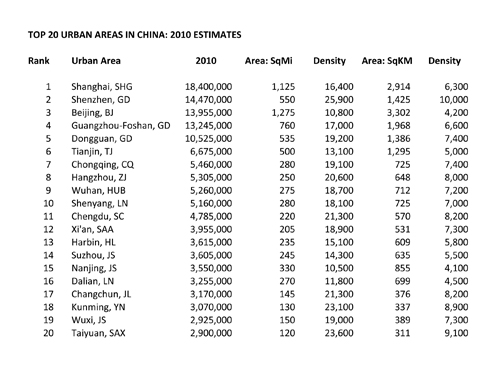
A Guide to China’s Rising Urban Areas

Source: Demographia World Urban Areas: Population & Projections: 6th Edition. http://demographia.com/db-worldua.pdf
 

I have a new piece up at NewGeography about China’s rising urban areas. Below is an excerpt from the introduction:

From a Rural to Urban Dispersion in the Middle Kingdom

China’s rise to economic prominence over the past 30 years has rested in large part to its rapid   urbanization. Prior to ‘reform and opening up’ that started in earnest during the 1970s, cities in China were viewed as pariahs by the party leadership. Millions of young urban dwellers were forced into the countryside to labor on farming communes during the Cultural Revolution. In stark contrast, today millions of rural migrants make their way to the city.

The scale at which this is happening is unprecedented. Currently, there are 85 metropolitan areas in China with more than 1 million people, compared to 51 in the US. By 2015, urban regions will account for half of China’s population and by 2025, the urban population’s share should reach about 75%. Continue reading

Fears About a China Housing Crash Overstated

Consensus among international media is that China’s economy is heading for an imminent and disastrous crash due to its inflated housing market. While there is absolutely no denying that housing prices in central parts of 1st Tier cities such as Beijing, Shanghai and Guangzhou are sky-high, this does not signal the end of China’s economic rise. If anything, the high price of housing in these cities affirms China’s rise from poor, cut-off backwater to the world’s second largest economy. Continue reading