Chengdu’s Tangba Jie – One of the World’s Coolest Neighborhoods

Last year Time Out Magazine rated Chengdu’s Tangba Jie as one of the coolest neighborhoods in the world. This is probably not surprising to residents of Chengdu or anyone who has been following the city’s development over the past decade. Tangba Jie has always been a popular spot with locals as it is host to a wide array of classic (and affordable!) Sichaun street food vendors.

Now with the completion of the adjacent Taikoo Li commercial development and new subway stops nearby at Chunxi Lu and DongMen Bridge, Tangba Jie has exploded with new boutiques, hotels and bars. What makes Tangba Jie an especially great neighborhood is that while it has evolved, it still retains a quintessentially Chengdu vibe.

My good friend Kam Panesar recently did a walk-through of Tangba Jie with a local Chengdu TV station. Kam is a British architect whose practice, Urban Hybrid Architecture, has done several projects in and around Chengdu, inlcuidng one in Tangba Jie. Check out the video below to get a better sense of one of Chengdu’s (and China’s) hottest neighborhoods.
The State of Seismic Safety in China

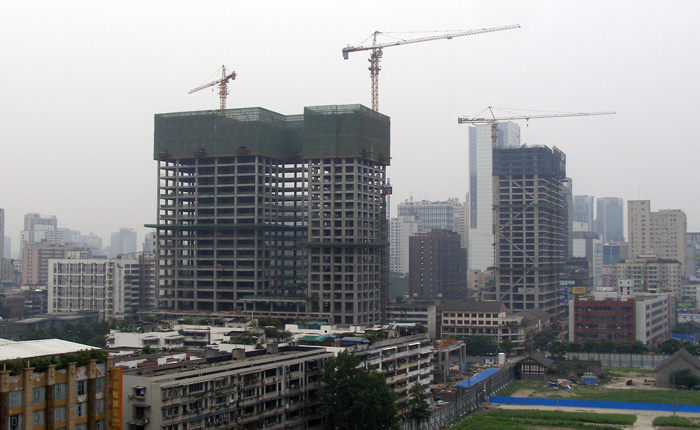
OLYMPUS DIGITAL CAMERA

The 7.0-earthquake in Ya’an, Sichuan Province this past April once again brought up the topic of construction quality in China. Images of crumbled buildings also reminded the world of the devastation that overcame the very same region 5 years ago when more than 70,000 people perished in the 2008 Wenchuan Earthquake.

Amazingly, the loss of life in the Ya’an quake was markedly smaller at only 200 (granted, so was the severity of the quake, but 7.0 is magnitude still a very significant tremor). Ideally, the goal of seismic building safety is to minimize casualties, thus April’s earthquake proved that China is stepping it up in the right direction.

I have a unique perspective on the issue having spent 2 years living and working in Chengdu, the capital of Sichuan. And given my position working on the inside of China’s construction boom, industry colleagues and acquaintances outside China frequently inquired about the country’s building safety standards. Continue reading

Organic Farming in China: Chengdu’s Anlong Village

With the ongoing spate of food safety scandals, Chinese consumers are rightly weary of the source and quality of their food. Unfortunately, food quality regulatory bodies in China remain unreliable and direct access to fresh food sources is limited for an increasingly urbanized populace. This is one of the great contradictions of China’s urban development: a country which for most of its history was majority agriculturally based is on the fast track to be one of the most urbanized nations in the world.

Status conscious Chinese urbanites would rather not associate with anything related to farming, as it evokes the recent memory of rural peasant life. For many upwardly mobile city dwellers, international restaurant chains like KFC, McDonalds and Pizza Hut are considered the best options for upper-class ‘healthy’ dining (that is, food with high caloric content).

The urban growth of China is a boon to these chains as more American consumers shun them in favor of a more organic, natural diet. The shift in American consumer preferences is reflected in the success of supermarket chain Whole Foods, local farmers markets, and the growing popularity of the Slow Food movement.

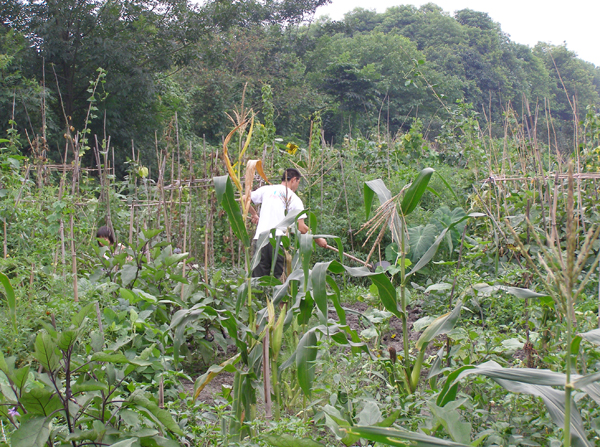
Given China’s new-found love affair with processed food and growing ambivalence about the role of agriculture, I was confident there was probably not much interest in organic farming. That was until I visited Anlong Village- a wholly organic, zero waste farm 50 km northwest of central Chengdu. With a full-time population of 3,000 residents, Anlong Village is sponsored by the Chengdu Urban Rivers Association (CURA), a local non-profit NGO. Continue reading

View from the Ground in the Chengdu-Chongqing Economic Zone

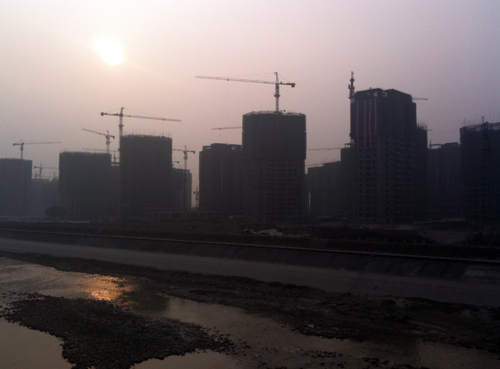
New development outside Jiangyou, Sichuan Province

The following post is an adaptation of a comment I made on my good friend and Chengdu-based American writer Sascha Matuszak’s recent ChengduLiving article about the development of the Chengdu-Chongqing Economic Zone. The comment recalls my own experience of a business trip to one of the smaller cities in the zone: Jiangyou, Sichuan Province:

Thanks for the update on the Chengdu-Chongqing Economic Zone, Sascha. Having been to several of the 3rd and 4th tier cities in Sichuan you mentioned (Suining, Mianyang, Nanchong, etc..) I’ve often wondered how the prosperity in the region’s two dominant cities (Chengdu and Chongqing) would trickle into these other cities as well.

It seems as if most of the young ambitious Chinese people I meet from these cities who now live in Chengdu feel like there is nothing left for them in their hometowns. They also tell me that if they want to move ahead the best opportunities are found in Chengdu or Chongqing.

This isn’t to suggest that Chengdu and Chongqing will continue being the only cities absorbing all the region’s young, educated and ambitious talents. As is clear from what you wrote, the government is pushing for the prosperity to spread throughout the region. And given the enormous combined population of Sichuan Province/Chongqing Municipality at a whopping 110 million people, this is certainly a reasonable plan.

Unfortunately, observations on the ground often tell a different story. About a year and a half ago I was in a city called Jiangyou (famous as the hometown of the poet Li Bai and now actually considered a part of greater Mianyang) to meet with a housing developer for a potential new project. The developer had just finished building a series of faux Italian-style villas on the outskirts of town and reveled in showing us the finished product. No one had moved in yet, but the units were sold out. Continue reading

9/11, China and the Enduring Symbolic Power of the Skyscraper

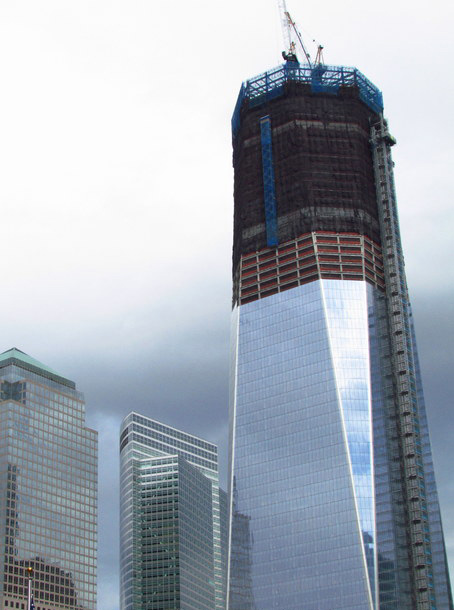
1 World Trade Center Rising in Lower Manhattan

Now that it has been about a month since the 10 year anniversary of the 9/11 attacks in the U.S., I have had some time to reflect on the enduring significance of the skyscraper. With One World Trade Center finally starting to form a new image in the Manhattan skyline, we see that in spite of protestations to building such a tower on sacred ground, construction crews move ahead to realize what will perhaps be the city’s most ambitious project in years. Some question why it has taken so long to get to this point while others still see the entire rebuilding effort as an affront to the memory of tragedy. Continue reading