China’s Ancient Cities and the Crisis of Branding

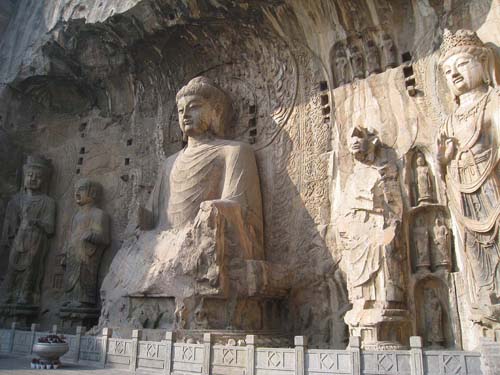
UNESCO Heritage Site, Longmen Grottoes Stone Carvings near Luoyang, Henan Province.  Photo by Easytourchina.

In April I had the honor of being invited to sit on a panel at a conference sponsored by Forbes China in Luoyang. The discussions that took place during the event centered around the next 10 years of development in central China. With Luoyang being the host, much of the discussion pertained to the city itself.

Luoyang, a city of about 6 million people, sits in China’s central plains in the northwestern part of Henan Province, 100 kilometers west of the provincial capital Zhengzhou. New buildings dot the skyline, but not at the high density one sees in 1st or 2nd tier Chinese cities. Automobile and pedestrian traffic is light as well. Wide, tree-lined streets with bike lanes and generous sidewalks lend the city a pleasant atmosphere.

What is not immediately clear traversing the streets of Luoyang is the fact that it is one of China’s Four Great Ancient Capitals. Luoyang was a seat of power for several dynasties- most prominently during the Eastern Zhou and Han dynasties, and later the Sui and Tang dynasties. Continue reading

Chinese Architectural Heritage and the Role of Foreign Architects

Competition Winning Entry for China Comic and Animation Museum in Hangzhou, by Dutch Architects MVRDV

I am often asked about the role of foreign architects working in China – particularly why China even needs foreign architects when there are many qualified Chinese architects. The answer is simple, albeit not the most politically correct: if we compare a piece of architecture to a consumer good, most Chinese buyers of luxury products will opt for a foreign name brand.

The same goes for Chinese developers building high-end real estate. This issue is pondered in an article on eChinacities titled “Foreign Architects in China: Innovation at the Cost of Culture?” Citing well-known examples of high-profile construction projects such as the CCTV Building and Olympic ‘Bird’s Nest’ Stadium in Beijing and the Liujiazui supertall towers in Shanghai, the article’s author wonders if these innovative pieces of architecture come at the expense of Chinese architectural culture. Continue reading

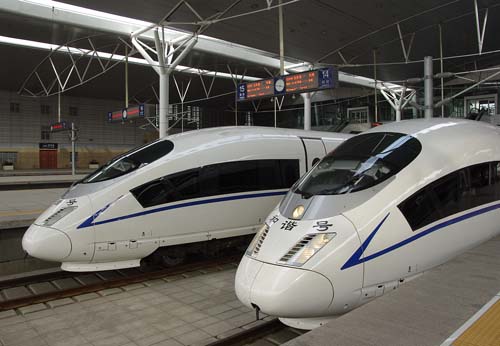
Another Misinformed Commentary on China’s High-Speed Rail

As we’ve pointed out here on China Urban Development, there is no lack of misinformation about China in the Western media. This has been the case for many years and will likely continue into the future. Predicting the collapse of China has even become a career for some pundits.

I started this site to offer a fresh perspective differing from most Western writers in that I actually live in China and work in an industry directly related to the country’s development. I have no illusions that China will transform itself to be more ‘democratic’ like the West, nor do I think that the West needs to copy China’s top-down development model to compete economically. What works in one culture will not necessarily work in another. Continue reading

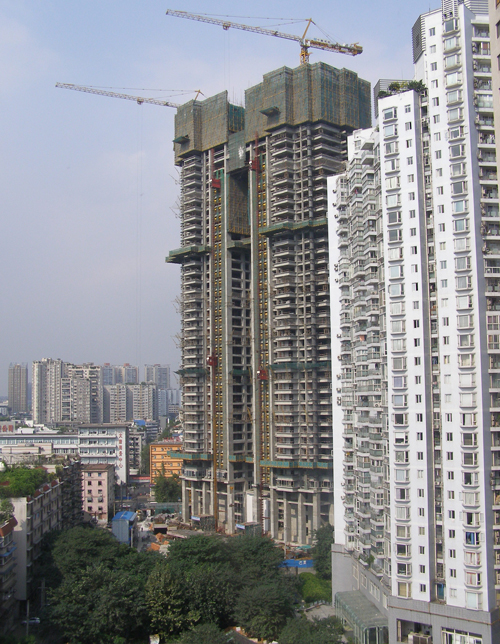
Fears About a China Housing Crash Overstated

Consensus among international media is that China’s economy is heading for an imminent and disastrous crash due to its inflated housing market. While there is absolutely no denying that housing prices in central parts of 1st Tier cities such as Beijing, Shanghai and Guangzhou are sky-high, this does not signal the end of China’s economic rise. If anything, the high price of housing in these cities affirms China’s rise from poor, cut-off backwater to the world’s second largest economy. Continue reading

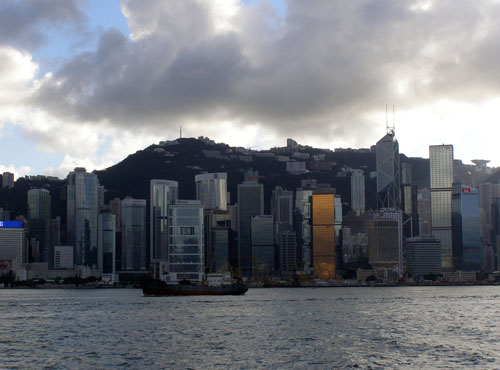
Land Reclamation and the Future of Hong Kong

Land reclamation is a controversial approach to urban planning wherever water-bound cities are land-strapped for new development. In the U.S., a place like San Francisco is a prime example of a city where much of the adjacent waterfront was ‘reclaimed’ from the bay and land-filled to make room for new buildings.

In Asia, Hong Kong practices land reclamation to accommodate large structures such as its convention center and Chep Lap Kok Airport. A piece from Metropolis magazine takes a closer look at reclamation and urban renewal in Hong Kong and how it is impacting its most prized asset: Victoria Harbor.

Metropolis: From Reclamation to Renewal