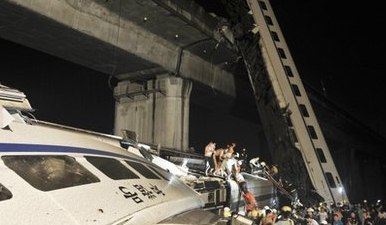
High-Speed Train Derails in Zhejiang Province

In a gigantic blow to the credibility and safety of China’s high-speed rail network, a train traveling from Zhejiang’s provincial capital of Hangzhou to the seaside city of Wenzhou derailed Saturday evening. Details at this point are still developing, but so far reports have said that the train was struck by lightning and then subsequently hit by another train, leading to two of the train’s cars falling from a bridge. So far, 16 passengers are reported dead and 89 injured. Continue reading

China Surges Ahead While Ideological Battles Hinder the U.S.

Public policy, stripped to its basics, is a choice among value alternatives. What one person will vehemently contend is the correct policy and another will say is wrongheaded will not depend on empirical measurement, but on the person’s values, philosophy, and ideology.” – John Kasarda

While in the above quote Kasarda, business professor at UNC-Chapel Hill and co-author of the book Aerotropolis, refers to individual values, the same rule is also applicable to groups and institutions. This is certainly the case in the United States where the government  is in the midst of tense negotiations over the so-called ‘debt ceiling’. America’s two main political factions, Republicans and Democrats, are currently at a loss of coming to a consensus due to ideological hangups.

Republicans, who favor severe austerity by cutting social programs yet oppose any sort of tax increases, are unwilling to compromise. The Republicans’ flawed ideological-based approach to solving America’s  economic turmoil comes at perhaps one of the worst times in the country’s history with unemployment at an all-time high and millions losing social benefits. Even Vice President Joe Biden recently told Republican lawmakers that their “intransigence over taxes is a matter of ideology not economics“. Continue reading

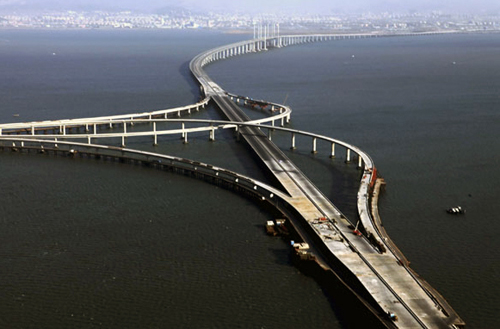
World’s Longest Sea Bridge Opens in Qingdao

To mark the 90th Anniversary of the founding of the Communist Party two weeks ago, the seaside city of Qingdao in Shandong province opened its new Jiaozhou Bay bridge. At 42.4 km, it is the longest sea bridge in the world. The bridge links historic Qingdao with the city’s industrial zone Huangdao. Continue reading

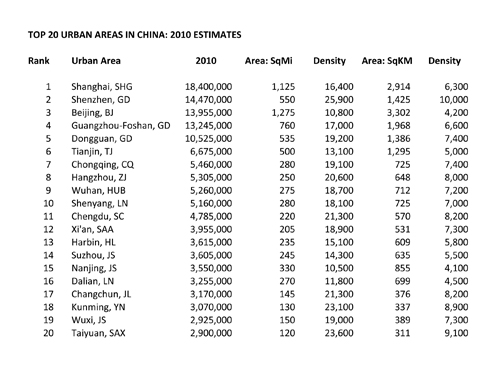
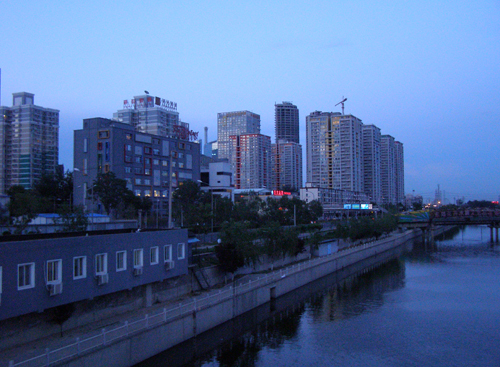
A Guide to China’s Rising Urban Areas

Source: Demographia World Urban Areas: Population & Projections: 6th Edition. http://demographia.com/db-worldua.pdf
 

I have a new piece up at NewGeography about China’s rising urban areas. Below is an excerpt from the introduction:

From a Rural to Urban Dispersion in the Middle Kingdom

China’s rise to economic prominence over the past 30 years has rested in large part to its rapid   urbanization. Prior to ‘reform and opening up’ that started in earnest during the 1970s, cities in China were viewed as pariahs by the party leadership. Millions of young urban dwellers were forced into the countryside to labor on farming communes during the Cultural Revolution. In stark contrast, today millions of rural migrants make their way to the city.

The scale at which this is happening is unprecedented. Currently, there are 85 metropolitan areas in China with more than 1 million people, compared to 51 in the US. By 2015, urban regions will account for half of China’s population and by 2025, the urban population’s share should reach about 75%. Continue reading

Torrential Rains and Flooding in Chengdu

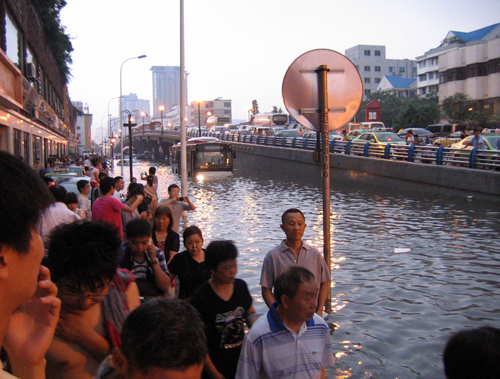
It’s been a rough start to the summer season for provinces in central and southwest China. Torrential rain and floods have affected millions, destroying crops and forcing many to evacuate their homes. Chengdu was largely spared any flooding up until this past Sunday when a heavy storm dumped on the city.

The storm blew out power lines while the flooded streets created traffic chaos throughout the city. My colleague took some photos of the flooding near his apartment in the low-lying southern part of Chengdu. Continue reading