Fake European Villages in China

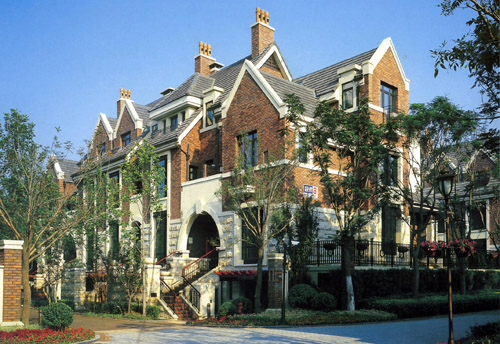
‘British Style’ Villa in China

China is known as the world’s hub for production of fake goods. Counterfeiting everything from electronics to clothing and more sinisterly, drywall and milk powder, is an ongoing problem that needs to be addressed. Fortunately the Chinese government is becoming more active in cracking down on individuals involved in intellectual property theft and the production of harmful goods.

Counterfeiting also happens at the urban scale in China. Recently developers from Guangdong Province have taken to planning an exact replica of the Austrian Alpine village of Hallstatt.

Unlike producing fake consumer goods,  the legality of appropriating architectural styles from overseas is not clearly defined. In the case of Hallstatt there may be some legal grounds against the Chinese developers due to the village’s status as a UNESCO Heritage site. Continue reading

China’s Ancient Cities and the Crisis of Branding

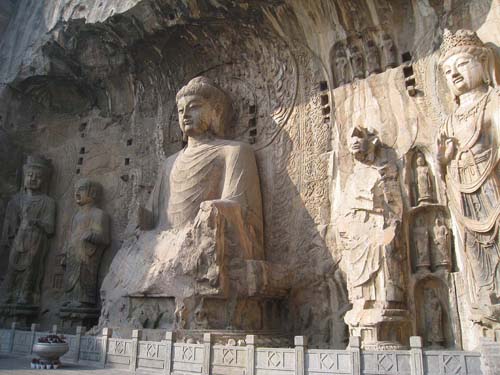
UNESCO Heritage Site, Longmen Grottoes Stone Carvings near Luoyang, Henan Province.  Photo by Easytourchina.

In April I had the honor of being invited to sit on a panel at a conference sponsored by Forbes China in Luoyang. The discussions that took place during the event centered around the next 10 years of development in central China. With Luoyang being the host, much of the discussion pertained to the city itself.

Luoyang, a city of about 6 million people, sits in China’s central plains in the northwestern part of Henan Province, 100 kilometers west of the provincial capital Zhengzhou. New buildings dot the skyline, but not at the high density one sees in 1st or 2nd tier Chinese cities. Automobile and pedestrian traffic is light as well. Wide, tree-lined streets with bike lanes and generous sidewalks lend the city a pleasant atmosphere.

What is not immediately clear traversing the streets of Luoyang is the fact that it is one of China’s Four Great Ancient Capitals. Luoyang was a seat of power for several dynasties- most prominently during the Eastern Zhou and Han dynasties, and later the Sui and Tang dynasties. Continue reading

Chinese Architectural Heritage and the Role of Foreign Architects

Competition Winning Entry for China Comic and Animation Museum in Hangzhou, by Dutch Architects MVRDV

I am often asked about the role of foreign architects working in China – particularly why China even needs foreign architects when there are many qualified Chinese architects. The answer is simple, albeit not the most politically correct: if we compare a piece of architecture to a consumer good, most Chinese buyers of luxury products will opt for a foreign name brand.

The same goes for Chinese developers building high-end real estate. This issue is pondered in an article on eChinacities titled “Foreign Architects in China: Innovation at the Cost of Culture?” Citing well-known examples of high-profile construction projects such as the CCTV Building and Olympic ‘Bird’s Nest’ Stadium in Beijing and the Liujiazui supertall towers in Shanghai, the article’s author wonders if these innovative pieces of architecture come at the expense of Chinese architectural culture. Continue reading

Land Reclamation and the Future of Hong Kong

Land reclamation is a controversial approach to urban planning wherever water-bound cities are land-strapped for new development. In the U.S., a place like San Francisco is a prime example of a city where much of the adjacent waterfront was ‘reclaimed’ from the bay and land-filled to make room for new buildings.

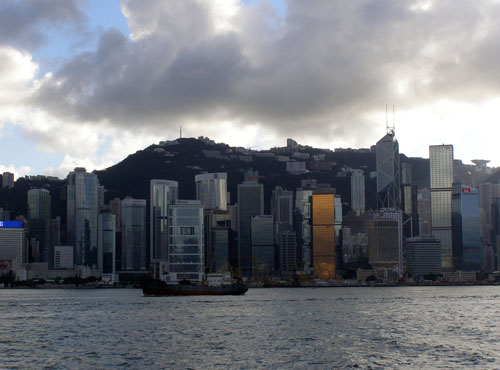
In Asia, Hong Kong practices land reclamation to accommodate large structures such as its convention center and Chep Lap Kok Airport. A piece from Metropolis magazine takes a closer look at reclamation and urban renewal in Hong Kong and how it is impacting its most prized asset: Victoria Harbor.

Metropolis: From Reclamation to Renewal

Shifting Real Estate Development Priorities

Last week I had a chance to chat with Russell Flannery, the Shanghai bureau chief for Forbes magazine, at a conference I spoke at in Luoyang, Henan Province. I talked to him about the shift in real estate development focus in China from residential to the retail and commercial sectors. Below is a reproduction of the interview from Forbes:

Shopping Malls Become China Real Estate Hot Spot As Economy Shifts
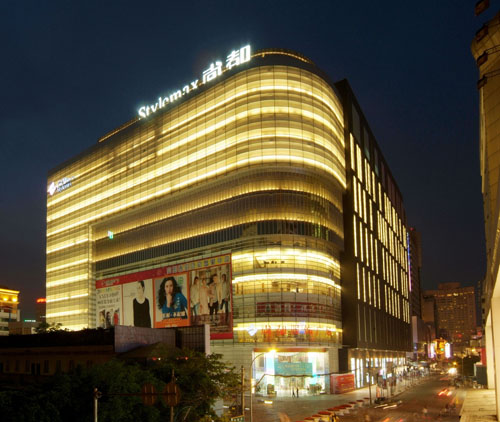
Shopping malls are becoming a China real estate hot spot as government efforts to ease housing prices reduce interest among developers in building apartment complexes.

So says Adam Mayer, a USC-educated senior project architect based in the western Chinese city of Chengdu for Cendes, a Singapore-founded architecture firm with projects in more than 20 Chinese cities.   Rapid growth in Chinese retail spending, he says,  “represents a shift of the Chinese economy from one of production to a more domestic, consumer-oriented market.”

I talked to Mayer on the sidelines of a conference about the business outlook in central China held yesterday in Luoyang, one of China’s ancient hubs. The event was being organized by Forbes China, the licensed Chinese-language edition of Forbes magazine, and the city government, and attracted speakers from IBM and GE. Excerpts follow.

 Q. China’s government seems to be slowing down the pace of the real estate industry right now. To what extent do you feel any of that in your own company?

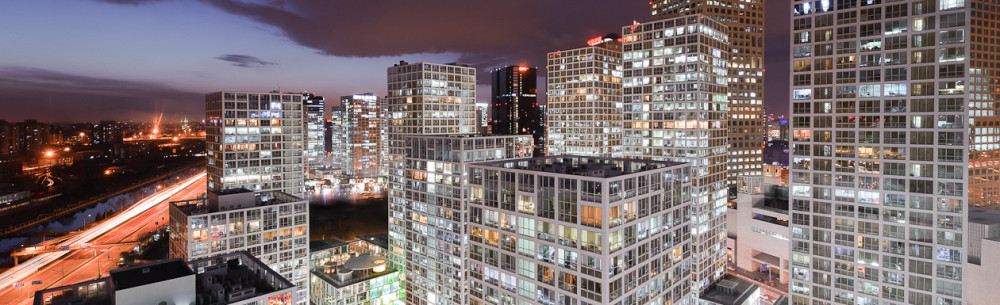
A. We do see it in the sense that there’s a shift away from such rapid development of residential property. Not all residential types, though, just, specifically, the high-rise clustered residential you see in all cities across China. The shift is more toward villas, which in the U.S. we would call detached houses. These are not intended to be primary residences. Rather, they are intended and marketed towards wealthy individuals who want a second home or a vacation home that’s outside the city.

What we’re seeing now is a huge growth in the retail sector in the design and developments of shopping malls, especially in Chengdu where we have a lot of work, and also in Kunming, the capital of Yunnan Province. We’ve been seeing a lot of mixed-used developments in the planning phases now. These are typically 4-5 storey retail shopping malls (that) in architectural terms we call a podium. These are usually high density sites. They have high floor to area ratios, which are zoning numbers that tell you how much square meters you can build on that site. These are usually in center city areas, and also around the second or third ring roads that are developing out from the center, typically around transit hubs where there might be a subway station. There are retail podiums with office towers, or it could be a hotel tower and also some residential tower on top.

Q. What’s driving that investment?

A.  I think it’s really more about retail. The developers are maximizing the FAR (floor to area ratio), and that’s why they’re building towers on top, but the retail really represents a shift of the Chinese economy from one of production to a more domestic, consumer oriented market. So we see real estate developers really pushing hard (on) the retail development.

Q.  In the old days, Chinese developers were making plenty of money just by building those tall residential buildings and selling them out quickly. Now, those same builders appear to be increasingly interested in commercial property. Do you see signs of that?

A. For sure. If developers are only in the residential sector, they definitely need to diversify. Also, when it comes to geographical development, (there’s a) shift of development of China moving from the coast inward (and) west. We see that happening to even further west than Chengdu, and, if you can imagine, into Urumqi and Xinjiang Province.

Forbes: Shopping Malls Become China Real Estate Hot Spot As Economy Shifts