Happy Birthday Shenzhen: Special Economic Zone Turns 30

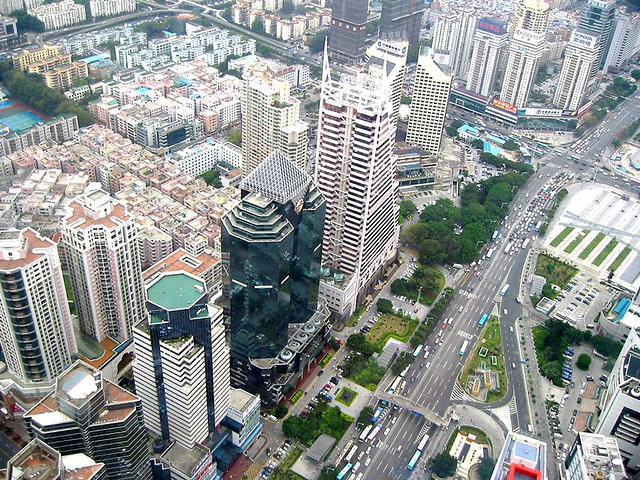
By now everyone knows the story of Shenzhen: a small fishing village in  south China’s Guangdong Province transforms into an economic powerhouse in only a matter of a few years. It was a mere 30 years ago this month when China’s then-leader Deng Xiaoping selected Shenzhen to become the country’s first Special Economic Zone (SEZ), laying the foundation for what would eventually become the most symbolic city of the new China. Continue reading

Development in the Far West: Bumpy Road Ahead

Uyghur people in Xinjiang. Photo courtesy of Nicolas Marino

One advantage of China’s top-down approach to urban development is the lack of organized resistance to new projects. Aside from the occasional story of a  lone-ranger hold out protesting imminent demolition of property, China is a nation almost completely devoid of NIMBYs (not in my backyard). This is due largely in part to the collectivist nature of China’s ethnic majority.

That majority is of course the Han people, who comprise more than 90% of China’s overall population. There is a very strong self-identification among the Han, which begets an unspoken but omnipresent social unification. This spirit has been one of the driving forces behind China’s rapid and successful urban development.

Yet as momentum shifts  westward, the outlook for peaceful development looks more uncertain. Whereas the east coast of China consists mainly of Han people, the interior areas are more mixed ethnically. The far west autonomous regions of Tibet and Xinjiang are majority-minority populations. Continue reading

China Housing Bubble? Maybe, But Not as Bad as You Think

Many economic analysts are convinced that China is now in the midst of a  colossal housing bubble. Wendell Cox thinks otherwise. In a recent NewGeography piece titled China’s Sliver of a Housing Bubble, Cox digs through the various studies surrounding the talk of a housing bubble and focuses in on one particular study conducted by Dr. Wang Xialou for Credit Suisse.

Dr. Wang’s study differs from the others in that it takes into account the ‘grey income’ that is prevalent in China. Grey income is income not reported in official data. Anyone familiar with the earning and spending habits in China knows that under-the-table dealings are standard practice. This makes it difficult to assess real income versus housing prices and decisively conclude whether there really is a housing bubble. Continue reading

The World’s Number 2 Economy…and Still a Long Way to Go

It’s fitting that the inaugural post for the China Urban Development Blog takes place just a week after it was announced that China passed Japan to become the world’s second-largest economy. What China has been able to do in such a relatively short time period is a testament to the organizational structure of the top-down political regime. Even during a global recession, China steadily kept its factories humming and cities under construction.

Events like the 2008 Beijing Olympic Games and this year’s World Exposition in Shanghai showed the world that China is serious about joining the global community. The country is wide open to foreign enterprises and investment, and expatriates from all over now live within its borders.

Yet behind the bombastic coming out parties and stunning economic growth are the ambitions of 1.3 billion Chinese citizens. Since China first implemented ‘reform and opening’ in the late 1970’s, hundreds of thousands of Chinese migrant workers have made the move from countryside village into urban areas to work in factories and help build cities.

China’s rapid urbanization would not be possible without its unique combination of command and control economy and large pool of workers looking to improve their life. Urbanization has achieved the dual goal of rising China’s overall GDP as well as improving the standard of living for millions of its people.

Despite these accomplishments, the country has a long way to go. Per capita income sits at about $3,600 USD – very low by developed world standards. Furthermore, problems still abound in many parts of China particularly the interior areas. Ethnic tensions run high in the western autonomous regions of Tibet and Xinjiang. Poor rural areas are prone to natural disasters. Just two weeks ago, Zhoqu County in Gansu Province experienced a devastating landslide, killing over 1,000 people.

China has already shown the world that it can get things done. The next step will be it to continue the momentum by developing the interior urban areas and further improving the life of its people. Leading the way towards this goal are China’s cities – where opportunities abound for those seeking a better life.