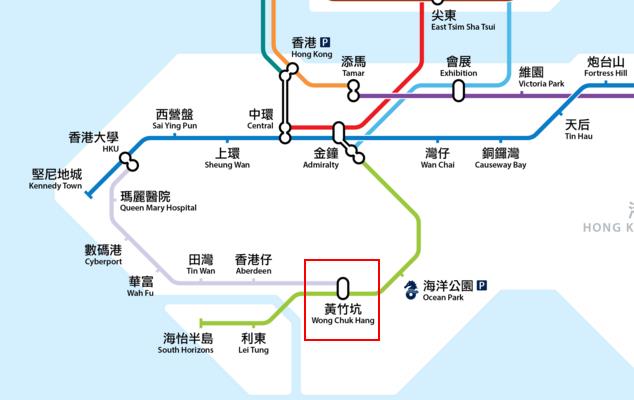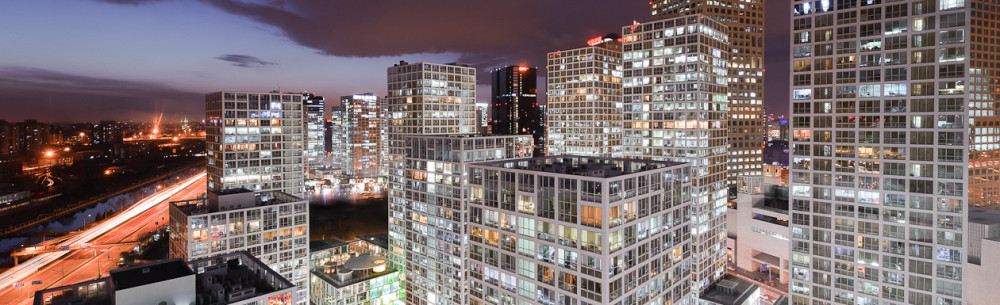
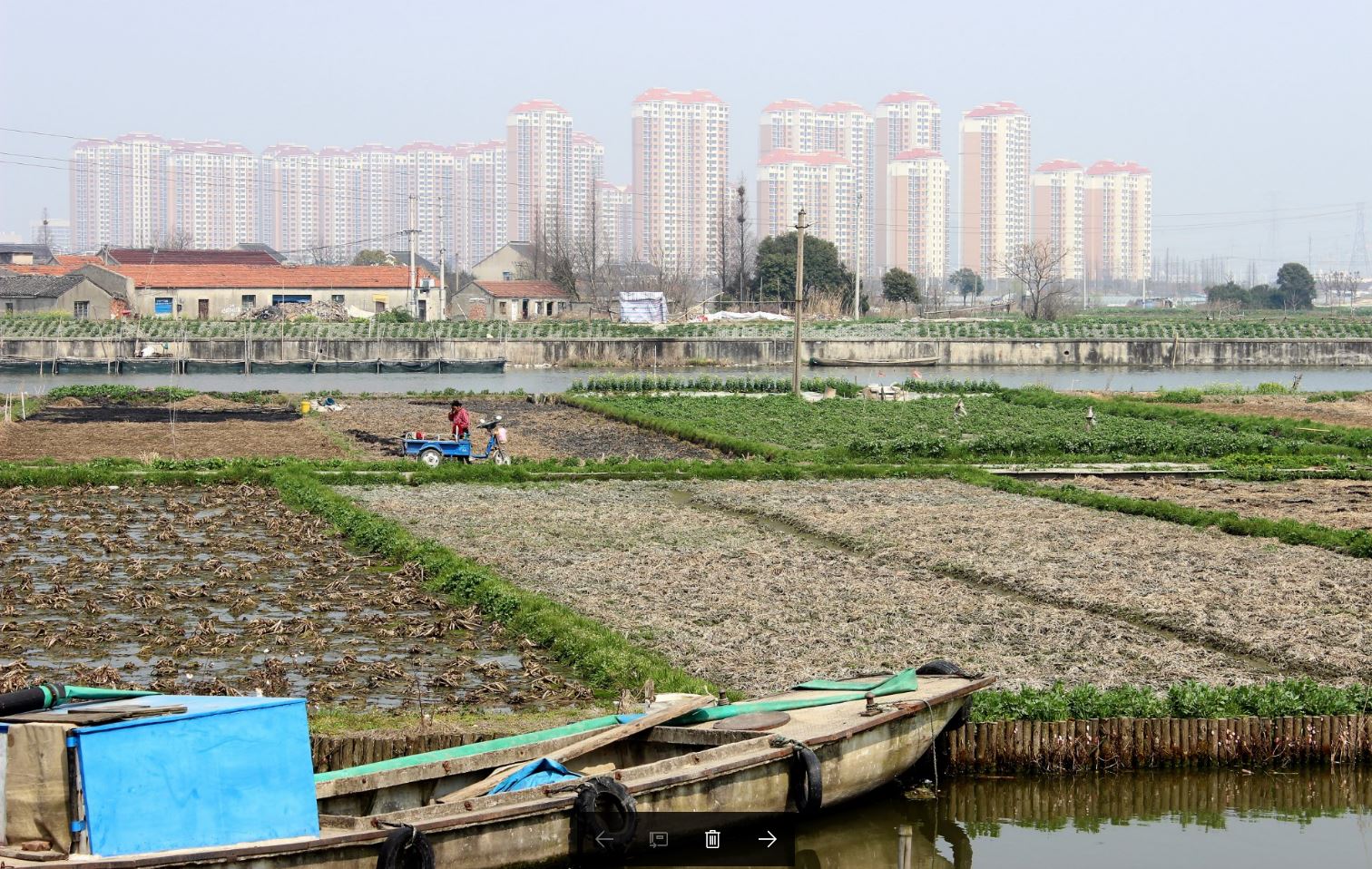
CHINA’S URBAN REVOLUTION: An Interview with British Architect Austin Williams

Image courtesy of Austin Williams

Very rare is it to meet a China expat in the architecture and design field who is as an astute observer of development trends as Austin Williams. Williams is a British architect and educator who came to China six years ago at the behest of the Xi’an Jiaotong-Liverpool University (XJTLU) in Suzhou to set up a new Architecture Department there.

Prior to making the move over to China, Williams was an editor of the Architects’ Journal and authored a series of books for the Royal Institute of British Architects (RIBA). He is currently working a new book, China’s Urban Revolution: Understanding Chinese Eco-Cities“, which is due out this October.

I had the pleasure of interviewing Williams recently about his experience in China and his observations of the country’s development. We also spoke a bit about his new book and how he is generally bullish about China’s ability to quickly clean up the environmental mess that has been generated through rapid development. Continue reading
TRT World Interview: CUD Blog’s Ziyou Tian on Hong Kong’s Housing Crisis

China Urban Development readers: I’m very pleased to share with you a recent TV news interview with our very own Ziyou Tian on the state of housing in Hong Kong. In this segment she offers a fresh take on how to tackle the housing shortage and addresses some of the underlying issues that cause income inequality in the city. Please take look below:

China’s Overheated Real Estate Market

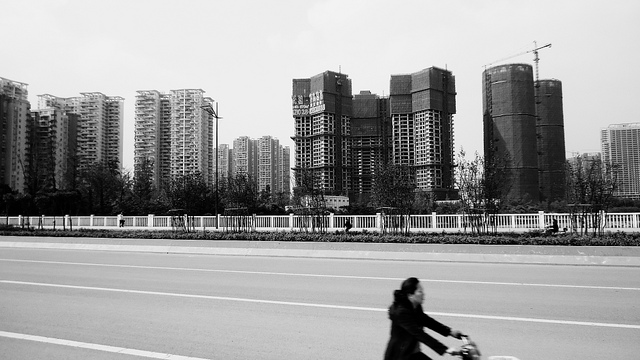
Photo by 发课 吴

Since the end of 2015, property values have been heating up throughout China. In over 15 cities, home prices increased over 20% since September 2015. Although home prices have been steadily climbing for over a decade, the past year recorded the largest jump since 2010.

Home prices in Shanghai, Shenzhen, and Dongguan recorded over a 40% (source in Chinese) increase in less than a year, which makes property value in China’s largest cities comparable to international hubs such as New York and London. However, home buyers do not get nearly the value for their money. Homeowners in China only enjoy the right to use the property on long lease terms. Most residential property contracts grant a 70-year right of use, and the policy for renewal terms has not yet been clarified. These lease terms not only determine the limited rights of owning a home, but also dictate the quality of construction. Continue reading

Cycling in Hong Kong: Mission Impossible?

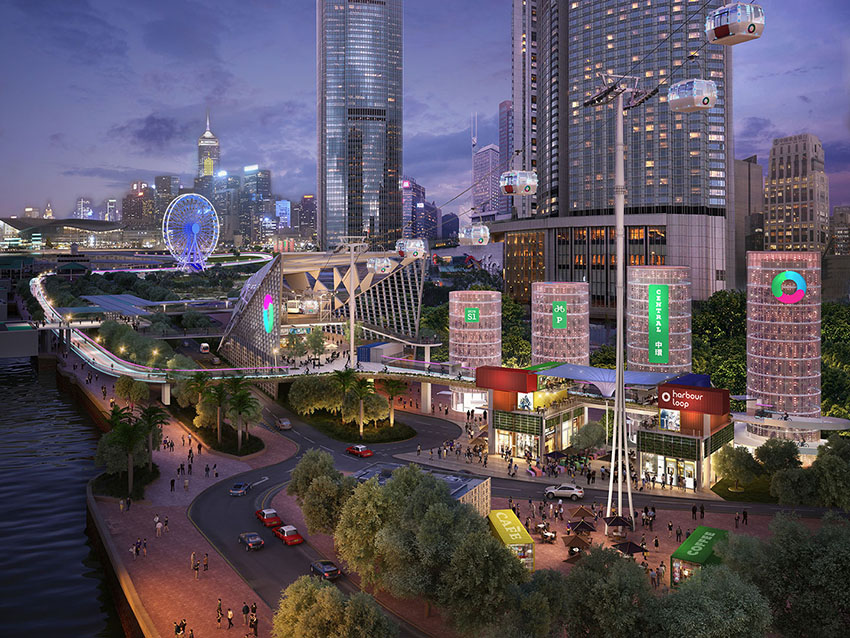
HarbourLoop_Render_850px

Conceptual Rendering of the Hong Kong “HarbourLoop” Proposal by Lead 8. Image Courtesy of Lead 8 Hong Kong Limited.

From Norway’s cross-country bicycle highway to Copenhagen’s cycling snake, large-scale cycling infrastructure projects around the world are attracting both public and private investments. With Amsterdam appointing its first Bike Mayor and London having cycling as a prominent issue during its mayoral election, pro-cycling campaigns are seizing the moment to normalize cycling as a way of daily transit.

Primarily known for its efficient public transportation system, Hong Kong has not actively explored the potential of cycling on a municipal level. Yet could Hong Kong benefit from getting more people on their bicycles? Would the right infrastructure and pro-cycling campaign create a passion for ground-level, zero-emission transportation? Continue reading

Hong Kong’s Wong Chuk Hang: How Long Will it be the “Undiscovered Gem” of HK’s Creative Community?

HK MTR Stations

Existing & Proposed MTR Stations, map by Wikimedia

Wong Chuk Hang, one of the most hip “undiscovered” neighborhoods in Hong Kong, is undergoing massive redevelopment thanks to a planned MTR Station. Just as galleries, artist studios, hidden coffee shops, and restaurants started emerging in recent years, the community is now facing rising rents and redevelopment pressures. Will WCH become another transient alternative neighborhood that will soon be overtaken by big developers? Continue reading