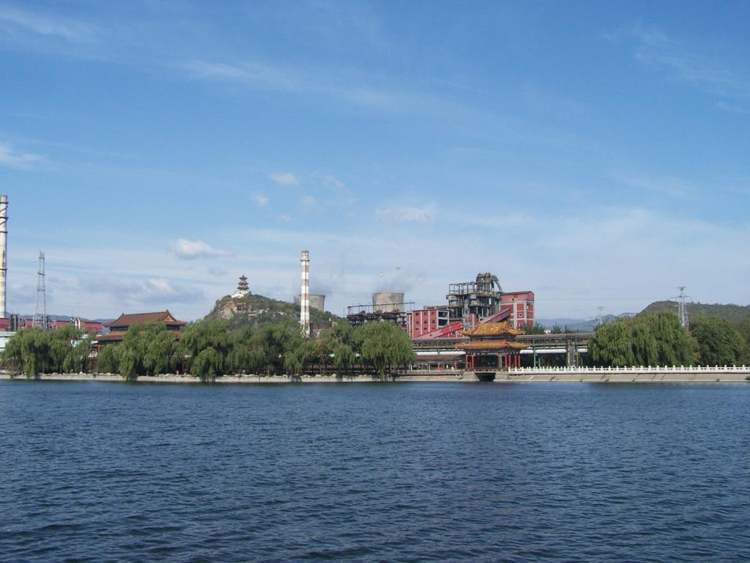
Deindustrializing Beijing: Images from the Decommissioned China National Steel Factory

Beijing’s poor air quality is a well-documented phenomenon, yet what is often not considered is the fact is that the municipality has taken steps in recent years to deindustrialize and move its polluting factories outside the city to neighboring provinces (mainly Hebei Province). Unfortunately the closure of factories doesn’t seem to have done much to abate Beijing’s air quality problems as an increasing number of private automobiles continue to clog the city’s roads. That being said, Beijing did try its best to at least keep its air clean for the two weeks of the Summer Olympics back in 2008.

One of the most high-profile examples of this effort was the permanent closure of the China National Steel Factory in western Beijing- one of the largest steel mills in the country. My friend and Beijing resident Daniel Garst, an American writer, recently had the opportunity to visit the decommissioned factory and take some nice shots of the slowly decaying complex.

As the future remains uncertain for the former steel factory, it presently serves as a reminder of Beijing’s industrial past and is a prime location for shooting photography and filming commercials. Perhaps the factory will be reused in the future as a commercial/entertainment district as developers take advantage of the ‘industrial chic’ aesthetic to redevelop other decommissioned factories around the country.

For now, please enjoy the following images of the abandoned complex. Continue reading
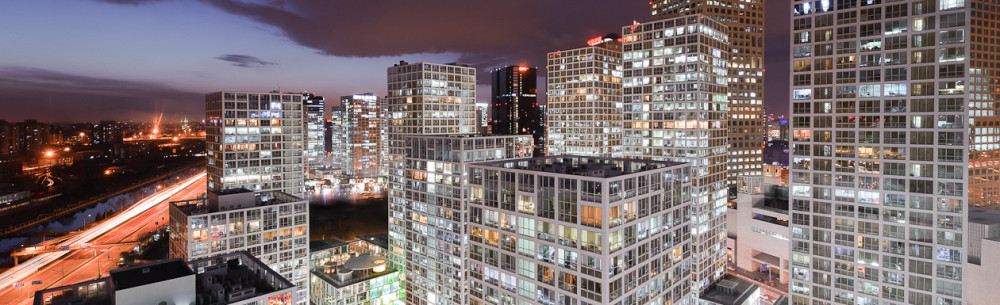
Speculation: China’s Proposed Eco-Cities

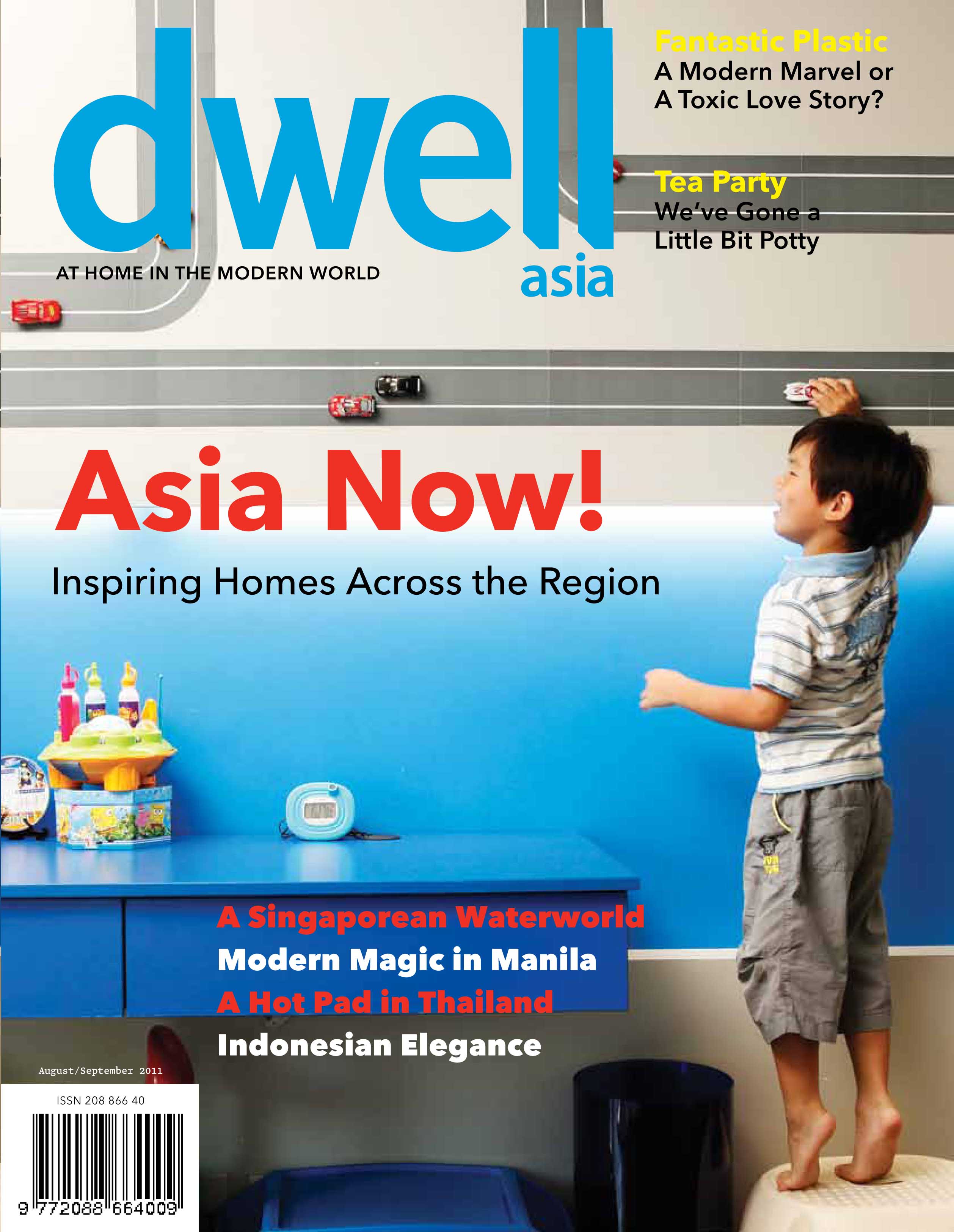
A piece I wrote about China’s proposed eco-cities appeared recently in the  inaugural issue of Dwell Asia magazine. The article takes a look at two proposed eco-cities, Dongtan in Shanghai and the Sino-Singapore Eco-city in Tianjin, examining the implications of the ideas presented in both proposals.

For the readers of the China Urban Development Blog, here is a reproduction of the original piece:

Today’s urban development zeitgeist suggests that cities should move towards sustainable models of living to combat climate change and reduce resource consumption. Of course, how to achieve that is a subject of ongoing debate among design and planning professionals. Unfortunately, branding new developments as ‘green’, ‘eco’ or ‘sustainable’ is often a loaded attempt to satisfy marketing and public relations needs for developers and government officials.

Nowhere is the use of greenwashing strategies more common than in China, where new cities practically arise overnight. Many new developments, particularly large-scale residential communities consisting of repetitive tower blocks, with names like Authentic Gardens and Spring Flower Court, claim to be environmentally friendly, but have little in the way of sustainable design strategies aside from a few patches of green space. Continue reading

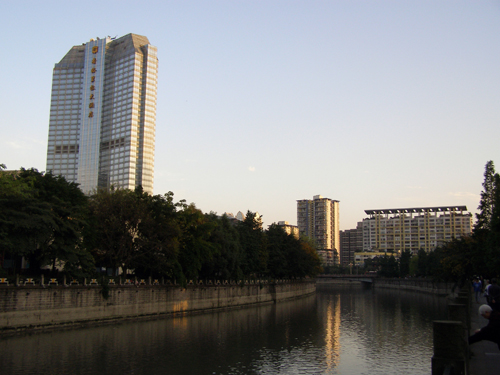
Chengdu Enhances Urban Environment With Recreational Paths

It seems that too often talk about China development focuses on ‘hard’ infrastructure projects including roads, bridges, power stations, rail systems, etc.  Yet what is often overlooked in discussions about China’s infrastructure are projects designed to enhance quality of life for city dwellers. I recently discovered one of these new projects in the city where I live, Chengdu. Continue reading

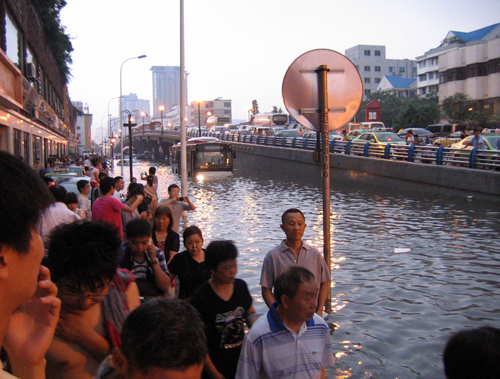
Torrential Rains and Flooding in Chengdu

It’s been a rough start to the summer season for provinces in central and southwest China. Torrential rain and floods have affected millions, destroying crops and forcing many to evacuate their homes. Chengdu was largely spared any flooding up until this past Sunday when a heavy storm dumped on the city.

The storm blew out power lines while the flooded streets created traffic chaos throughout the city. My colleague took some photos of the flooding near his apartment in the low-lying southern part of Chengdu. Continue reading

China’s Ancient Cities and the Crisis of Branding

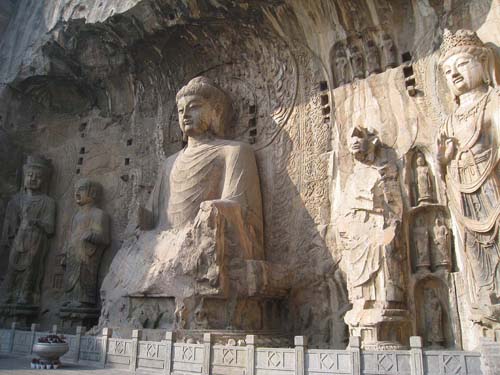
UNESCO Heritage Site, Longmen Grottoes Stone Carvings near Luoyang, Henan Province.  Photo by Easytourchina.

In April I had the honor of being invited to sit on a panel at a conference sponsored by Forbes China in Luoyang. The discussions that took place during the event centered around the next 10 years of development in central China. With Luoyang being the host, much of the discussion pertained to the city itself.

Luoyang, a city of about 6 million people, sits in China’s central plains in the northwestern part of Henan Province, 100 kilometers west of the provincial capital Zhengzhou. New buildings dot the skyline, but not at the high density one sees in 1st or 2nd tier Chinese cities. Automobile and pedestrian traffic is light as well. Wide, tree-lined streets with bike lanes and generous sidewalks lend the city a pleasant atmosphere.

What is not immediately clear traversing the streets of Luoyang is the fact that it is one of China’s Four Great Ancient Capitals. Luoyang was a seat of power for several dynasties- most prominently during the Eastern Zhou and Han dynasties, and later the Sui and Tang dynasties. Continue reading