Q&A With Author of “The People’s Republic of Chemicals”

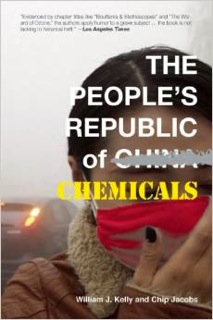
PRC cover

Nothing threatens the stability of China’s economic miracle more than the hazardous levels of pollution generated by rapid development. The rise of the private automobile, unregulated toxic factories, and the widespread use of coal-burning as an energy source have all contributed to environmental degradation across China’s cities. While in the past, these issues were swept under the rug in favor of economic growth at all costs, the rise in living standards means that China’s leadership can no longer ignore the concerns of the people they serve.

China is now at a crucial turning point where economic goals must be balanced with considerations for the environment going forward. This is not an easy problem to tackle and the solution will require a global effort.

The new book The People’s Republic of Chemicals serves as an excellent starting point in understanding how China’s pollution problem got so out of hand in the first place and what can be done to stop it (or at least slow it down). The book’s co-authors, William Kelly and Chip Jacobs, are appropriate storytellers having together written the 2008 book Smogtown about the rise and fall of pollution in mid-century Los Angeles.

William took the time to answer some questions for us about their new book:
Continue reading

Urban Creative Culture, Air Quality and the Tragedy of Beijing

Beijing_Pollution

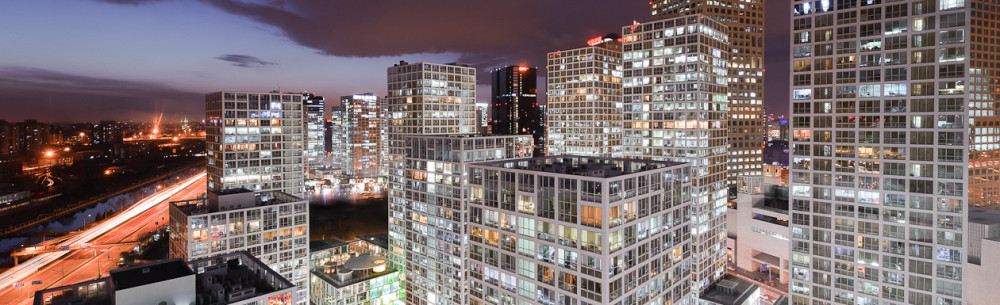
Like many foreign travelers and working expats who arrive to China, Beijing was my first port of entry into the country. Leaving Capital Airport I was struck by the massive scale of the city, overwhelmed by the repetitive concrete towers standing like regimented rows of soldiers in the skyline. Beijing’s urban form is undoubtedly inspired by the Soviet-era tendency towards grandiose urban planning schemes, but as I would come to learn the story on the ground painted a different, much more vibrant picture of urban life.

Beijing is not a city that one can fully appreciate in the matter of just a few days visiting the famous historical sites. In the space between gigantic attractions like The Forbidden City, Temple of Heaven, and Summer Palace, a modern grassroots culture thrives. Underground rock clubs, artist studios and independent coffee shops coexist in what’s left of old hutong neighborhoods as well as reclaimed industrial spaces on the periphery of the city center.

The notion of a burgeoning arts scene would seem to run counter to what many outside China still think of the city: that is, the seat of an oppressive Communist government devoted to quashing all personal freedoms. Although Chairman Mao’s portrait still looks ominously over Tiananmen Square, the perception of Beijing as a cultural desert couldn’t be further from the truth. Continue reading

Organic Farming in China: Chengdu’s Anlong Village

With the ongoing spate of food safety scandals, Chinese consumers are rightly weary of the source and quality of their food. Unfortunately, food quality regulatory bodies in China remain unreliable and direct access to fresh food sources is limited for an increasingly urbanized populace. This is one of the great contradictions of China’s urban development: a country which for most of its history was majority agriculturally based is on the fast track to be one of the most urbanized nations in the world.

Status conscious Chinese urbanites would rather not associate with anything related to farming, as it evokes the recent memory of rural peasant life. For many upwardly mobile city dwellers, international restaurant chains like KFC, McDonalds and Pizza Hut are considered the best options for upper-class ‘healthy’ dining (that is, food with high caloric content).

The urban growth of China is a boon to these chains as more American consumers shun them in favor of a more organic, natural diet. The shift in American consumer preferences is reflected in the success of supermarket chain Whole Foods, local farmers markets, and the growing popularity of the Slow Food movement.

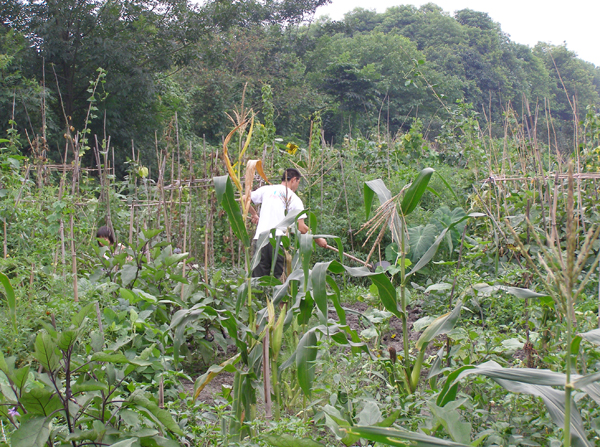
Given China’s new-found love affair with processed food and growing ambivalence about the role of agriculture, I was confident there was probably not much interest in organic farming. That was until I visited Anlong Village- a wholly organic, zero waste farm 50 km northwest of central Chengdu. With a full-time population of 3,000 residents, Anlong Village is sponsored by the Chengdu Urban Rivers Association (CURA), a local non-profit NGO. Continue reading

Building a Greener Capital

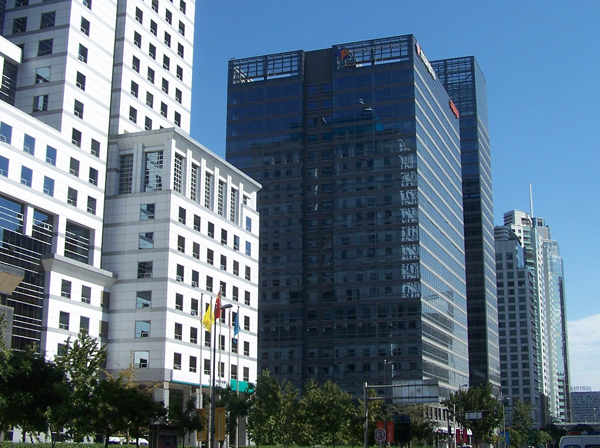
Prosper Center, Beijing’s First LEED Gold Certified Building

The following is a guest post by Daniel Garst, a Beijing-based American writer. This article originally appeared in the March 24, 2011 China Daily Metro edition.

Nothing concentrates the mind of economic planners quite like political instability in key overseas energy suppliers.  China’s new Five Year Plan therefore not only mandates further reductions in the energy used in generating economic output, but also sets, for the first time, overall consumption goals.

Making buildings here more energy efficient will be one key element in achieving these goals.  A January 7, 2011 National Geographic News story states that the building sector absorbs 30% of China’s energy, a threefold increase since 1980. Continue reading