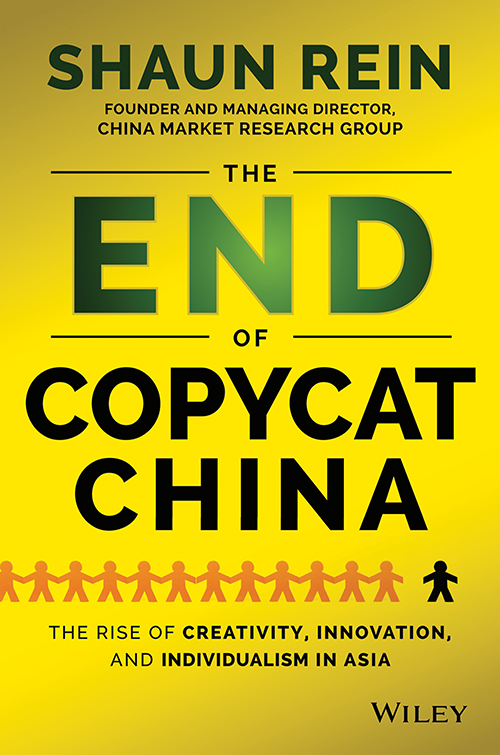
5 Questions for Shaun Rein, Author of “The End of Copycat China”

EndofCopycat China

More can happen in two years in a developing country like China than can happen in a decade or more in developed countries. And given this high speed of change, the information in business books about China’s economy can go out of date really fast.

That is why it is not surprising that although it has only been a little over two years since China analyst Shaun Rein released his first book, The End of Cheap China, he is back with another one. In that time span, China got a new leader in Xi Jinping, the one-child policy was significantly reformed, and Alibaba, the country’s biggest internet company, went public on the New York Stock Exchange.

The End of Copycat China is a natural follow up to End of Cheap China (which we featured a review of on this blog not long ago) and looks to build upon the research he’s been doing for the past decade on the ground in China.

I recently had a chance to chat with Rein about his new book and ask some questions about what he’s seen change in the past two years and, more importantly, the trends he sees influencing China’s development in the near future. Continue reading
China Regional Urbanization Trends: 2014 Edition

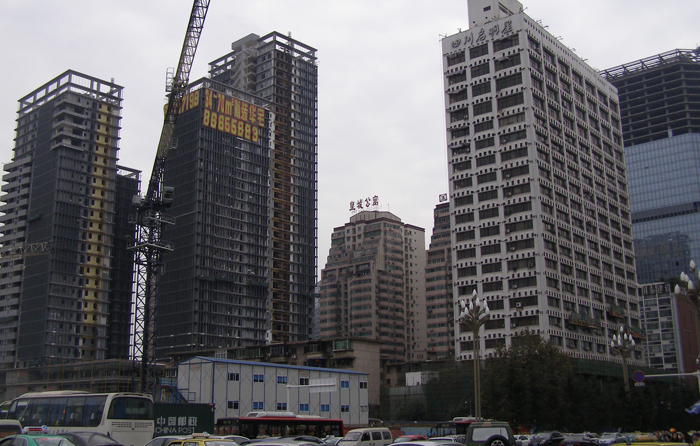
OLYMPUS DIGITAL CAMERAThe Economist Intelligence Unit (EIU) shared with us their new study on “China’s Urban Dreams 2014” – an update on the country’s urbanization program. With all the uncertainty about China’s property sector in the news recently, this in depth analysis gives some clarity to the often murky topic of Chinese development.

While Western media tends to paint China with one large brushstroke when discussing the country’s property sector, the reality is that real estate markets vary greatly from region to region. China, like the U.S., is a large, diverse country with many different cities and regions with varying strengths and weaknesses. If there is one takeaway from the EIU study, it’s that not all regions are created equally, and going forward, there are bound to be winners and losers. Continue reading

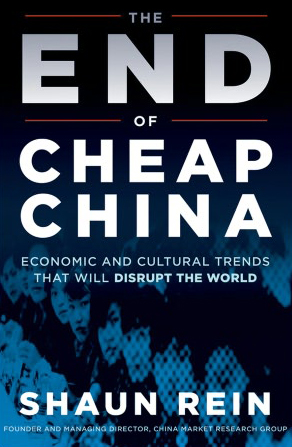
Book Review: “The End of Cheap China” by Shaun Rein

Sensationalist stories about China’s supposed looming economic collapse captivate international headlines. While these articles might be entertaining to read or talk about, they nevertheless perpetuate an inaccurate picture of an evolving Chinese economy. The really big China story is perhaps too mundane for editors looking for catchy headlines. That is, the emergence of the largest middle-class in the world- beginning with Deng Xiaoping’s reform and opening up in 1978 and still being written today.

Upon my own arrival to China nearly five years ago, it became clear fairly quick that the younger generations living in urban areas would not be content to continue working in low-wage factories and construction sites forever. Following a similar arc of modernization and urbanization that developed countries went through in the past, albeit at a much accelerated rate, China ambitiously aims to move up the value chain economically.

This development is not easily grasped for those who haven’t had the opportunity to invest significant time interacting with people on the ground in China. Luckily we have Shaun Rein and his book The End of Cheap China to tell us the story of China’s evolving trends. The book was released in 2012, but the predictions Rein makes are perhaps even more relevant today than when it originally came out two years ago. Continue reading

China’s Urbanites Take to the Internet in Droves

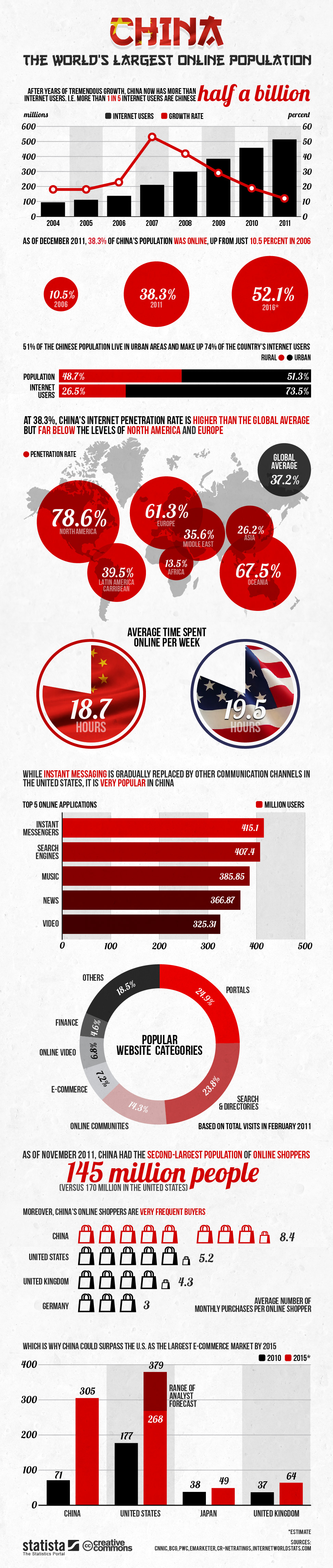
The good people over at Statista provided us with yet another excellent China infographic, this time about the country’s huge online population. Already, 1 in 5 worldwide internet users is Chinese, yet still less than half of the country’s population is online. Most of those are people living in China’s urban areas, accounting for 73.5% of those online. That statistic and the overall number of people using the internet is bound to increase with the technological advantages that urban areas continue to afford over rural areas.

The world of microblogging is also exploding. China’s version of Twitter, called Weibo, is already a paradigm-changing social phenomenon with over 300 million registered users. Although strict government controls routinely restrict searches for sensitive topics, savvy netizens find ways around these blockades through the use of aliases and codewords. For instance, while the ongoing saga surrounding the recent escape of blind dissident Chen Guangcheng from house arrest has led authorities to block searches for his name, Weibo users are creatively microblogging around the sensors .

It might be too early to assess the full extent of influence that widespread internet use has on Chinese society, but it is safe to assume that it has already changed the social landscape in significant ways.