Shaun Rein Gets It

As more economists jump on the China bubble bandwagon, reliable information about the country’s state of development is becoming more difficult to come by. Anecdotes about empty buildings, empty trains, and just all around emptiness abound from China bears. I have no idea where these observations come from given the overwhelming falsity of some of these claims.

Neither does Shaun Rein over at Forbes. In a piece titled “Nouriel Roubini Is All Wrong About China“, Rein takes the famed economist to task by picking apart Roubini’s observations about ’empty trains’ and ’empty roads’ between Shanghai and Hangzhou. Continue reading
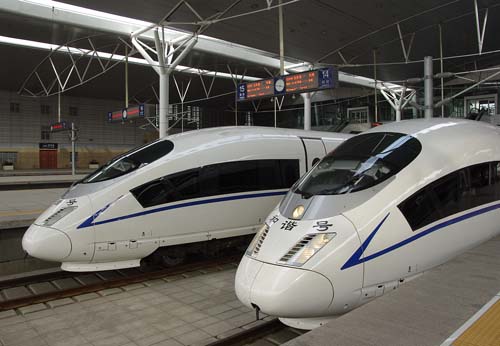
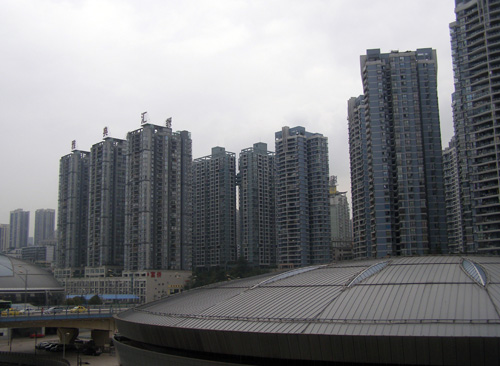
Another Misinformed Commentary on China’s High-Speed Rail

As we’ve pointed out here on China Urban Development, there is no lack of misinformation about China in the Western media. This has been the case for many years and will likely continue into the future. Predicting the collapse of China has even become a career for some pundits.

I started this site to offer a fresh perspective differing from most Western writers in that I actually live in China and work in an industry directly related to the country’s development. I have no illusions that China will transform itself to be more ‘democratic’ like the West, nor do I think that the West needs to copy China’s top-down development model to compete economically. What works in one culture will not necessarily work in another. Continue reading

How China’s Megacities Have Avoided Problems of Other Developing Cities

Urbanist media can’t seem to get enough of the megacity these days. Much of the commentary surrounding this topic is disconcertingly celebratory about these leviathans despite such phenomena as overcrowding, high levels of congestion and sprawling slums.

Yet absent from most of the commentary is any mention cities in China. This is perhaps due in large part to the lack of serious social problems in comparison to its developing city counterparts in other countries. If a megacity is defined as a city with a population of more than 10 million, then China is home to 5 megacities: Shanghai, Beijing, Shenzhen, Guangzhou and Dongguan. As the country continues to urbanize, more Chinese cities are bound to join the ranks of these megacities.

How has China been able to avoid the pitfalls facing other developing megacities? No one is denying that Chinese cities don’t have problems including unequal income distribution, pollution and growing traffic congestion. Yet China’s megacities seem to have largely avoided social dangers such as violent crime, disease and slum proliferation that plague urban areas of other developing countries.

Following I have identified five points as to how China’s cities have avoided these issues: Continue reading

China’s Air Traffic Glut and the Case for High-Speed Rail

Recently there has been an increase in questions raised about China’s unrelenting ambitions to connect the country with high-speed rail. Some commentators question whether the new lines will meet projected capacity, others argue that ticket prices are out of reach for China’s  workers, and there is even concern over the safety of the tracks.

Yet given the benefit of the doubt, there is no question that expanding high-speed rail needs to remain a top priority in developing a comprehensive national transportation network. It isn’t as if China has invested only in high-speed rail at the expense of other forms of transportation infrastructure such as roads and airports- in fact the country has been busy building both in addition to focusing on trains. Continue reading

Urbanizing Towards a Clean and Sustainable Future

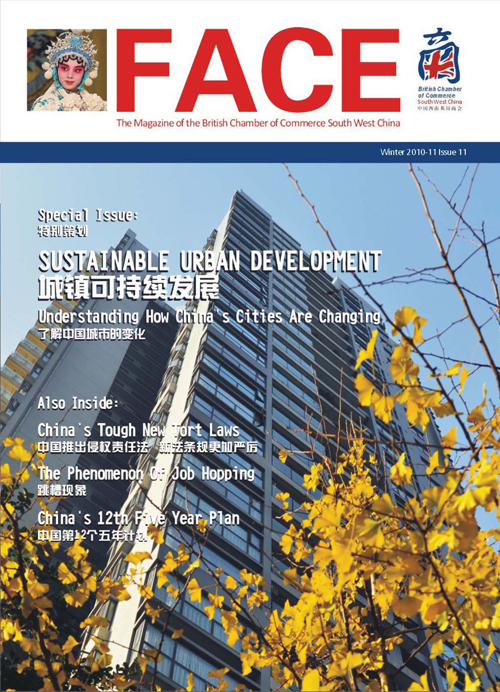
An article I wrote about the sustainable development in China’s cities was recently published in the Winter 2010/2011 Issue of the British Chamber of Commerce South West China Magazine “Face“. The piece examines the historical context under which China’s cities are currently developing and looks at some of the important decisions being made  by civic leaders, arguing that they will ultimately prove to be beneficial in the long-run.

For the readers of the China Urban Development Blog, here is a reproduction of the original piece: Continue reading