Q&A With Author of “The People’s Republic of Chemicals”

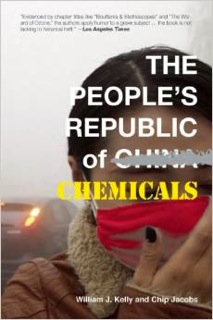
PRC cover

Nothing threatens the stability of China’s economic miracle more than the hazardous levels of pollution generated by rapid development. The rise of the private automobile, unregulated toxic factories, and the widespread use of coal-burning as an energy source have all contributed to environmental degradation across China’s cities. While in the past, these issues were swept under the rug in favor of economic growth at all costs, the rise in living standards means that China’s leadership can no longer ignore the concerns of the people they serve.

China is now at a crucial turning point where economic goals must be balanced with considerations for the environment going forward. This is not an easy problem to tackle and the solution will require a global effort.

The new book The People’s Republic of Chemicals serves as an excellent starting point in understanding how China’s pollution problem got so out of hand in the first place and what can be done to stop it (or at least slow it down). The book’s co-authors, William Kelly and Chip Jacobs, are appropriate storytellers having together written the 2008 book Smogtown about the rise and fall of pollution in mid-century Los Angeles.

William took the time to answer some questions for us about their new book:
Continue reading

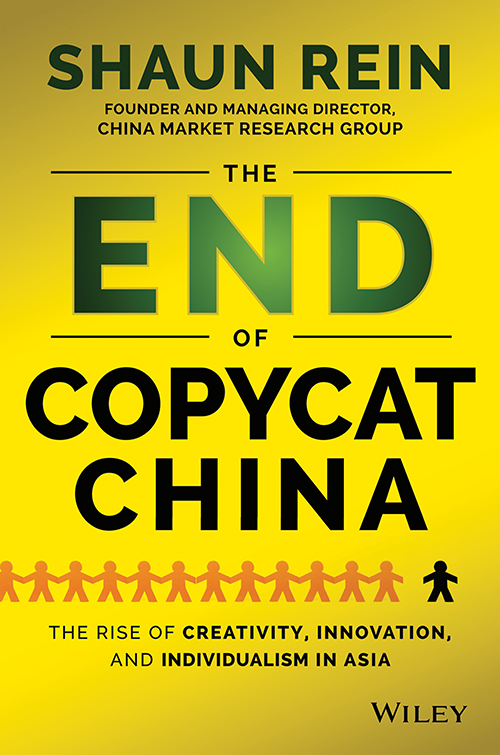
5 Questions for Shaun Rein, Author of “The End of Copycat China”

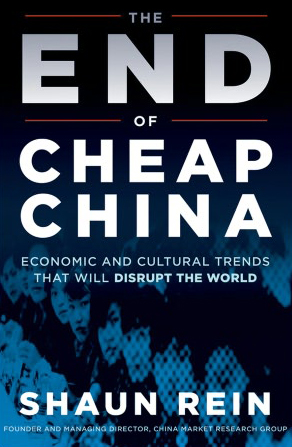
EndofCopycat China

More can happen in two years in a developing country like China than can happen in a decade or more in developed countries. And given this high speed of change, the information in business books about China’s economy can go out of date really fast.

That is why it is not surprising that although it has only been a little over two years since China analyst Shaun Rein released his first book, The End of Cheap China, he is back with another one. In that time span, China got a new leader in Xi Jinping, the one-child policy was significantly reformed, and Alibaba, the country’s biggest internet company, went public on the New York Stock Exchange.

The End of Copycat China is a natural follow up to End of Cheap China (which we featured a review of on this blog not long ago) and looks to build upon the research he’s been doing for the past decade on the ground in China.

I recently had a chance to chat with Rein about his new book and ask some questions about what he’s seen change in the past two years and, more importantly, the trends he sees influencing China’s development in the near future. Continue reading

Book Review: “The End of Cheap China” by Shaun Rein

Sensationalist stories about China’s supposed looming economic collapse captivate international headlines. While these articles might be entertaining to read or talk about, they nevertheless perpetuate an inaccurate picture of an evolving Chinese economy. The really big China story is perhaps too mundane for editors looking for catchy headlines. That is, the emergence of the largest middle-class in the world- beginning with Deng Xiaoping’s reform and opening up in 1978 and still being written today.

Upon my own arrival to China nearly five years ago, it became clear fairly quick that the younger generations living in urban areas would not be content to continue working in low-wage factories and construction sites forever. Following a similar arc of modernization and urbanization that developed countries went through in the past, albeit at a much accelerated rate, China ambitiously aims to move up the value chain economically.

This development is not easily grasped for those who haven’t had the opportunity to invest significant time interacting with people on the ground in China. Luckily we have Shaun Rein and his book The End of Cheap China to tell us the story of China’s evolving trends. The book was released in 2012, but the predictions Rein makes are perhaps even more relevant today than when it originally came out two years ago. Continue reading

China In Africa: An Interview With Go West Project

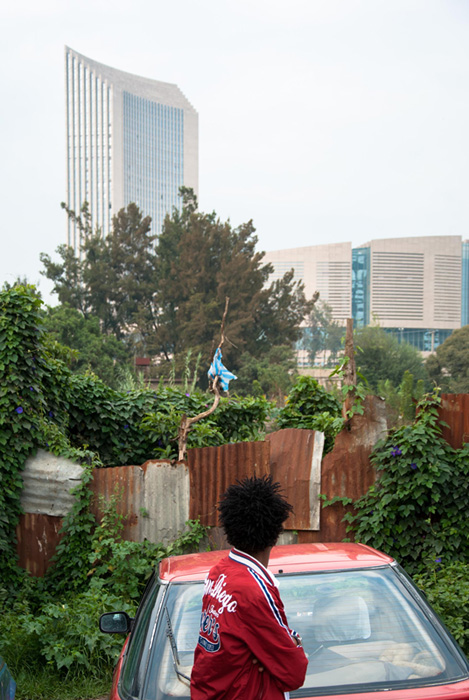
African Union Building A local looks up at the new African Union Headquarters in Addis Ababa, Ethiopia. The complex was funded entirely by Chinese money. Photo Credit: Go West Proejct

In 2009, China surpassed the U.S. to become Africa’s single largest trading partner. Yet the burgeoning relationship between China and Africa is no ordinary trading arrangement. Rather than colonizing the continent as Western powers did in the past century, China is trading infrastructure development and urbanization expertise for access to Africa’s vast natural resources. This re-balancing of trade has yet to be studied in depth as it is probably too early to tell what the impact of China’s involvement in Africa will have on the broader world’s economy.

What we can observe is the immediate impact China is having on Africa’s urban development. Luckily we have Dutch researchers Michiel Hulshof and Daan Roggeveen of the emerging cities think-tank Go West Project to explain to us what is happening on the ground.

I first met Hulshof (a journalist) and Roggeveen (an architect) at the 2011 Chengdu Biennale where they presented their research on China’s developing western metropolises (hence the name of their think-tank). Their research culminated in the book How the City Moved to Mr. Sun – China’s New Megacities (2011), which looks beyond the so-called 1st Tier cities of Beijing and Shanghai to tell the story of urbanization in the country’s heartland.

Now Hulshof and Roggeveen are looking even further, beyond China’s borders, to study what the Chinese urbanization experiment means for Africa’s cities. They were kind enough to take the time to answer some questions for us about their initial research: Continue reading

China and the Legacy of Steve Jobs

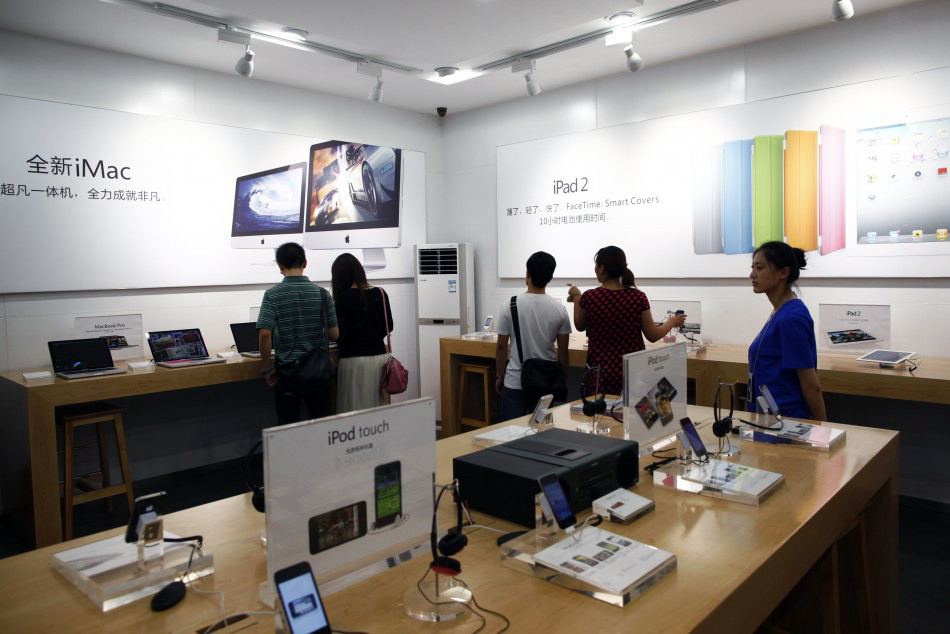
Fake ‘Apple Store’ in Kunming

It is not hard to understate the influence that Apple has had on China. If we examine the role the country plays in the supply-chain of Apple products, then China’s relationship with the company is undeniable. It is safe to say that without China’s contribution to the manufacturing and assembly process, Apple’s stylish products would be unaffordable to the average consumer around the globe.

That’s why last year when a string of suicides hit Foxconn, the company that manufactures products such as the iPad and iPhone, Steve Jobs was quick to announce that Apple would look into the working conditions. Jobs, a marketing genius, knew that negative PR associated with Foxconn would hurt Apple’s sleek and stylish image in the U.S.

What commentators in the U.S. failed to notice is the relative ambivalence of people in China regarding the Foxconn suicides. When I asked my Chinese colleagues what effect the incident had on their perception of Apple, they responded that there was absolutely none. Not only that, they defended Foxconn by saying that the rate of suicides among workers (there are tens of thousands of them) is not abnormal for society at large. Continue reading