Defining Western Bias

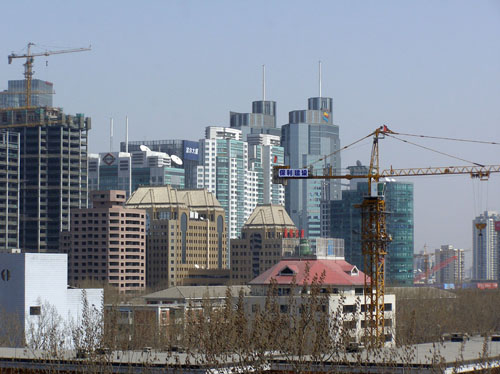
Architecture critic Guy Horton has an excellent essay on ArchDaily about redefining the way we judge and evaluate Chinese urban development.

China’s unique history and special set of circumstances at this time means that Western methods of analyzing urban issues are not sufficient for understanding the entire scope of Chinese development. Horton summarizes his point in the conclusion: Continue reading

Guangzhou’s Inferiority Complex

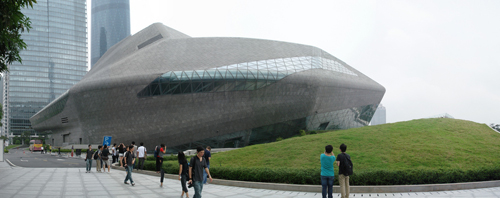
Guangzhou Opera House. Photo by puikincz

You gotta give Guangzhou some credit. The capital city of Guangdong Province is trying desperately hard to catch up to its first tier city peers in the culture department. The city’s inferiority complex manifested itself most recently in the over-the-top production of the 2010 Asian Games – an event reminiscent of the 2008 Beijing Olympics but hardly as noteworthy.

Now Guangzhou is looking to capture the spotlight once again with a spectacular opera house designed by Zaha Hadid, set to open to the public in February. This isn’t the first time striking architecture by a world-famous designer has been used to raise the profile of a city. Continue reading

City Journal’s Guy Sorman: China Basher

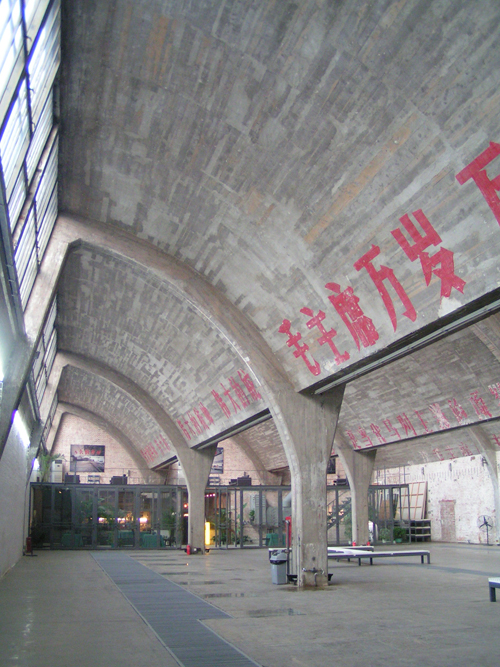
Beijing’s 798 Arts District

While browsing through the front page of the planning website Planetizen the other day, I came across a link to a story from the autumn issue of City Journal titled ‘Asian Megacities, Free and Unfree‘. City Journal, published by the Manhattan Institute, is one of my favorite publications about urban issues, and usually produces well-reasoned, thought-provoking pieces. And given the topic of this piece, I was excited to read what I thought would be a compelling article about the rise of Asian cities.

I couldn’t have been more wrong. Continue reading

Too Good To Be True: Architecture Scams in China

Architecture professionals across the world are entranced by the building boom taking place in China. The urbanization of China’s cities has been a lucrative opportunity for several foreign firms. With the global economic recession freezing construction activity in most Western countries, more architects are looking to China as a panacea for the lack of new work.

Being an American architecture design professional working in China, I get asked often about opportunities for foreign architects eager to break into the local market. My advice always starts by suggesting  to leave preconceived notions about doing business in China behind and approach opportunities with a very open mind. Furthermore, despite the perception that China’s building boom is a free-for-all, the reality is that penetrating the market and getting commissions is not as easy as it seems. Continue reading

Tragedy in Shanghai

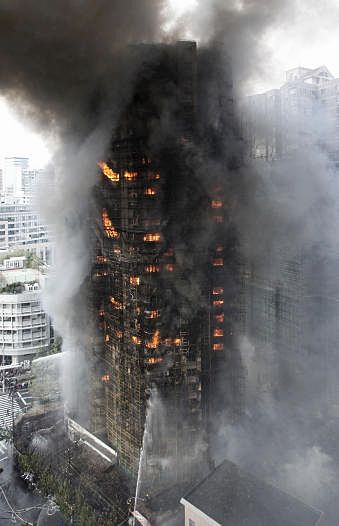
I’m an unabashed fan of tall buildings, high-rises, skyscrapers- whatever you want to call them. Not only do they lend cities a sense of identity by the way a collection of tall buildings can uniquely define a skyline, they also offer occupants a chance to experience urban environments in the elusive z-axis. Residential towers offer the potential to transform neighborhoods into bustling high-density zones of activity. There is arguably no other type of building that defines the current modern era of world architecture better than the skyscraper.

The high-rise building type is not without its calculated risk though, especially when it comes to the issue of safe occupant egress in case of emergency. When tall buildings do fail (a very rare occurrence), the results are sometimes disastrous. One only needs to remember the image of the collapsing World Trade Center Towers in Manhattan to get a grim reminder of the great risk and loss of life skyscrapers can pose. Continue reading