An Experience in Contrasts: Redevelopment in Beijing’s Historic Qianmen Neighborhood

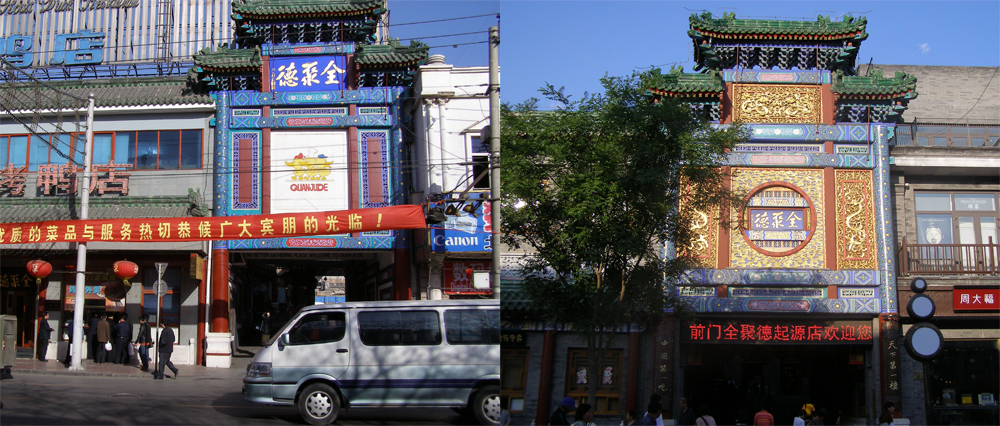
Before and After Photos of ‘Quanjude’, a famous Peking Duck Establishment in Qianmen Since 1864

It is a familiar narrative across China’s cities: historic districts routinely razed to make way for new developments comprised of high-rise residential communities and retail mixed-use complexes designed to reflect China’s 21st Century image.

Yet in some of China’s more high-profile historic neighborhoods, redevelopment is conceived to capture the spirit what was once previously on site by rebuilding in traditional Chinese architectural styles. ‘Tourist Streets’, as these kinds of developments are referred to by developers and government officials, are a hot project type in China- nearly every city wants one. They range from accurate recreations of China’s past to cheap pastiche. Continue reading
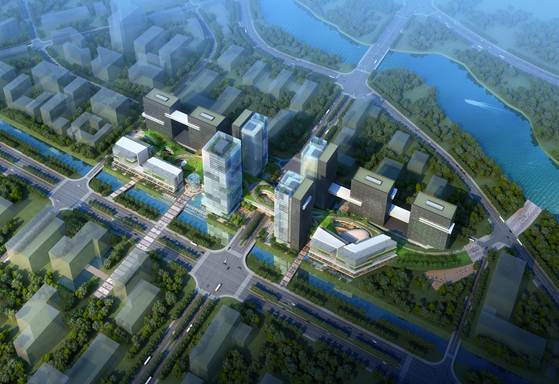
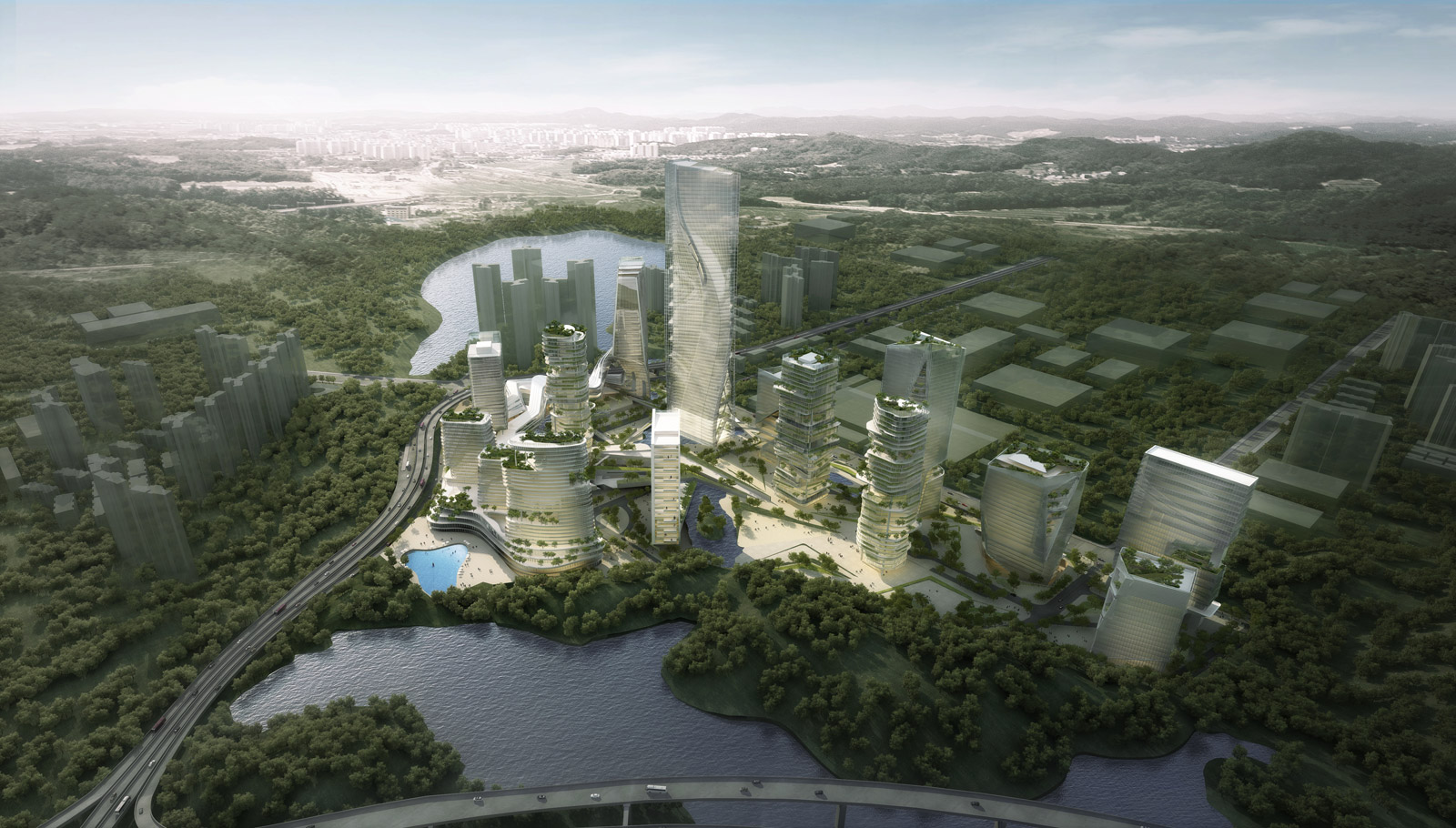
Lessard Design Wins Competition For Nanjing Technology Community

Lessard Design, an American architecture firm based out of the Washington D.C. area, recently shared with us some images of their competition winning entry for the Nanjing Technology Community. Designed in conjunction with local design institute Nanjing City-Town Architecture Design & Consultants (CTA Architects), the project is a 4,280,000 square foot office complex geared towards technology entrepreneurs. Continue reading

Shenzhen Surging: Yabao Hi-Tech Park by 10 Design

Shenzhen, China’s experimental Special Economic Zone, is often derided for its lack of history and culture. This is in no small part due to the fact that the city is essentially a boomtown that is more or less just over 30 years old. Yet making up for this drawback is the fact that the city has some of the most interesting and innovative new architecture being built in the country.

I was recently informed of a design for a compelling new project that fits the bill for Shenzhen’s growing stock of interesting buildings. The Yabao Hi-Tech Park is a new development by the Shenzhen-based Galaxy Group and designed by the architecture firm 10 Design. Continue reading

Politicizing the Pritzker

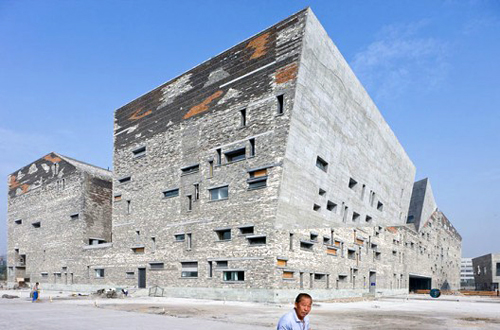
Ningbo History Museum by architect Wang Shu

Last month, this year’s Pritzker Prize (architecture’s highest honor) was awarded to Chinese architect Wang Shu. The announcement was surprising for a few reasons. For one, consensus around the architecture blogosphere was that the award would go to a more high-profile architect such as Toyo Ito or Steven Holl, both looked over in recent years. Secondly, assuming that the Pritzker jury intentionally chose a Chinese architect, there were others who could have been considered such as Zhu Pei, Ma Qingyun, or Ma Yansong (perhaps still a bit too young).

The Chinese architects mentioned above derive inspiration from China’s ascendancy towards the future, pushing the limits of avant-garde building form. Wang Shu’s architecture, on the other hand, is rooted more in the past, exuding firmness and strength. In this regard, Wang’s architecture is more like last year’s Pritzker winner, Portugal’s Eduardo Souto de Moura, than his Chinese counterparts. Continue reading

An Architect’s Guide to Working in China

A few months ago I read a piece from Bloomberg discussing Frank Gehry’s decision to ‘turn to Asia for architecture projects as U.S. growth slows.’ In terms of big name architects from the U.S. and Europe turning to Asia for work, Gehry is late to the party. Nevertheless, it is a very telling sign that Gehry, someone who in the past could be highly selective of his clients, is looking to Asia to keep his office busy.

In the Bloomberg article, Gehry is candid about his desire to work domestically in the U.S. yet lacking the opportunity due to the depressed economic situation. As if another reminder is needed about the sorry state of the industry, Salon published a piece about the dire outlook for the profession last month titled ‘The Architecture Meltdown‘.

So aside from returning to graduate school, designing furniture or leaving the profession completely, most architects in the U.S. and other Western nations have limited options, therefore turning to emerging markets where there is work happening. China is by far the largest of these emerging markets for new buildings. Continue reading