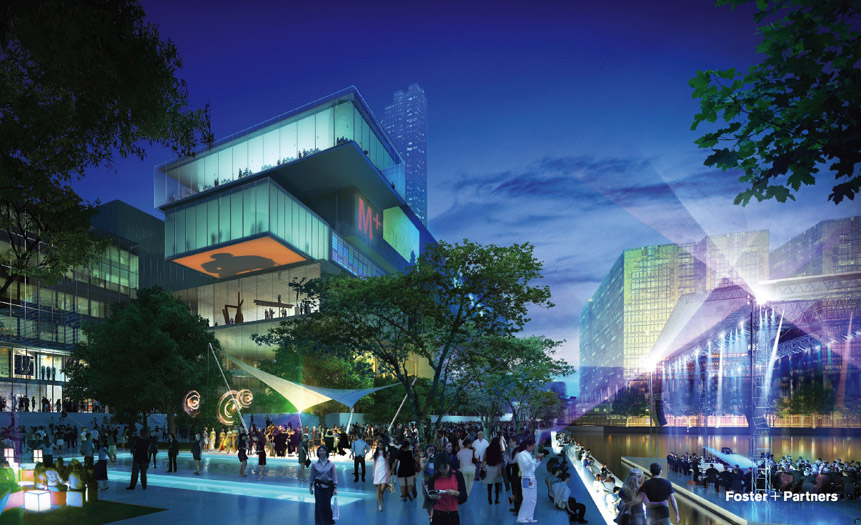
Foster + Partners Wins Hong Kong’s West Kowloon Cultural District Master Plan Competition

Although famous as an international trading and banking center, Hong Kong, save for a strong culinary tradition, lacks in the culture department. The city is just simply not know as an arts destination. That reputation could be changing soon as southwest tip of Kowloon is redeveloped into a large cultural district.

The West Kowloon Cultural District seeks to fill the void of a lacking arts scene in the Special Administrative Region. While undertakings by city governments around the world looking to create large-scale arts or culture districts sometimes come off as desperate attempts to prevent decline and irrelevance, Hong Kong has not such problem of reverting to a backwater anytime soon. Continue reading
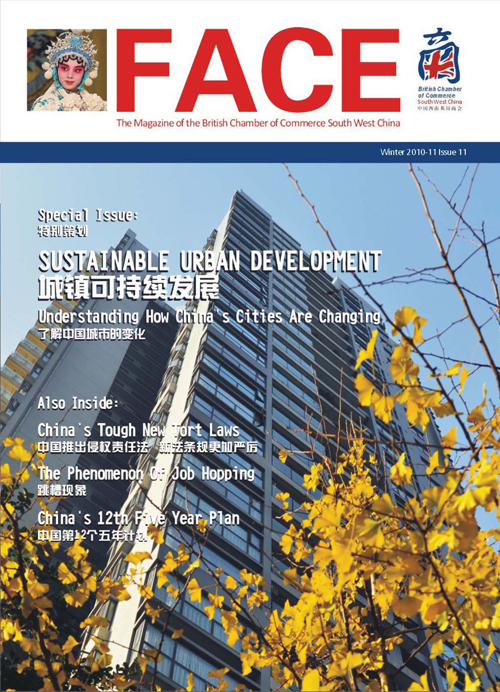
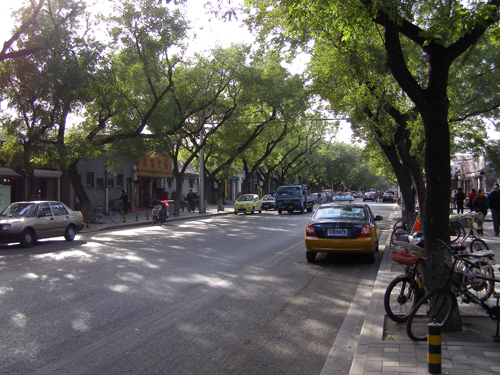
Urbanizing Towards a Clean and Sustainable Future

An article I wrote about the sustainable development in China’s cities was recently published in the Winter 2010/2011 Issue of the British Chamber of Commerce South West China Magazine “Face“. The piece examines the historical context under which China’s cities are currently developing and looks at some of the important decisions being made  by civic leaders, arguing that they will ultimately prove to be beneficial in the long-run.

For the readers of the China Urban Development Blog, here is a reproduction of the original piece: Continue reading

Preservation in Beijing: The Battle for Gulou

A frequently revisited topic in discussions about China’s development is the widespread loss of historic structures and neighborhoods throughout the country’s fast-changing metropolises. From the Western historical preservation perspective, much of what has taken place over the course of China’s three-decade long modernization is nothing short of an epic tragedy. No other narrative exemplifies this lament more than the destruction of the hutong neighborhoods in central Beijing.

Last July, the New York Times ran a story about this very topic, aptly titled ‘Bulldozers Meet Historic Chinese Neighborhood’. The neighborhood in question is Gulou (meaning ‘drum tower’, which is the neighborhood’s landmark, along with the adjacent Zhonglou, or ‘bell tower’). Located in central Beijing, just north of the Forbidden City, Gulou is one of the last remaining areas comprising hutongs (narrow alleys) lined by the accompanying siheyuan (traditional courtyard homes). Continue reading

Mega-City Semantics in the Pearl River Delta

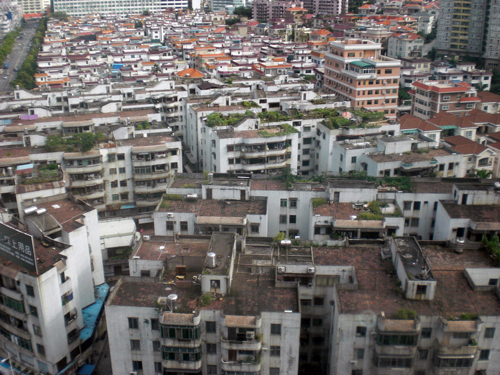
Dongguan Housing. Photo by livinginchina4now.

Several people have called my attention to a recent article from The Telegraph about China ‘creating the largest mega-city in the world with 42 million people‘. The title of the piece is a bit misleading as the government is not planning a new city per se, but rather combining a group of nearby cities into one huge ‘mega-city’. The targeted group of cities make up the Pearl River Delta region in China’s southern Guangdong Province.

Home to China’s famous first tier cities Guangzhou and Shenzhen, the Pearl River Delta is already one of the most populated places on earth. It is the manufacturing powerhouse of the country, thanks in large part to it being the first economically liberalized region after Reform and Opening Up. As a result of this, the Pearl River Delta has absorbed ambitious migrants from all over China for  the better part of three decades. Continue reading

Defining Western Bias

Architecture critic Guy Horton has an excellent essay on ArchDaily about redefining the way we judge and evaluate Chinese urban development.

China’s unique history and special set of circumstances at this time means that Western methods of analyzing urban issues are not sufficient for understanding the entire scope of Chinese development. Horton summarizes his point in the conclusion: Continue reading