Category Archives: Environment

Organic Farming in China: Chengdu’s Anlong Village

With the ongoing spate of food safety scandals, Chinese consumers are rightly weary of the source and quality of their food. Unfortunately, food quality regulatory bodies in China remain unreliable and direct access to fresh food sources is limited for an increasingly urbanized populace. This is one of the great contradictions of China’s urban development: a country which for most of its history was majority agriculturally based is on the fast track to be one of the most urbanized nations in the world.

Status conscious Chinese urbanites would rather not associate with anything related to farming, as it evokes the recent memory of rural peasant life. For many upwardly mobile city dwellers, international restaurant chains like KFC, McDonalds and Pizza Hut are considered the best options for upper-class ‘healthy’ dining (that is, food with high caloric content).

The urban growth of China is a boon to these chains as more American consumers shun them in favor of a more organic, natural diet. The shift in American consumer preferences is reflected in the success of supermarket chain Whole Foods, local farmers markets, and the growing popularity of the Slow Food movement.

Given China’s new-found love affair with processed food and growing ambivalence about the role of agriculture, I was confident there was probably not much interest in organic farming. That was until I visited Anlong Village- a wholly organic, zero waste farm 50 km northwest of central Chengdu. With a full-time population of 3,000 residents, Anlong Village is sponsored by the Chengdu Urban Rivers Association (CURA), a local non-profit NGO.

Anlong Village was initially set-up in an effort to help clean up the Funan River, which flows into central Chengdu

Anlong Village is CURA’s flagship project, and unlike other purported ‘eco-cities’ under development in China, lives up to its claim of being 100% sustainable. The partnership was established in 2003 as an effort to help clean up the adjacent Funan River, which flows through central Chengdu, after it was discovered that most of the river pollutants come from agricultural runoff upstream.

Anlong helps abate this problem by avoiding the use of chemical pesticides and instead using natural methods to fight agricultural pests. These methods include surrounding plots with mint (a natural pesticide) and planting garden plots with a variety of different species (so if one crop succumbs to disease, it does not destroy the entire plot). This not only avoids dumping unnatural chemical waste into the river, but ensures that the farm’s soil is nurtured over the long-term.

The village also features a comprehensive composting system. Composting toilets turn waste into organic fertilizer and animal waste is recycled into concrete pits treated with anaerobic digestive microorganisms that convert it into methane gas used for heating and cooking. Plant waste is also re-used as organic fertilizer.

Organic waste is mixed together in large pits and composted naturally before being re-used as fertilizer

Throughout the village, greywater is treated in a series of specialized ponds that naturally remove pollutants. Treated greywater can then be re-used for agricultural irrigation. Constructed wetlands adjacent to the Funan River also treat greywater, assuring that potentially harmful waste water is filtered before entering the river.

Constructed wetlands treat greywater, naturally removing pollutants

Despite the initial apprehension of local government officials, Anlong Village is a tremendous success. Of the few plots available to non-Anlong residents (primarily health conscious families living in the city who tend to their crops on the weekend), demand outstrips supply.

Demand is also great for the organic produce grown in Anlong. This is in large part due to Chinese consumer mistrust of the validity of produce labeled ‘organic’ in large Chengdu supermarkets like Wal-Mart, Carrefour, or Isetan. Anlong, on the other hand, offers a trustworthy source.

Unfortunately, at this point there are very limited formal distribution channels for purchasing organic produce grown in the village. Farmers frequently venture to the city to sell their crops, but usually only those ‘in-the-know’ will know when and where exchange points are. To make it a bit easier for consumers, CURA is currently in the process of training Anlong farmers how to use microblogging sites to announce the time and location of exchange points.

An outdoor dining hall in Anlong Village. The 100% organic & vegetarian lunch I ate here ranks up as one of the best meals I’ve eaten in China

In its relatively short history as a 100% organic farm, Anlong Village is already a benchmark for other aspiring sustainable farms around China. Yet like in the U.S., there is ongoing debate about the scalability of such a model. Considering the high markup on price compared to commercially farmed crops (produce grown in Anlong can be two to three times the cost of commercially farmed produce), many argue that this method of farming is not practical to feed a nation with such a huge population as China.

In spite of this debate, and given China’s struggle with pollution as it continues to develop, Anlong Village is a blessing and a valuable reminder that practical steps can be taken to protect its environment.

Building a Greener Capital

Prosper Center, Beijing’s First LEED Gold Certified Building

The following is a guest post by Daniel Garst, a Beijing-based American writer. This article originally appeared in the March 24, 2011 China Daily Metro edition.

Nothing concentrates the mind of economic planners quite like political instability in key overseas energy suppliers.  China’s new Five Year Plan therefore not only mandates further reductions in the energy used in generating economic output, but also sets, for the first time, overall consumption goals.

Making buildings here more energy efficient will be one key element in achieving these goals.  A January 7, 2011 National Geographic News story states that the building sector absorbs 30% of China’s energy, a threefold increase since 1980.

Beijing has recently made notable progress in reducing energy waste in this area.  A thirty percent wholesale subsidy program encourages the purchase of efficient light bulbs, while local authorities have aggressively pushed a coal-to-electricity project in hutong neighborhoods.

This program both lowers sulfur emissions and energy use, as the electric heaters are more efficient and have adjustable thermostats; some models even have thermostats pre-programmed to use less electricity during peak day hours and store it up at night.  Rooftop solar water heaters are also now a common sight in Beijing’s hutongs.

Moreover, a Ministry of Construction crackdown has raised the compliance rate with the construction code calling for new Beijing buildings to use 65% less energy than their 1980s predecessors to over 90%.

However, even with this success, Li Bingren, chief economist at the Ministry of Housing and Urban-Rural Development, notes in a September 21, 2010 China Daily story that heating energy consumption in buildings here will still substantially exceed those in the west.

Fortunately, lots of room still exists for further efficiency gains.  For example, heat for most residential buildings is still supplied by coal-fired boilers pumping hot water into radiators, so dwellers cannot lower or turn off the heat when it warms up or they’re out of the house.

An October 2010 University of Nottingham China Policy Institute paper on energy consumption in Chinese buildings states that 7% of the heat here is wasted when people open their windows because they have no way of controlling it themselves.

As incomes continue rising in the capital, Beijingers will demand larger flats with more lighting and electrical gadgets.  This makes it imperative for new buildings to allow residents—China’s 2008 Energy Conservation Law mandates that they be charged according to the amount of heat used—to control interior temperatures.

Subsidies could also be given to residents adopting thermal technology products that automatically allocate heat to rooms with different temperature demands.

Lastly, Beijing can be much more aggressive in retrofitting not just siheyuans, but other residential units as well.  The National Geographic News article cited earlier notes that Harbin has spent 1.1 million RMB to improve wall insulation and roofing in 2 million square meters of residential buildings.

Many high-rise commercial buildings also waste energy.  The University of Nottingham paper notes that while such structures take up just 4% of the floor space of Chinese construction, they account for 22% of the building sector’s energy use, thanks to poor design, especially badly insulated windows.

Unfortunately, as a leading Tsinghua University Professor quoted in an April 3, 2006 story on the Science Ministry headquarters, the granddaddy of Beijing’s “green” office buildings, puts it, “local governments just want fancy post-modern designs you can brag about.”

But the newly completed Parkview Green building on the Dongdaqiao Lu, which sports a slanting environmental shield resembling a giant greenhouse, shows that such structures can be very green.  In 2010, it was the first Chinese building to win the prestigious MIPIM Asia “Green Building” award.  And just down the Guanghua Lu stands the Prosper Center, Beijing’s first LEED Gold certified building awarded by the U.S. Green Building Council.

While both these buildings were expensive build and are costly to lease, Beijing’s first U.S. Natural Resources Defense Council certified green building, the Science Ministry headquarters, demonstrates that green construction can be less expensive in the short- as well long-run.  According to the Christian Science Monitor article on this structure, by avoiding the use of expensive materials, like marble, it cost $700 per square meter to build vs. the $850-1000 per square meter for other government buildings.

Of course Beijing’s construction industry still lacks a green material supply chain and expertise.  However, these things will develop as more of these buildings are constructed.  And since most factories have already been moved from the capital, Beijing will have to go green in building to do its part in helping China conserve energy.

Deindustrializing Beijing: Images from the Decommissioned China National Steel Factory

Beijing’s poor air quality is a well-documented phenomenon, yet what is often not considered is the fact is that the municipality has taken steps in recent years to deindustrialize and move its polluting factories outside the city to neighboring provinces (mainly Hebei Province). Unfortunately the closure of factories doesn’t seem to have done much to abate Beijing’s air quality problems as an increasing number of private automobiles continue to clog the city’s roads. That being said, Beijing did try its best to at least keep its air clean for the two weeks of the Summer Olympics back in 2008.

One of the most high-profile examples of this effort was the permanent closure of the China National Steel Factory in western Beijing- one of the largest steel mills in the country. My friend and Beijing resident Daniel Garst, an American writer, recently had the opportunity to visit the decommissioned factory and take some nice shots of the slowly decaying complex.

As the future remains uncertain for the former steel factory, it presently serves as a reminder of Beijing’s industrial past and is a prime location for shooting photography and filming commercials. Perhaps the factory will be reused in the future as a commercial/entertainment district as developers take advantage of the ‘industrial chic’ aesthetic to redevelop other decommissioned factories around the country.

For now, please enjoy the following images of the abandoned complex.

Speculation: China’s Proposed Eco-Cities

A piece I wrote about China’s proposed eco-cities appeared recently in the  inaugural issue of Dwell Asia magazine. The article takes a look at two proposed eco-cities, Dongtan in Shanghai and the Sino-Singapore Eco-city in Tianjin, examining the implications of the ideas presented in both proposals.

For the readers of the China Urban Development Blog, here is a reproduction of the original piece:

Today’s urban development zeitgeist suggests that cities should move towards sustainable models of living to combat climate change and reduce resource consumption. Of course, how to achieve that is a subject of ongoing debate among design and planning professionals. Unfortunately, branding new developments as ‘green’, ‘eco’ or ‘sustainable’ is often a loaded attempt to satisfy marketing and public relations needs for developers and government officials.

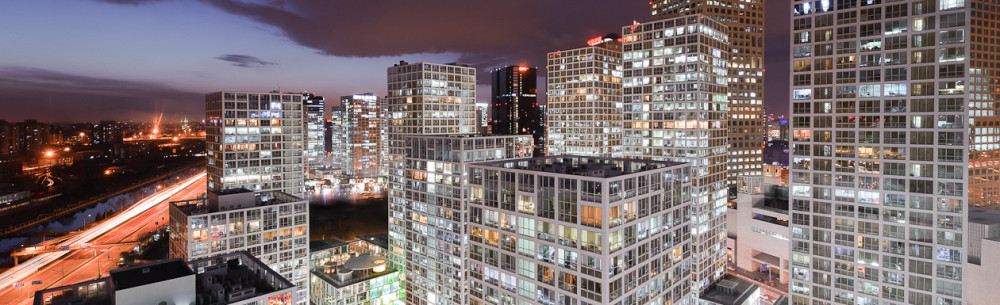
Nowhere is the use of greenwashing strategies more common than in China, where new cities practically arise overnight. Many new developments, particularly large-scale residential communities consisting of repetitive tower blocks, with names like Authentic Gardens and Spring Flower Court, claim to be environmentally friendly, but have little in the way of sustainable design strategies aside from a few patches of green space.

There are few problems with this mode of development. For one, new residential projects often take up entire city blocks, turning their back on public streets and discouraging a mix of uses and walkability. Secondly, tower blocks are often built cheaply without proper insulation or sealed windows, leading to more energy consumption for heating and cooling. With the demand for new residential units so strong, there is generally no incentive for property developers to spend extra on things that would save energy in the long run.

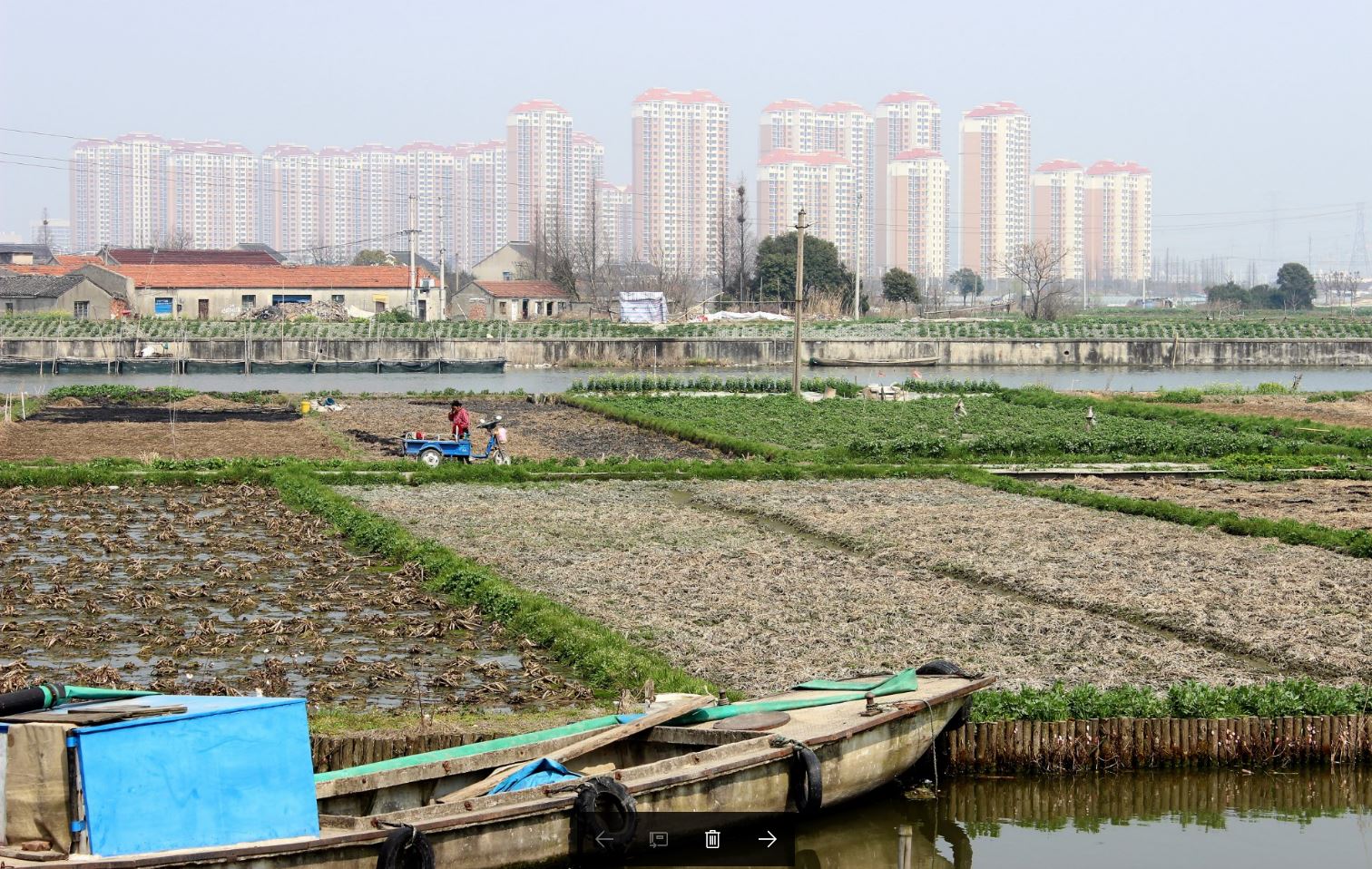
The need to make new residential developments sound greener than they actually are reflects a deep contradiction between China’s traditional love of nature and its current state of hyper-urbanisation. As more farmland makes way for expanding cities, promoting a sense of nostalgia ensures that newly developed properties will appeal to first time Chinese homebuyers. Yet a new mode of development is emerging in what might ultimately serve as more appropriate and honest model for China to reconcile its agrarian past with its
urban future.

Enter the eco-city. The eco-city concept, which has gained a wide international audience among planners and environmentalists over the last two decades, aims to build new cities and neighbourhoods in a way that uses the best of sustainable technologies and planning strategies to reduce waste and carbon emissions. Given its current state of development, China is an ideal testing ground for new eco-cities.

Dongtan: A planned Eco-city on Chongming Island in Shanghai

China is lauded for two planned eco-cities in particular: Dongtan, on Chongming Island in Shanghai, and the Sino-Singapore Eco-city in Tianjin. Both eco-cities lie well outside the traditional urban cores of their respective municipalities and seek to become self-sufficient sustainable communities complete with residential, commercial, retail, educational and recreational uses. The way in which these eco-cities differ from other new developments around China is their focus on clean energy, including solar, wind and bio-fuels and urban design promoting sustainable transportation methods such as walking and cycling.

Despite the good intentions of their designers, there is some concern over the viability and appeal of such developments. Some critics argue that Dongtan, which is now indefinitely on hold, is nothing more than a ‘Potemkin Village’ meant to make government officials look good. Others argue that the high initial cost of sustainable technologies means that the cost of living will be too far out of reach for middle-class Chinese urbanites.

Perhaps most misleading about China’s eco-cities is the overall impact they will have on the entire country’s carbon footprint. Together, Dongtan and the Tianjin Eco-City are planned for less than 1 million residents…a drop in the bucket compared to an urbanising population of more than a billion.

Sino-Singapore Eco-city in Tianjin

Eco-city hype aside, China is doing much more to develop towards a more sustainable future in ways that will have much greater impact. Construction of transportation infrastructure, including a national high-speed rail system and extensive metro systems in nearly every large city, will help reduce carbon emissions. Furthermore, China is already the world leader in renewable energy technology, with enormous investment into wind and solar energy.

Whether or not China’s eco-cities ever come to fruition, there are lessons to be taken from the ideas presented in the plans. Promoting genuine mixed-use neighborhoods and buildings with sustainable technologies such as passive heating and cooling and low-flush toilets are a step in the right direction. Yet given the type of development that is currently en vogue in China (the quickly built, tower block type), perhaps it best to start with the unglamorous basics: wall insulation and properly sealed windows.