Category Archives: Dongguan

A Guide to China’s Rising Urban Areas

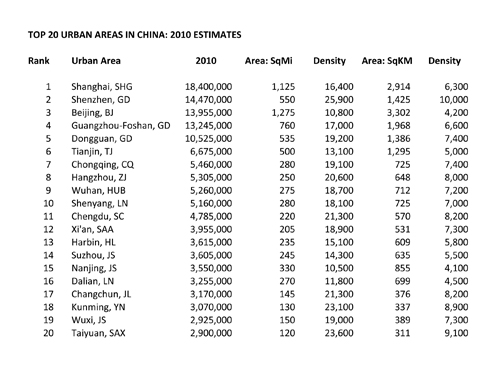
Source: Demographia World Urban Areas: Population & Projections: 6th Edition. http://demographia.com/db-worldua.pdf
 

I have a new piece up at NewGeography about China’s rising urban areas. Below is an excerpt from the introduction:

From a Rural to Urban Dispersion in the Middle Kingdom

China’s rise to economic prominence over the past 30 years has rested in large part to its rapid    urbanization. Prior to ‘reform and opening up’ that started in earnest during the 1970s, cities in China were viewed as pariahs by the party leadership. Millions of young urban dwellers were forced into the countryside to labor on farming communes during the Cultural Revolution. In stark contrast, today millions of rural migrants make their way to the city.

The scale at which this is happening is unprecedented. Currently, there are 85 metropolitan areas in China with more than 1 million people, compared to 51 in the US. By 2015, urban regions will account for half of China’s population and by 2025, the urban population’s share should reach about 75%.

To date, international attention has remained fixated on China’s largest cities of Beijing and Shanghai (and to a lesser extent, Guangzhou and Shenzhen). This is not without good reason, as Beijing and Shanghai are not only the respective government and financial centers of mainland China, but both were host to two of the most visible world events of the past decade: the 2008 Summer Olympics and the recently concluded World Expo.

Second and Third-Tier Cities Enter Onto the World Stage

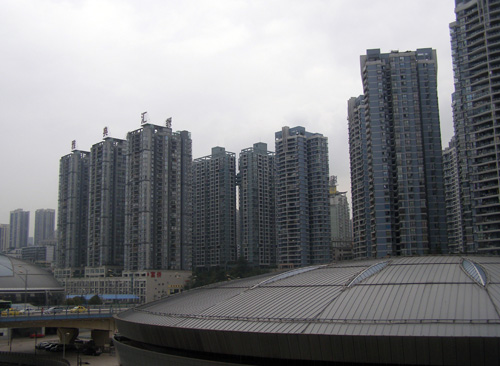
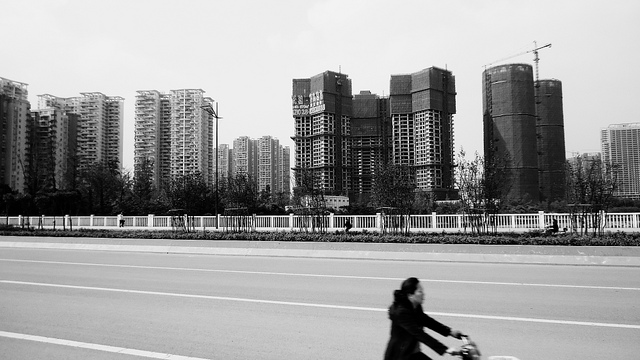
Increasingly, however, the real trajectory of urban growth is shifting to China’s so-called ‘second-tier’ and ‘third-tier’ cities. To the outside observer, China’s lesser-known cities might seem all too similar to one another given the monotonous aesthetic of their newly constructed cityscapes. Indeed, the newfound appearance of Chinese cities is a point of contention among local urban development scholars who are concerned about the converging ‘identical faces’ of these urban areas.

Yet to Chinese locals and foreigners who have spent some time living here, it Chinese cities are defined more by their local cuisine, dialect, history, geography, culture and climate rather than their architectural character. These often-overlooked nuances of local culture are much more essential to the identity of these cities than buildings. In the future, these distinctions may prove more effective in attracting investment and talent than flashy new construction projects.

To continue reading about these cities please click here.

How China’s Megacities Have Avoided Problems of Other Developing Cities

Urbanist media can’t seem to get enough of the megacity these days. Much of the commentary surrounding this topic is disconcertingly celebratory about these leviathans despite such phenomena as overcrowding, high levels of congestion and sprawling slums.

Yet absent from most of the commentary is any mention cities in China. This is perhaps due in large part to the lack of serious social problems in comparison to its developing city counterparts in other countries. If a megacity is defined as a city with a population of more than 10 million, then China is home to 5 megacities: Shanghai, Beijing, Shenzhen, Guangzhou and Dongguan. As the country continues to urbanize, more Chinese cities are bound to join the ranks of these megacities.

How has China been able to avoid the pitfalls facing other developing megacities? No one is denying that Chinese cities don’t have problems including unequal income distribution, pollution and growing traffic congestion. Yet China’s megacities seem to have largely avoided social dangers such as violent crime, disease and slum proliferation that plague urban areas of other developing countries.

Following I have identified five points as to how China’s cities have avoided these issues:

1. Construction of New Housing Units

Western media continues to bawl over the amount of new residential construction in China, calling it the ‘biggest bubble ever‘. I have pointed out before how this might be an overestimation of the problem and that the housing market is actually more stable than many think. One thing is clear: the ample construction of new housing units in cities across China remains the essential component leading the way in the country’s development. The ability to provide modern accommodations for millions of aspiring urban dwellers has also directly prevented the proliferation of slums and large-scale shantytowns.

2. Development of Public Transportation

The ability to move efficiently through an urban area is paramount to opportunity and quality of life. When one thinks of megacities such as Jakarta or Mexico City, automobile gridlock often comes to mind. Beijing might have its traffic problems as well, but China’s development of public transportation, including extensive underground subway networks, ensures citizens will have other options to move around besides motor vehicles. The more connected by different forms of a transportation a city is, the more opportunity people have to live where they want and have access to a wider geographic range of job options.

3. Land-Use and Zoning Flexibility

The often-overlooked reality of zoning and land-use regulations plays a much greater role in the shaping the character of megacities then it is given credit for. Mumbai’s draconian 1.33 floor-to-area ratio (FAR) throughout most of the city means that it is limited to construction of low-rise buildings, leading to the growth of overcrowded sprawling slums. Chinese cities, in contrast, allow for high FAR, promoting construction of high-rise buildings that leave room for ample green space.

Furthermore, Chinese cities are not limited by ‘urban growth boundaries’ and allow development to occur on newly annexed land outside of traditional urban cores. Even traditionally ‘dense’ cities like Shanghai and Hong Kong allow for new development outside of their traditional centers: the Pudong New Area in Shanghai and the New Territories in Hong Kong are huge areas that are still largely underdeveloped when compared to their respective downtown areas.

Critically, these nominally suburban or even “exurban” expansions are not mere bedroom community; they are frequently attached to areas of intense commercial, industrial and technical development. In many cities, including Chengdu, where I reside, most of the new economic growth takes place in such communities.

4. Providing Economic Incentives with Special Trade Zones

As China enters its third decade of rapid development, competition is heating up between its cities for domestic and foreign investment. The winners will ultimately be cities that are most business friendly and offer incentives like tax breaks to companies looking to set up operations. Many of China’s cities have gone about this by establishing special ‘economic and trade zones’, usually outside of traditional urban cores. As a matter of fact, one of new China’s most economically successful cities, Shenzhen, largely started as a ‘Special Economic Zone’ (SEZ). Special economic and trade zones that are not actual cities, but part of a larger city, thrive because they usually built on more affordable land on urban peripheries, opening up more investment for construction of state-of-the-art manufacturing and R&D facilities.

5. Willingness to Learn from Outside Experts

When it comes to political issues at the Central Government level, it is clear that China does not want to be told how to run its country by outside diplomats and foreign policy experts. Yet at the municipal level, Chinese government and business leaders are earnestly open to listening to experts in planning and development from outside its borders. One only needs to take a look at the countless architecture and urban planning practices from the West, Singapore and even Taiwan who currently work in China. This open exchange of ideas taking place is what allows best practices to come to fruition.

Mega-City Semantics in the Pearl River Delta

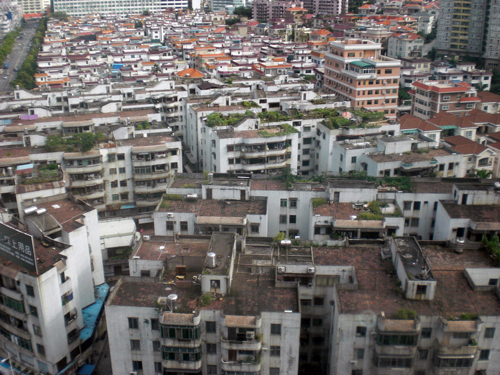
Dongguan Housing. Photo by livinginchina4now.

Several people have called my attention to a recent article from The Telegraph about China ‘creating the largest mega-city in the world with 42 million people‘. The title of the piece is a bit misleading as the government is not planning a new city per se, but rather combining a group of nearby cities into one huge ‘mega-city’. The targeted group of cities make up the Pearl River Delta region in China’s southern Guangdong Province.

Home to China’s famous first tier cities Guangzhou and Shenzhen, the Pearl River Delta is already one of the most populated places on earth. It is the manufacturing powerhouse of the country, thanks in large part to it being the first economically liberalized region after Reform and Opening Up. As a result of this, the Pearl River Delta has absorbed ambitious migrants from all over China for  the better part of three decades.

In addition to Guangzhou and Shenzhen, the proposal calls for integrating smaller (albeit still in the millions population-wise) cities of Donggaun, Foshan, Huizhou, Zhaoqing, Jiangmen, Zhongshan and Zhuhai into one. Upon first reading, the proposal doesn’t make much sense as the Pearl River Delta region has done an excellent job already of linking transportation and  infrastructure among its different cities- so why the need to amalgamate into one city?

Yet the intention of the integration becomes clear when Ma Xiangming, the chief planner at the Guangdong Rural and Urban Planning Institute, articulates that:

The idea is that when the cities are integrated, the residents can travel around freely and use the health care and other facilities in the different areas.

This is the key. The Chinese government still enforces the hukou household registration system for its citizens, making it difficult for people who move from one city to another to use the services offered by their new city. Restrictions for migrants to new cities are not only limited to healthcare and educational services, but to investment opportunities as well such as starting a business or purchasing a new home.

By amalgamating the cities of the Pearl River Delta into one ‘mega-city’, this gets rid of the bureaucratic restrictions of the hukou registration. Now, the migrants who have left their native homes and settled in the Pearl River Delta can move more freely around the region. This is much more than semantics- it is a huge step forward in the liberalization of movement and opportunity for its citizens. It is unbelievable that The Guardian piece makes no mention of the significance of this development.

The Telegraph: China to Create Largest Mega City in the World

UPDATE:

Now there are reports that the story of the Pearl River Delta mega-city is false. According to an AFP report, China denies plan to create world’s biggest city.

The error made by the original Telegraph article is most likely due to a misunderstanding by the reporters. As I mentioned above, the title was highly misleading- nothing more than a sensational headline designed to get reader attention. And the consultants quoted in the original article are city planners- professionals whose job it is to make recommendations on how to go about development- not the final decision makers who approve projects.

The fact that the Pearl River Delta is not going to become one ‘mega-city’ doesn’t necessarily take away from the interest in integrating the region, making it  a place where services are shared and the ease of mobility between its cities is increased.