Category Archives: International Trade

China and the Legacy of Steve Jobs

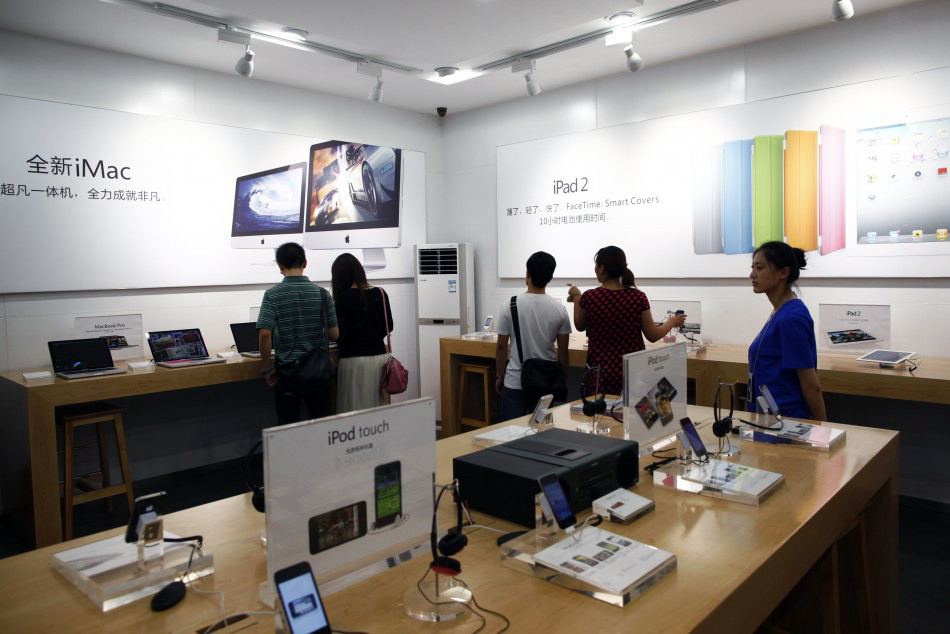
Fake ‘Apple Store’ in Kunming

It is not hard to understate the influence that Apple has had on China. If we examine the role the country plays in the supply-chain of Apple products, then China’s relationship with the company is undeniable. It is safe to say that without China’s contribution to the manufacturing and assembly process, Apple’s stylish products would be unaffordable to the average consumer around the globe.

That’s why last year when a string of suicides hit Foxconn, the company that manufactures products such as the iPad and iPhone, Steve Jobs was quick to announce that Apple would look into the working conditions. Jobs, a marketing genius, knew that negative PR associated with Foxconn would hurt Apple’s sleek and stylish image in the U.S.

What commentators in the U.S. failed to notice is the relative ambivalence of people in China regarding the Foxconn suicides. When I asked my Chinese colleagues what effect the incident had on their perception of Apple, they responded that there was absolutely none. Not only that, they defended Foxconn by saying that the rate of suicides among workers (there are tens of thousands of them) is not abnormal for society at large.

The willingness to defend Apple and its manufacturer is a testament to the huge popularity of the brand in China. From first-hand observation, it seems that Apple products are as ubiquitous here as they are in my native Silicon Valley. It is certainly not only about function- rather, owning an iPhone or iPad is akin to owning a luxury handbag from Hermes or Prada. I know many people who are willing to spend 2 or 3 months salary or even borrow money from friends to purchase an iPhone.

Perhaps more baffling is the fact that Apple products cost more in Mainland China than they do outside. This defies logic given that most of the products are made here…one would think that a reduction in transport cost would bring the price down. The reality is that despite being ‘made in China’, Apple products are treated as ‘imports’ and are taxed as such. This is done to encourage the consumption of domestic products rather than foreign competitors.

The high price point has done nothing to deter Chinese consumers from buying Apple products. Even when the comparable Lenovo tablet computer is advertised for 1000 RMB (~$156.00 USD), Chinese consumers are willing to pay 4 to 5 times that price just to have the iPad.

Furthermore, the desire for Apple products has created an illicit industry of smuggling from Hong Kong and other places. Not long ago, authorities shut down a zipline stretching across the border from Hong Kong into the Mainland city of Shenzhen. Flying on that zipline was none other than shipments of  iPads. Women in overcoats concealing a body covered in iPhones and iPads have also been caught trying to cross the border between Hong Kong and Shenzhen.

In a country known for its knock off products, Apple products are worth the price of their authenticity (even if those real products are purchased in ‘fake’ Apple Stores). Given this fervor, the overwhelming reaction from Chinese Apple fans upon hearing about the passing of Steve Jobs is not surprising. Netizens took to Weibo (China’s ‘Twitter’) commemorating his contributions to the world. Others visited Apple vendors around the country to offer their condolences in person.

Steve Jobs’ popularity in China demonstrates a universal admiration for ground-up innovation and entrepreneurship. Despite having a reputation as a culture that discourages innovation and forces workers to ‘toe the line’ in order to maintain social stability, China’s rising living standards and gradual shift to consumer economy will create an environment more conducive to the kinds of innovations that have come out of places like Silicon Valley in the past.

American economist Panos Mourdoukoutas disagrees with this notion in a recent Forbes article (Why China Doesn’t Have It’s Own Steve Jobs). Mourdoukoutas cites the ‘nature of Chinese institutions’ and ‘lack of incentives to develop pioneering products’ as reasons for this being the case. While looking back at the past few decades, his observations might be correct, looking into the future, he could not be more off the mark.

As I have said before, China’s economy is in a constant evolutionary state. What may appear a static, archaic, and centrally controlled beast from the outside is certainly not reality within China. One only needs to look at the evolution of China’s neighbors, Japan and South Korea- both places once known as bastions of intellectual property theft- to get an idea of where China is headed in the innovation department. Only this time, the scale will be much larger.

Only once the country’s ‘hardware’ (infrastructure, buildings, etc…) is in place, will China make the full shift to a more consumer driven economy. Mourdoukoutas finally acknowledges this reality at the end of his piece:

“To have its own celebrated entrepreneurs, China must develop a consumer-centered market economy that releases the ingenuity and creativity of its people in the search for novel ways to change consumers’ lives, amassing wealth for themselves in the process.

On the ground here this is already happening, but the process might be too gradual for outside observers to see. If reverence for Steve Jobs is any indication, China is in for a golden age innovation and entrepreneurship…the people here are hungry for it.

Local Debt Adding Fuel to Bearish Outlook on China

Credit rating agency Moody’s recently released a report claiming that Chinese financial auditors have understated local government debt by half a trillion dollars. This is no small estimate, and the thought of so many non-performing loans on bank balance sheets is enough to make any seasoned investor bearish on China.

Of course, the majority of debt is fueled by lending that is going to local provincial and municipal governments and developers to fund new infrastructure and building projects. Banks are making these loans because of direct orders from the top-level of China’s central government. These orders were stepped up significantly after the 2008 world financial crisis to keep the country’s growth engine humming along as the export market fell off a cliff.

The New York Times wrote an article acknowledging that China’s building boom is stirring up fears of debt overload. To get a better understanding of the situation, the NYT examined the central China city Wuhan to see what the process of urban development entails from a financing standpoint.The piece does a good job of explaining how municipal governments often set up separate entities (state-owned) to help finance and construct large-scale infrastructure projects.

In the case of Wuhan, the city set up an entity called ‘Wuhan Urban Construction Investment and Development’, or Wuhan UCID. According to the NYT piece, Wuhan UCID “has over 16,000 employees, 25 subsidaries, and 15 billion dollars’ worth of projects, including roadways, bridges and sewage treatment plants.” Sun Zhengrong, a spokesman for Wuhan UCID, admitted to the NYT that the company is  heavily in debt.

China’s mode of development is contrary to everything that is sacred to Chicago school economists and free-market fundamentalists. If it were up to the ‘market’ to decide the fate of entities like Wuhan UCID, it should fail tomorrow because of its tremendous liabilities. There is no way that Wuhan UCID will ever be able to recoup its investment in things like bridges or sewage treatment plants because these kinds of investments don’t traditionally turn a profit.

Infrastructure investment is necessary for any developing economy. China understands this and is willing to take the risk of ordering its state-owned banks to make loans towards this type of investment (even if they are never paid back). In a sense, entities similar to Wuhan UCID (of which there are countless across China) and the state-owned banks lending to them are ‘too big to fail’.

When entities like Wuhan UCID do default on their loans, it is likely to dissolve into smaller pieces or restructure into something different to avoid the responsibility of paying them back. The ‘failure’ of these entities to pay back loans also ensures that the central government maintains control over local governments.

What about the banks? The reality is that China’s banks are nothing more than conduits for the government to spend money. They are in no hurry to recoup their loans- rather they have a longer view and see the hundreds of millions of new Chinese homeowners as a stabilizing force in the banking system (and the social system as well). China’s leaders also realize that the era of cheap labor won’t last forever, thus the rush to build the country’s infrastructure.

Property developers, whether state-owned or private, are also tools of the government, pressured into acting fast to build or risk losing land they had successfully bid on.

What are the implications for overseas investors? It is important, first, to acknowledge that the Chinese government doesn’t care about outside investment. Overseas companies who gain access to the China market do so because of the potential to acquire technical know-how. When it comes to banking and investment, China is very closed off. Foreigners have barely any access to the real estate market and China’s currency is still not easily convertible despite pressure from developed economies around the world.

The closed nature of China’s economy, as well as its huge foreign-exchange reserves, is a hedge against the potential damage that over-investment in urban development could cause. If there were to be a problem, China could always do more to open up to foreign investors to prop itself up again. China could also do a lot more to promote internal consumption, including float its currency and remove tax barriers on foreign goods.

The time for these measures has not arrived yet. Despite all the hype of being the world’s number two economy, China is still very much a developing country. Investment in infrastructure makes a lot of sense at this point given the how it will benefit the country now and well into the future.

China Linking Southeast Asia with High-Speed Rail

Kunming, Yunnan Province:   China’s Gateway to Southeast Asia

China receives a lot of well-deserved recognition for its expanding high-speed passenger rail system. Now China’s rail ambitions are extending well beyond its borders into neighboring countries. This April, construction is to begin on a rail line linking southern Yunnan province with the country of Laos to the south.

With cash in hand and the ability to build such a rail line, China is paying for the majority of the construction cost while Laos will only be responsible for 30% of the cost. This is yet another example of China exercising its policy of ‘infrastructure diplomacy’- that is, helping other developing nations pay for and build new infrastructure to promote favorable relations and gain access to natural resources.

China can now be seen practicing this form of infrastructure diplomacy in everywhere from sub-Saharan Africa to Central Asia and even South America. Yet nowhere are the implications of this approach to foreign policy more manifest than in Southeast Asia. This is not only due to the close proximity of the region to China’s southern border, but because Southeast Asian nations are about to undergo their own development transformations and China is looking to establish a  key role in the process.

China’s ambitions are so high in Southeast Asia in fact that the country hopes to someday link via rail all the way from Beijing to Singapore. Plans are also underway to connect China to Cambodia and Thailand. Much to the dismay of human-rights activists, China also has very good relations with Myanmar despite that countries questionable leadership.

Vietnam is a unique case in that their sense of autonomy is especially strong in the region. In particular, Vietnam does not shy away from criticizing China over overextending its claim over the adjacent South China Sea. Territorial disputes could arise, but chances are likely that Vietnam and China will find a way to work together that will mutually benefit one another.

In China, Kunming, the provincial capital of Yunnan, stands to gain tremendously from the growing ties with Southeast Asia. A city of about 3 million people, Kunming is already China’s gateway to the region and boasts a diverse array of minority cultures with historical ties to countries to the south. Though long relegated to 3rd tier status, Kunming is on the rise to become what will be an important international business and transportation hub for China and all of Southeast Asia.

GoKunming: Trans-Laos Railway Construction to Start in April

Monsters & Critics: Construction on Laos’ High-Speed Rail Set to Start in April

Post G-20 Hangover: Trade Wars, Currency Manipulation & More

Downtown Seoul

The G-20 meeting in Seoul earlier this month left in its wake a trail of uncertainty regarding the state of the global economic system. The U.S. received its fair share of criticism over its ‘QE2′ quantitative easing measure. ‘Quantitative easing’ is  essentially akin to the Federal Reserve Bank printing more money. The goal here is to help stimulate job growth in the U.S. by weakening the dollar. Forbes columnist Shaun Rein explains why quantitative easing might actually be  a terrible mistake.

Treasury Secretary Timothy Geithner denies the U.S. is manipulating its currency while continually berating China over the low valuation of its RMB. With QE2, the United States can no longer taker the moral high-ground because it has now entered the currency devaluation game. The intent of QE2 is to try to direct investment and job growth back to the U.S. but it will probably have the opposite effect: lowering the standard of living of American by causing inflation.

The U.S. government along with the Federal Reserve is trying to incentive people to start borrowing on credit again with super-low interest rates. Quantitative Easing also aims to bring back manufacturing jobs by killing the U.S. dollar. This is a dangerous game as I have pointed out before (Floating China’s Currency Will Not Bring Manufacturing Jobs Back to the USA). Unfortunately, for America and its citizens, the standard of living has nowhere else to go but down.

China on the other hand is waiting to unleash the power of the Chinese consumer (by letting its currency value rise) when the time is right. That time has not arrived yet. It is much easier to give your citizens more purchasing power when all they have known before is poverty. When the Chinese government is ready, the RMB will rise and the Chinese consumer will be busy shopping. The New York Times magazine spells out the situation exceptionally well in a recent piece: Can the Chinese Become Big Spenders?

The actions by the Federal Reserve have already managed to compel China to enact measures restricting foreign investment, or so-called ‘hot money’, into its domestic market. One example of this is the booming property market, where China just implemented a new rule limiting foreign companies to purchasing  only one commercial property, intended for its own use. In addition, foreign individuals are limited to buying only one residential property in mainland China.

The G-20 managed to accomplish nothing except to exacerbate currency disputes. The recent attacks by North Korea on South Korean territory could also negatively influence trade relations even further by escalating political tensions between the U.S. and China. Assuming tensions subside, it is in the best interest of all parties involved to resist currency anxiety in order to avoid a full on trade war.

Additional coverage on the Post G-20 Hangover:

Forbes: Summers and Economic Fluctuations

Forbes: Why Ben Bernanke is Wrong

New York Times: Currency Fight With China Divides U.S. Business

Wall Street Journal: Bernanke on China, Translated

Wall Street Journal: Barney Frank: GOP ‘Joining the Central Bank of China’

China, Japan, America

Japanese Retail Chain Uniqlo at Chengdu’s Chunxi Lu Shopping Street

After spending the previous two weeks in the U.S. visiting friends and relatives, I returned to chaos in Chengdu last week. Just a few blocks from my apartment, protests were being held at the city’s main shopping street, Chunxi Lu, against Japanese-owned businesses. I had no idea this was going on until I was alerted by my friends over at Chengdu Living who were there documenting the scene with photos and video.

This anti-Japanese demonstration came about due to a recent dispute about the ownership of the Diaoyu Islands in the Pacific. The cultural rift between the two countries goes deeper than that though, with bitter feelings about Japan’s invasion of China during World War II still prevalent among those living in mainland China.

Now with China having recently surpassed Japan as the world’s second largest economy, the Chinese are feeling more confident about their growing influence in the world, and especially in East Asia. The protests against Japanese businesses in Chengdu reflect this newfound confidence.

Strangely, China and Japan are very similar in that both are ethnically homogenous countries, with strong cultures and long histories. The successful development process of both countries (and South Korea as well) can be attributed to this fact. Yet too much of the same kind of ethnic pride, if taken to extremes, can lead to radical patriotism- a kind of ‘us versus them‘ mentality. North Korea currently possesses this radical patriotism. Unfortunately, the Chengdu demonstrations hinted at this poisonous mentality as well.

On the other side of the Pacific, the United States is suffering from the opposite affect- a stark lack of consensus among the population. This is exacerbated by fact that America is an ethnic melting-pot, making cultural unity more difficult to achieve. Citizens and politicians alike cannot seem to agree on anything, therefore, nothing happens to help repair the U.S. economy.

Perhaps the lack of ethnic unity is one of America’s primary strengths. After all, there is a lot to be said for a place where people from all over the world are welcome to make a better life for themselves (at least this was the case up until recently). There are some groups though, namely the fringe element known as the ‘Tea Party’, who oppose the notion of openness upon which America built a successful nation.

The Tea Party is America’s own version of radical patriotism. They purport to be about putting an end to frivolous government spending, when in reality it seems to be the last gasp of air for a dying Anglo-Saxon American hegemony. Instead of putting a stop to ALL government spending, Tea Party members and other concerned Americans should be encouraging the U.S. government to make investments in things that promote opportunity (cutting-edge infrastructure, IT research and development, education).

America will never be an ethnically homogenous country like China or Japan. Yet the U.S. can take a cue from the success of East Asian countries by focusing on investing in nation-building rather than sitting around waiting for opportunity to magically come back to its shores.